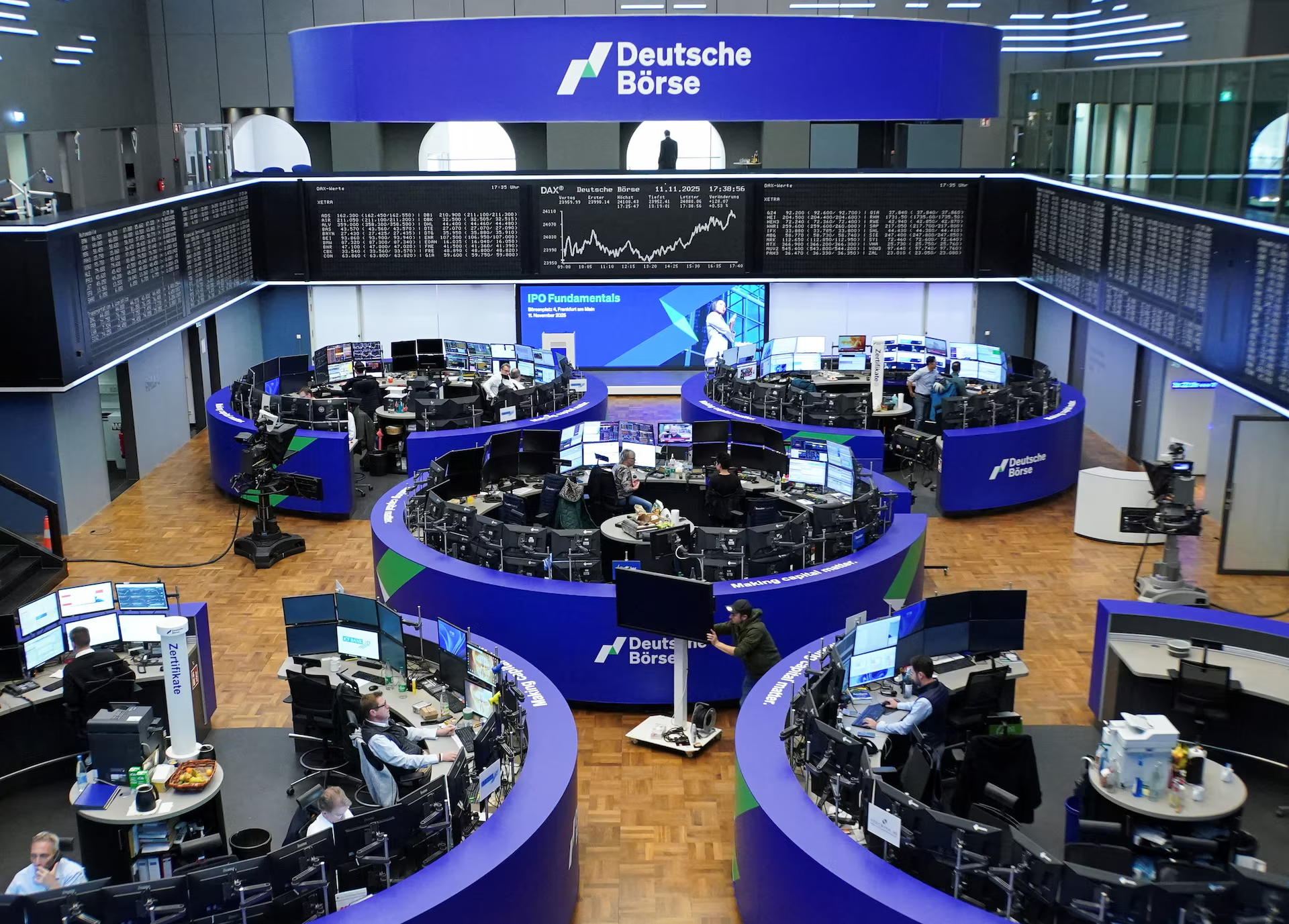
European stocks moved higher on Monday, recovering part of last week’s losses after major indexes fell to three-month lows.
Softer U.S. labor-market data helped improve investor sentiment, although rising geopolitical tensions in the Middle East continued to limit risk appetite.
The pan-European STOXX 600 rose around 0.4% in early trading, ending a three-week losing streak.
Major European Indexes Edge Higher
Germany’s DAX gained around 0.2%, while France’s CAC 40 was little changed.
London’s FTSE 100 advanced approximately 0.7%, while Italy’s FTSE MIB rose around 0.8%.
The recovery followed gains across Asian markets, where investors also reacted positively to changing expectations for U.S. interest rates.
Weak U.S. Jobs Data Ease Fed Rate Hike Fears
European markets continued to digest Friday’s weaker-than-expected U.S. nonfarm payrolls report.
The data also included downward revisions to employment growth for the previous two months, reinforcing signs that the U.S. labor market is losing momentum.
As a result, investors reduced expectations for another Federal Reserve interest rate increase in October.
Markets are now pricing in roughly a 20% chance of a Fed rate hike, down from around 65% a week earlier.
Lower Treasury Yields Support Equities
The shift in rate expectations pushed U.S. Treasury yields lower from recent multi-decade highs.
That provided support to equity sectors that are particularly sensitive to interest rates.
Lower bond yields can make stocks more attractive by reducing borrowing costs and improving the relative appeal of future corporate earnings.
Yemen Conflict Keeps Energy Risks Elevated
Geopolitical tensions remain a major concern for European markets.
Yemen’s internationally recognised, Saudi-backed government announced a major military campaign aimed at retaking territory controlled by Iran-backed Houthi forces.
The move threatens to open another active front in the wider regional conflict.
Houthi Attacks Raise Oil Market Concerns
Houthi forces also claimed responsibility for launching ballistic missiles and drones at Saudi Aramco energy facilities near Riyadh.
The claims added fresh uncertainty to global oil markets.
Although crude prices did not surge sharply, the threat of further disruption helped keep geopolitical risk premiums elevated.
Energy prices remain an important issue for Europe because higher oil costs can add to inflation and weigh on economic growth.
Eurozone PMI Data in Focus
Investors are also waiting for preliminary September Eurozone composite PMI data.
The figures will provide an updated view of business activity across the region.
Markets will be watching closely for signs that higher energy costs and weaker demand are affecting growth.
A weaker-than-expected PMI reading could increase concerns about the health of the eurozone economy.
ECB Officials Set to Speak
Attention will also turn to comments from European Central Bank policymakers.
ECB Executive Board member Isabel Schnabel and Chief Economist Philip Lane are both scheduled to speak.
Investors will be looking for clues on whether the ECB intends to keep monetary policy restrictive even as economic growth weakens.
European Market Outlook Remains Cautious
European equities have found some support from lower U.S. rate expectations and easing Treasury yields.
However, sentiment remains fragile.
Investors are balancing improving expectations for Federal Reserve policy against geopolitical risks, energy-market uncertainty and signs of weaker economic growth across Europe.
The next major direction for European stocks could depend on the upcoming PMI data and fresh guidance from ECB officials.