Dollar Holds Firm as US-Iran Tensions and Inflation Data Keep Markets on Edge
The U.S. dollar traded largely unchanged against major currencies on Wednesday as investors monitored escalating tensions between the United States and Iran while awaiting a crucial U.S. inflation report that could influence the Federal Reserve’s next policy moves.
Currency markets remained cautious as geopolitical risks and expectations for future interest rates continued to drive investor sentiment.
Renewed US-Iran Conflict Supports Safe-Haven Demand
The latest tensions followed U.S. military strikes against Iranian targets after President Donald Trump pledged to respond to the downing of an American Apache helicopter earlier in the week.
In retaliation, Iran’s Revolutionary Guard reportedly launched attacks against a U.S. military base in Jordan and multiple other targets across the Gulf region.
Despite the renewed exchange of military action, some analysts believe the broader conflict remains on a path toward gradual de-escalation rather than a full-scale expansion.
According to Commonwealth Bank of Australia economist Harry Ottley, the recent developments do not yet suggest a dramatic escalation of the conflict despite the breakdown of the weekend ceasefire.
Dollar Remains Supported by Economic Resilience
The U.S. Dollar Index, which measures the greenback against a basket of major currencies, remained close to the 100 level and was little changed during trading.
The euro traded near $1.1544, while the British pound edged higher to approximately $1.338.
Analysts note that the U.S. economy is generally less vulnerable to energy price shocks than many of its global counterparts, helping support demand for the dollar during periods of geopolitical uncertainty.
This advantage has contributed to continued strength in the greenback while placing pressure on currencies such as the euro and Japanese yen.
Japanese Yen Remains Near Intervention Levels
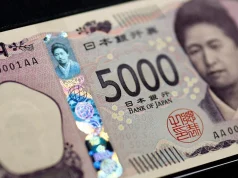
The Japanese yen continued to hover around the closely watched 160-per-dollar level, a threshold many traders view as a potential trigger for official intervention by Japanese authorities.
Market participants have largely priced in a Bank of Japan interest rate increase at its June 16 policy meeting, reducing the likelihood that a rate hike alone would significantly strengthen the currency.
Analysts suggest the yen may require a more aggressive signal from BOJ Governor Kazuo Ueda regarding future rate increases before investors begin reversing bearish positions.
Without a stronger policy shift, Japan’s Ministry of Finance could once again be forced to intervene directly in currency markets to support the yen.
BOJ Expected to Continue Raising Rates
A recent Reuters survey indicated that economists expect the Bank of Japan to raise interest rates this month and again later in the year.
Forecasts suggest the benchmark rate could reach 1.25% by the end of 2026 as policymakers become increasingly concerned about inflation pressures.
Supporting this view, new economic data showed Japan’s wholesale inflation accelerated to 6.3% in May, the highest level in three years.
Rising energy prices linked to the Middle East conflict have contributed significantly to the increase in inflationary pressures across Japan’s economy.
US Inflation Report Takes Center Stage
Investor attention is now firmly focused on the release of U.S. Consumer Price Index (CPI) data.
The inflation report is expected to play a key role in shaping expectations for Federal Reserve policy during the second half of the year.
Following a stronger-than-expected U.S. employment report last week, markets are increasingly considering the possibility that the Fed could maintain a hawkish stance or even raise rates again if inflation remains elevated.
Market analysts believe a stronger inflation reading could provide further support for the dollar by reinforcing expectations for higher interest rates.
Higher Oil Prices Add to Inflation Concerns
Elevated oil prices remain another important factor supporting the dollar.
The ongoing conflict in the Middle East has kept energy markets volatile, increasing concerns that inflationary pressures could remain persistent in the coming months.
Strong economic growth combined with sticky inflation continues to support expectations that U.S. monetary policy may remain restrictive for longer than previously anticipated.
Focus Also Turns to the ECB
Beyond the Federal Reserve, investors are also preparing for the European Central Bank’s upcoming policy meeting.
Markets widely expect the ECB to deliver a 25-basis-point interest rate increase, which could influence the near-term direction of the euro and broader currency markets.
Meanwhile, risk-sensitive currencies remained under pressure, with both the Australian dollar and New Zealand dollar posting modest declines against the U.S. dollar.
As geopolitical uncertainty and inflation concerns persist, the dollar is likely to remain at the center of investor attention in the days ahead.