Global equity positioning weakened further last week as investors adopted a more defensive stance across major stock markets.
According to Citi, short positioning increased across several regions, with the strongest bearish shift seen in U.S. small-cap stocks, Europe and parts of Asia.
Citi Sees Weaker Global Equity Sentiment
Citi strategists led by David Chew said net positioning remains relatively resilient in the EuroStoxx and U.S. large-cap markets.
However, underlying investor sentiment has weakened as traders continue to reduce directional exposure.
The bank said elevated short positions are creating greater imbalance across markets. This raises the risk of sharp short-covering moves if sentiment suddenly improves.
Citi highlighted the Nikkei, KOSPI and S&P 500 as markets where these dynamics could become especially important.
Fed and Bank of Japan Drive De-Risking
The decline in global equity positioning followed a series of major macroeconomic developments.
The Federal Reserve delivered its first interest rate increase in three years, while the Bank of Japan also made another policy adjustment.
Higher energy prices and persistent geopolitical tensions added further pressure.
Citi described the move as one of the most synchronized periods of investor de-risking seen during the current interest-rate cycle.
U.S. Markets See New Short Positions
Bearish flows appeared across all three major U.S. stock indices.
Citi said the weakness was mainly driven by investors opening new short positions rather than closing existing long exposure.
The Russell 2000 experienced the sharpest weekly decline in positioning among all markets tracked by Citi.
All remaining long positions in the small-cap index are currently showing losses.
By comparison, the S&P 500 and Nasdaq displayed greater resilience. Ongoing short covering helped offset some of the bearish pressure in both indices.
S&P 500 Faces Short-Covering Risk
Citi estimates that around 80% of both long and short S&P 500 positions are currently loss-making.
However, the short side of the market is larger.
As a result, Citi believes the positioning imbalance creates a greater risk of short covering.
Even a relatively modest S&P 500 rebound could force bearish traders to close positions, creating additional buying pressure and potentially accelerating the move higher.
European Equity Positioning Turns More Defensive
In Europe, new short positioning pushed both Germany’s DAX and the European Banks index into mildly bearish territory.
The EuroStoxx maintained a more constructive overall position, despite experiencing the region’s largest investor outflows.
Citi said the main concern in Europe is shifting away from outright market direction and toward positioning stress.
Long positions across many European indices are now underwater, while the DAX currently has the weakest profit-and-loss profile in the region.
Asian Markets Remain Heavily Shorted
Asia continues to be the most bearish region based on Citi’s positioning data.
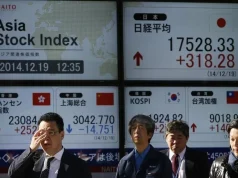
The Nikkei remains the most negatively positioned major market, although conditions have improved slightly.
Investors also added new short exposure in the KOSPI, Hang Seng and China A50.
Citi said short positions in the Nikkei, KOSPI and Hang Seng remain close to historically elevated levels.
More than 40% of short positions in both the Nikkei and KOSPI are currently loss-making.
That setup means a positive economic, monetary or geopolitical catalyst could trigger a much larger short-covering rally than normal.
Citi sees the Nikkei as particularly exposed to this risk because of the size of existing bearish positions.