China’s consumer inflation rose less than expected in September, as holiday spending provided only limited support to domestic demand. Meanwhile, producer prices climbed to their highest level in more than four years, highlighting a growing divide between consumer and factory-gate inflation.
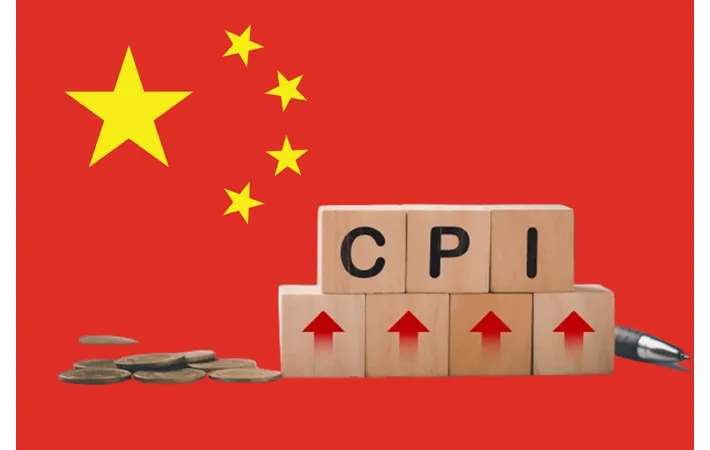
Official data released on Wednesday showed that China’s Consumer Price Index (CPI) increased 0.9% year-on-year in September. The reading fell slightly below economists’ forecasts of 1.0%, although it improved from August’s 0.8% increase.
On a monthly basis, consumer prices advanced 0.2%, missing expectations for a 0.3% rise.
Weak Consumer Spending Limits China’s CPI Inflation
The modest increase in China’s CPI inflation was largely driven by higher consumer spending during the autumn festival holiday.
However, recent government figures indicated that holiday consumption remained subdued. A prolonged property market downturn, weak wage growth and sluggish employment conditions continued to weigh on household spending.
Despite Beijing’s ongoing economic stimulus measures, domestic demand has struggled to recover meaningfully.
China has faced persistent disinflationary pressures since the COVID-19 pandemic, reflecting weak consumer confidence and broader challenges across its economy.
China PPI Surges to Highest Level Since June 2022
In contrast to subdued consumer inflation, China’s Producer Price Index (PPI) recorded a sharp increase in September.
Factory-gate prices jumped 5.0% year-on-year, significantly exceeding market expectations of 4.4%. The figure also represented a substantial acceleration from August’s 3.8% increase.
This marked the strongest annual producer inflation reading since June 2022.
Several factors contributed to the increase, including stronger business investment, rising industrial input costs and growing demand for artificial intelligence-related technology.
In particular, global demand for computing equipment has driven up prices for essential electronic components and related industrial materials.
Consequently, China’s producer prices have strengthened steadily throughout the year, helping the country emerge from a prolonged period of factory-gate deflation.
Middle East Conflict Fuels Inflationary Pressures
Geopolitical tensions have also played a significant role in pushing China’s producer prices higher.
Disruptions linked to the ongoing Middle East conflict have increased raw material and energy costs, adding pressure to manufacturers and industrial supply chains.
Analysts at Capital Economics expect inflationary pressures to remain elevated in the near term, particularly if regional tensions continue without meaningful signs of easing.
However, the research firm anticipates that the impact of higher external costs will gradually diminish.
According to its projections, producer prices could eventually return to deflation, while annual consumer inflation may average just 0.4% in 2027.
This outlook suggests that China’s underlying domestic demand challenges could persist even after temporary supply-side inflation pressures subside.
Beijing Faces Renewed Pressure to Support Economic Growth
The latest inflation figures highlight the contrasting forces affecting China’s economy.
While industrial producers are experiencing higher costs and stronger demand in certain technology-related sectors, households remain cautious about spending.
The property market slump and relatively weak labor market continue to undermine consumer confidence, limiting the effectiveness of previous stimulus initiatives.
As a result, attention is turning toward Beijing’s next policy decisions.
China’s Communist Party is expected to announce additional economic support measures during a key meeting later in October.
Investors will closely examine whether new initiatives can strengthen household consumption, stabilize the property sector and support a more sustainable economic recovery.