BOJ Board Member Signals Support for Early Interest Rate Hike
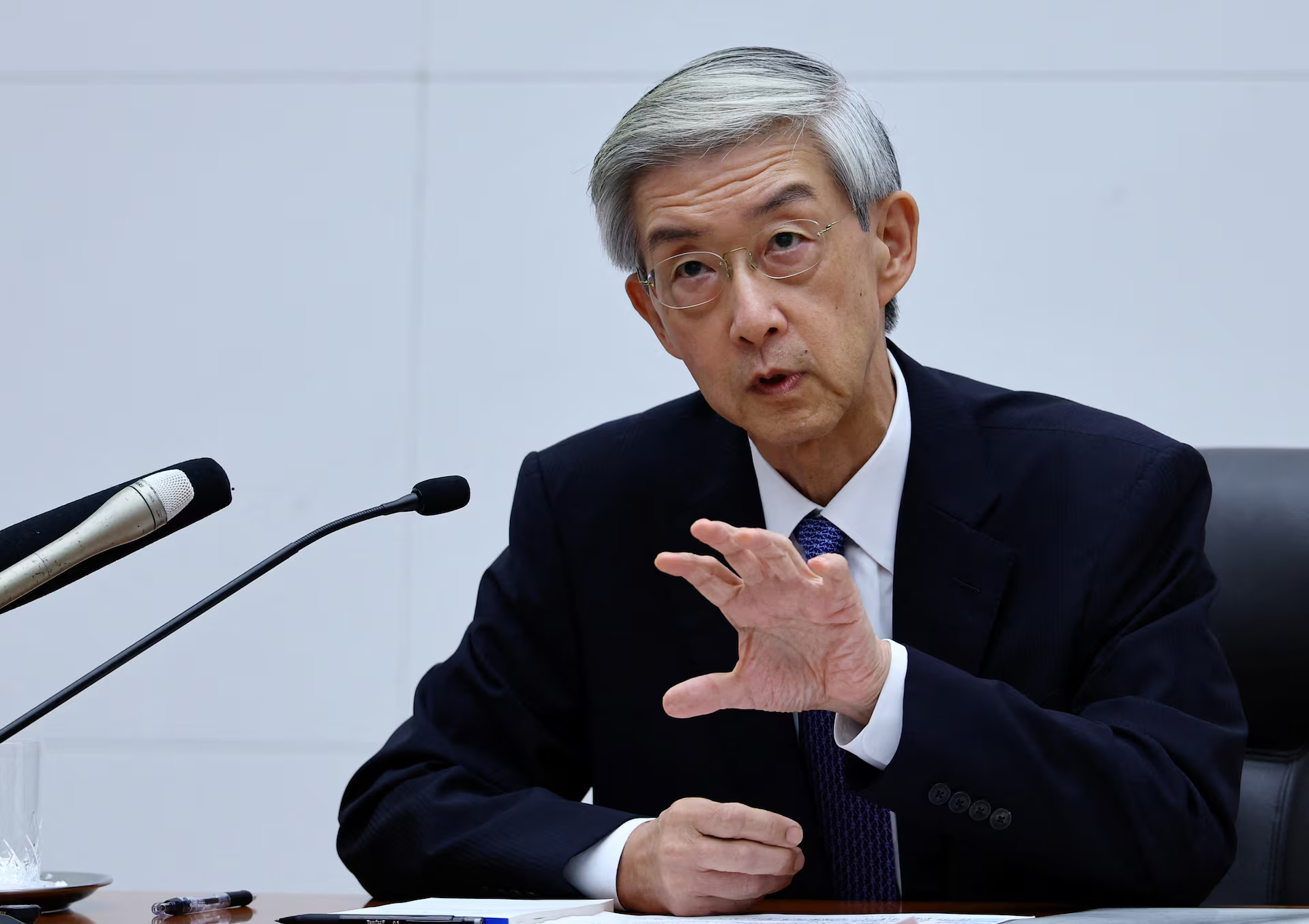
Bank of Japan board member Kazuyuki Masu said the central bank should raise interest rates as soon as possible if the Japanese economy does not show clear signs of slowing down.
His comments increased market expectations that the BOJ could move toward another rate hike during its next policy meeting in June.
Masu had voted to keep rates unchanged in April, but his latest remarks suggest he may now align with the more hawkish members of the board as inflation pressures continue to rise.
Rising Oil Prices Fuel Inflation Concerns
Speaking on Thursday, Masu said he previously believed there was no need for an immediate rate increase.
However, he added that if incoming economic data does not point to a significant downturn, it would be appropriate for the BOJ to raise rates at the earliest possible opportunity.
The BOJ maintained its benchmark interest rate at 0.75% last month. Still, three of the bank’s nine board members dissented and supported raising rates to 1.0%, highlighting growing concern over inflation linked to soaring energy prices caused by the Iran conflict.
Markets Increase Bets on June Rate Hike
A series of increasingly hawkish signals from BOJ officials has led financial markets to price in roughly a 70% probability of a June interest rate increase.
Economists have also become more confident that tighter monetary policy is approaching. Nearly two-thirds of economists surveyed by Reuters before the April meeting had already expected a June rate hike.
Yusuke Matsuo, senior market economist at Mizuho Securities, said it is unlikely Japan will experience a major economic slowdown before the June meeting.
According to Matsuo, there is now a strong possibility that Masu will support raising rates next month.
Japanese Bond Yields Hit Multi-Decade High
Concerns about rising inflation pushed the yield on Japan’s benchmark 10-year government bond to 2.625% on Thursday, its highest level in 29 years.
Higher fuel costs, a weak yen, and steady wage growth have all contributed to mounting price pressures across the Japanese economy.
Masu warned that while higher prices for fuel and chemical goods could eventually prove temporary, they may also increase distribution costs and create more persistent inflationary trends.
BOJ Focused on Ending Negative Real Rates
Masu stated that Japan has clearly entered an inflationary phase after years of deflation.
He stressed that the BOJ must act carefully to ensure underlying inflation does not rise above its 2% target through timely and appropriate rate increases.
Although Masu said underlying inflation remains slightly below 2%, he noted that it is now approaching that level rapidly.
He also warned that continued weakness in the Japanese yen could further accelerate inflation and increase public expectations for rising prices.
According to Masu, Japan’s economy is no longer in a deflationary environment, meaning the BOJ should move real interest rates out of negative territory as quickly as possible.
BOJ Seen Moving Toward Neutral Interest Rates
Masu said the central bank should gradually raise rates closer to levels considered neutral for the economy, which are estimated to fall between 1.1% and 2.5%.
He explained that moving rates closer to neutral would allow the BOJ to respond more effectively to future inflation shocks.
The Bank of Japan ended its decade-long ultra-loose monetary stimulus program in 2024 and has since raised interest rates several times, including another increase in December, based on expectations that Japan could sustainably maintain inflation near its 2% target.
Investors Watch Upcoming BOJ Speeches
The ongoing Middle East conflict has complicated the BOJ’s policy decisions because higher energy prices continue pushing inflation higher while also hurting Japan’s import-dependent economy.
Following Masu’s hawkish comments, investors are now focusing on upcoming speeches from BOJ Deputy Governor Ryozo Himino and board member Junko Koeda, both of whom previously supported keeping rates unchanged in April.