Asian Stocks Edge Higher on AI Rebound and Easing Israel-Iran Tensions
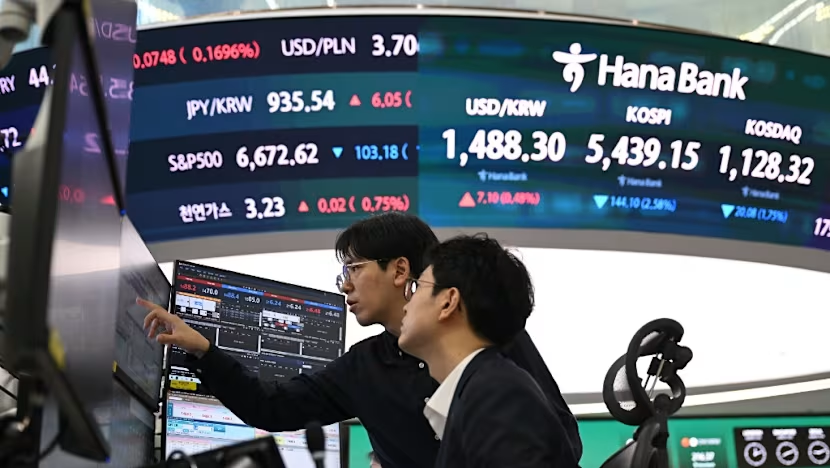
Most Asian stock markets advanced on Tuesday as technology and artificial intelligence shares recovered from steep recent losses. Improving sentiment was also supported by easing tensions in the Middle East after Israel and Iran agreed to halt direct military strikes.
South Korean and Chinese equities led regional gains, while investors continued to monitor developments in global trade, interest rates, and geopolitical risks.
Technology Stocks Drive Market Recovery
Regional markets took a mixed lead from Wall Street, where technology shares rebounded after a sharp selloff in recent sessions.
Investor confidence improved after Israel and Iran agreed to suspend attacks following diplomatic pressure from U.S. President Donald Trump. The development reduced some geopolitical concerns that had recently weighed on global markets.
S&P 500 futures also moved slightly higher during Asian trading after Trump stated that the United States could declare a “total victory” over Iran within the next two weeks.
Despite the rebound, many investors remain cautious as questions persist about the sustainability of the AI-driven rally and the impact of higher global interest rates.
South Korea’s KOSPI Leads Regional Gains
South Korea’s KOSPI index surged 3%, recovering strongly after an 8.3% decline during the previous session.
The rally was largely driven by a rebound in major semiconductor stocks.
Samsung Electronics climbed 3.4%, while SK Hynix jumped 7.7%. SK Hynix also benefited from news of a significant partnership agreement with AI chip leader Nvidia, boosting optimism surrounding future growth prospects.
Investor sentiment was further supported by revised economic data showing South Korea’s economy expanded by 1.8% during the first quarter, helped primarily by strong semiconductor exports.
Japanese Markets Benefit From Tech Rebound
Japan’s Nikkei 225 index rose 0.9% after falling more than 4% in the previous session.
The broader TOPIX index gained 0.5% as investors returned to technology-related stocks.
Chipmaking equipment manufacturer Tokyo Electron was among the strongest performers, soaring 7.6%.
However, SoftBank Group slipped 0.8%, highlighting ongoing selectivity among investors despite the broader recovery.
Market participants remain cautious about technology stocks following recent volatility and concerns that valuations may have become stretched after the sector’s powerful rally.
Chinese Stocks Rise on Strong Trade Data
Chinese equities also moved higher after the release of stronger-than-expected trade figures.
The CSI 300 Index and Shanghai Composite Index each gained approximately 0.4% following data showing China’s trade surplus expanded more than expected in May.
The improvement was largely driven by robust export growth, reinforcing the importance of exports as a key driver of China’s economic expansion.
Imports also exceeded forecasts, supported by strong domestic demand for semiconductors and components used in artificial intelligence infrastructure.
Limited Impact From U.S. Blacklist Expansion
Chinese technology shares showed little reaction after the United States added several major Chinese companies to a blacklist over alleged military ties.
Companies affected included Alibaba, Baidu, and BYD.
Baidu and BYD recorded modest gains, while Alibaba slipped 0.5%.
The muted market response suggests investors remain more focused on economic data and growth prospects than on the latest geopolitical developments.
Hong Kong’s Hang Seng Index edged down 0.2%.
Mixed Performance Across Asia
Elsewhere in the region, Singapore’s Straits Times Index advanced 1.1%, benefiting from improved market sentiment.
Australia’s ASX 200 underperformed regional peers, declining 0.3% due to weakness in mining stocks.
Indian markets also remained under pressure. Futures tied to the Nifty 50 Index fell 0.2%, signaling a subdued opening after the benchmark index lost 1% during the previous session.
Indian equities have lagged many Asian markets in recent months as investors grow increasingly concerned about the impact of elevated oil prices on the country’s import-dependent economy.
Outlook
Asian markets have found short-term support from the recovery in AI-related stocks and signs of easing geopolitical tensions.
However, investors continue to monitor global interest rates, technology sector valuations, and developments in the Middle East, all of which could influence market direction in the weeks ahead.