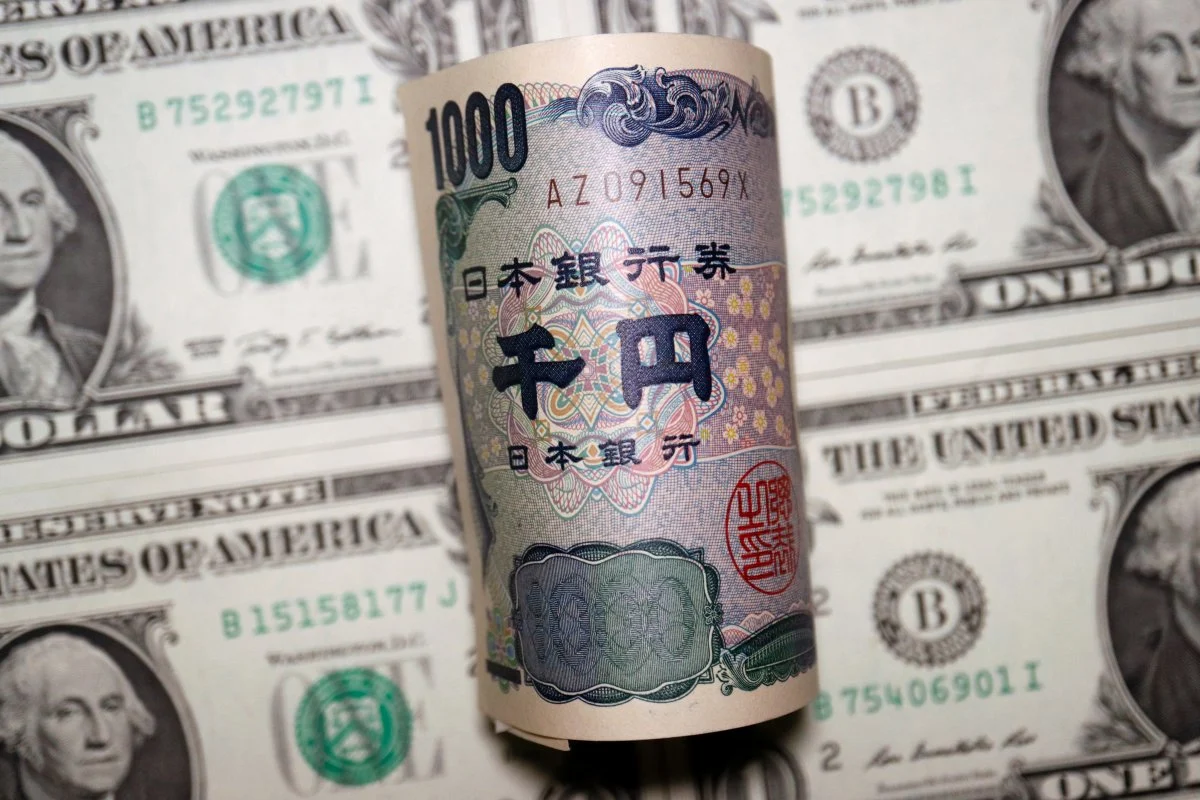
Asian currencies traded in narrow ranges on Tuesday as the U.S. dollar remained close to an 18-month high. Meanwhile, the euro stayed under pressure near its weakest level in 17 months.
Elevated U.S. Treasury yields continued to support the dollar, while investors assessed fresh economic data and the outlook for Federal Reserve policy.
Dollar Holds Near 18-Month High
The U.S. dollar index traded near 102.11 after climbing as high as 102.21. The index had reached an 18-month peak during the previous session.
EUR/USD hovered around 1.123, while GBP/USD edged slightly higher to 1.3224.
Elsewhere, USD/JPY traded near 157.92. AUD/USD was around $0.698, while NZD/USD stood near $0.560.
Treasury Yields Support the Dollar
The dollar has remained strong despite weaker-than-expected U.S. employment data, which reduced expectations for an immediate Federal Reserve rate increase.
However, investors continue to see a possibility that the Fed may need to maintain tighter monetary policy if inflation remains elevated.
Recent U.S. services-sector data showed that activity slowed in September. At the same time, solid domestic demand increased pressure on supply chains and pushed input costs higher.
These figures suggest that inflationary pressures could remain persistent into next year.
As a result, the Federal Reserve may have less room to ease monetary policy aggressively.
Higher U.S. Treasury yields have also provided significant support for the dollar. Longer-term borrowing costs remain elevated as investors assess inflation, fiscal risks and the future direction of interest rates.
Euro Pressured by Fiscal and Energy Concerns
The euro remained weak, with EUR/USD trading near $1.1225 after touching its lowest level since May 2025 during the previous session.
The currency has fallen roughly 1.2% over the past week as investors focus on political uncertainty and fiscal concerns across the eurozone.
Higher energy costs have also added pressure.
Rising energy prices could weaken economic growth while also keeping inflation elevated across Europe.
These risks have increased expectations that the European Central Bank may need to keep monetary policy restrictive for longer than previously anticipated.
Indian Rupee Approaches Record Low
The Indian rupee was also under pressure, with USD/INR trading near 96.58.
Higher long-term U.S. Treasury yields and broad dollar strength continued to weigh on the currency.
The rupee closed at 96.2925 on Monday and remained around 0.6% away from its record low of approximately 96.96, reached in May.
The Reserve Bank of India is expected to continue intervening in currency markets to limit sharp movements in the rupee.
Rather than defending a specific exchange rate, the central bank has reportedly been selling dollars to slow the pace of depreciation.
Chinese Yuan Remains Stable
The Chinese yuan showed little movement.
USD/CNH traded around 6.702, while the onshore USD/CNY pair stood near 6.705.
Trading activity remained subdued as China continued its week-long National Day holiday.
Other regional currencies were also relatively stable. USD/KRW traded near 1,341.40, while USD/SGD was around 1.2791.
Asian Markets Await Policy and Growth Signals
Investors across Asia are closely watching inflation, growth and central-bank policy.
Bank of America sees Indonesia facing slower economic growth alongside higher inflation risks.
Malaysia could potentially raise interest rates to 3% in November, while the Philippines continues to face renewed inflation and fiscal pressures.
Singapore may also require additional policy tightening if core inflation remains elevated.
Thailand’s economic recovery continues to benefit from artificial intelligence investment and government fiscal support.
However, higher oil prices and flooding remain potential risks to growth. Interest rates in Thailand are currently expected to remain unchanged through 2027.