Asian Currencies Stabilize as Strong U.S. Jobs Data Supports Dollar
Asian currencies traded mostly steady on Monday after suffering losses in the previous session, as investors continued to assess the implications of stronger-than-expected U.S. employment data. At the same time, escalating tensions in the Middle East limited risk appetite and reinforced demand for the U.S. dollar as a safe-haven asset.
The U.S. Dollar Index remained close to a two-month high during Asian trading hours after surging 0.7% on Friday. U.S. Dollar Index futures were also largely unchanged.
Strong U.S. Labor Market Strengthens Fed Rate Expectations
Investor sentiment was shaped by Friday’s U.S. nonfarm payrolls report, which revealed that the economy added 172,000 jobs in May, significantly surpassing market forecasts. The stronger labor market data reinforced expectations that the Federal Reserve may keep interest rates elevated for a longer period.
As a result, markets have increased their expectations for a potential Federal Reserve interest rate hike later this year, with traders assigning higher odds to a move by December.
Japanese Yen Near Multi-Week High
Currency movements across Asia were mixed during early trading.
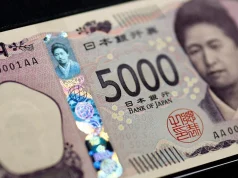
The Japanese yen remained relatively stable, with the USD/JPY pair trading around 160.31. This marks its highest level since late April, when Japanese authorities intervened in the foreign exchange market to support the currency.
Investors also reviewed updated economic data from Japan, which showed that the country’s economy expanded at a slower pace than initially estimated during the first quarter. Revised figures indicated annualized GDP growth of 1.8%, compared with the preliminary estimate of 2.1%.
South Korean Won Weakens, Australian Dollar Recovers
The South Korean won came under pressure, with the USD/KRW pair rising sharply after reaching its highest level in 17 years during Friday’s session.
Meanwhile, the Australian dollar posted a modest recovery. The AUD/USD pair edged 0.1% higher after falling to a near two-month low at the end of last week.
Chinese Yuan, Singapore Dollar and Indian Rupee Under Pressure
Elsewhere in Asia, the Chinese yuan weakened slightly as the USD/CNY pair advanced 0.3%.
The Singapore dollar also slipped, with the USD/SGD pair rising 0.1%, while the Indian rupee weakened as the USD/INR pair gained 0.3%.
The broad strength of the U.S. dollar continued to weigh on regional currencies as traders adjusted expectations for future Federal Reserve policy decisions.
Middle East Tensions Support Safe-Haven Demand
Investor caution was further amplified by renewed geopolitical tensions in the Middle East.
According to regional reports, Iran launched several missiles toward northern Israel late Sunday. Israeli defense systems reportedly intercepted the projectiles before they reached their targets.
Iran stated that the attack was a response to Israeli military operations in Beirut’s southern suburbs. Israel responded on Monday despite reports that U.S. President Donald Trump had urged Israeli authorities to avoid further escalation.
Growing concerns surrounding the Strait of Hormuz have also increased fears over potential disruptions to global energy supplies and rising inflationary pressures. The uncertainty has helped strengthen the U.S. dollar’s safe-haven appeal.
Focus Shifts to Key U.S. Inflation Data
Market participants are now turning their attention to upcoming U.S. consumer price index (CPI) and producer price index (PPI) data scheduled for release later this week.
The inflation reports could provide important insights into the Federal Reserve’s future interest rate path and may determine whether the recent strength in the U.S. dollar continues in the weeks ahead.