Alphabet (NASDAQ: GOOGL), Google’s parent company, reported strong revenue growth in its third-quarter 2026 earnings results. However, disappointing earnings per share and soaring artificial intelligence investment costs overshadowed the company’s expanding business operations.
The technology giant generated $127.6 billion in quarterly revenue, representing a 25% increase compared with the previous year. Nevertheless, earnings per share reached just $2.12, falling substantially below Wall Street expectations of approximately $3.02.
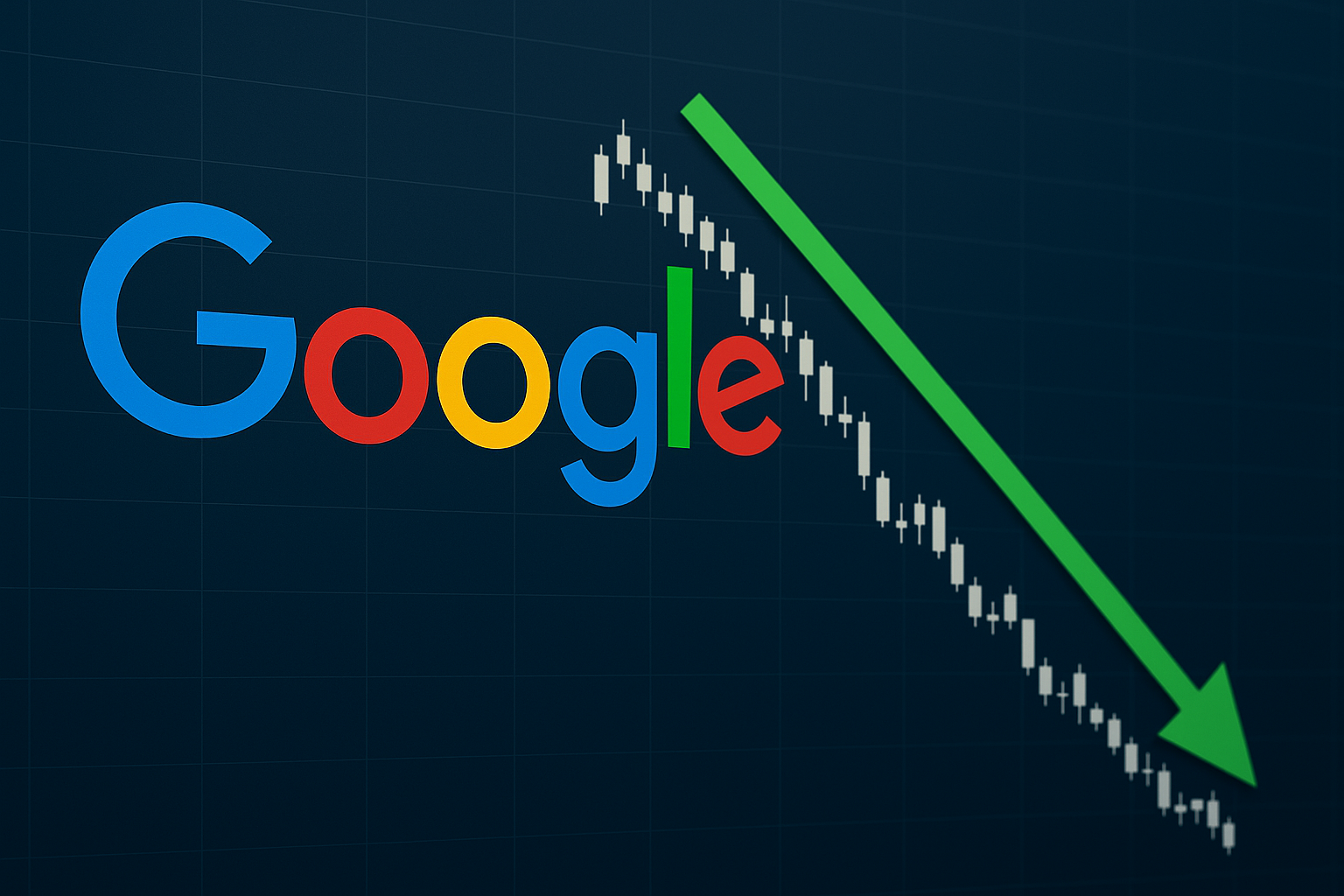
Alphabet shares dropped more than 10% in after-hours trading following the October 28 announcement, reflecting investor concerns about profitability, rising capital expenditures, and the financial returns from the company’s aggressive AI expansion.
Alphabet Q3 2026 Earnings Reveal Strong Revenue Growth
Alphabet’s third-quarter revenue increased from $102.3 billion in 2025 to $127.6 billion in 2026.
The results marked the company’s 13th consecutive quarter of double-digit revenue growth. Additionally, Alphabet reached an annualized revenue run rate exceeding $500 billion.
Despite this impressive performance, quarterly revenue fell slightly short of Wall Street’s consensus expectations.
Operating income increased approximately 30% year-over-year, climbing from $31.2 billion to $40.6 billion.
Meanwhile, the company’s operating margin improved to 31.8%, demonstrating that its core operations continued generating stronger profits.
However, net income available to common shareholders declined approximately 25% to $26.2 billion, compared with $35 billion a year earlier.
The earnings decline reflected significant non-operating investment losses, alongside concerns about the company’s rapidly increasing AI infrastructure spending.
Why Alphabet Earnings Missed Wall Street Expectations
Alphabet reported diluted earnings per share of $2.12, substantially below analysts’ expectations of approximately $3.02.
A major contributor was an $8.7 billion loss on equity securities, including valuation changes affecting the company’s investment portfolio.
The quarter also included approximately $8.2 billion in net non-operating expenses.
These investment-related losses significantly reduced reported net income, even as Alphabet’s operating profit continued expanding.
Consequently, the disappointing earnings figures did not indicate a collapse in the company’s core advertising or cloud businesses.
Nevertheless, investors remain concerned about the sustainability of Alphabet’s investment strategy and the growing financial resources required to compete in artificial intelligence.
Google Cloud Revenue Surges 103% as AI Demand Accelerates
Google Cloud emerged as Alphabet’s strongest-performing business segment during the third quarter.
Revenue more than doubled to $30.7 billion, representing an exceptional 103% increase compared with the same period last year.
The expansion reflected strong enterprise demand for artificial intelligence infrastructure, cloud computing services, and advanced AI solutions.
Google Cloud also reported substantial improvements in profitability.
Operating income increased to approximately $11.1 billion, while its operating margin expanded to 36.2%, compared with 23.7% a year earlier.
The results demonstrate that Alphabet is successfully converting growing AI infrastructure demand into higher cloud revenue and operating earnings.
However, management cautioned that continued reliance on third-party computing resources could create additional margin pressure in the near term.
Google Search and YouTube Continue Expanding
Alphabet’s Google Services division also maintained positive momentum during the quarter.
The segment generated $96.3 billion in revenue, an 11% increase from the previous year.
Google Search and related advertising revenue climbed 12% to $63.3 billion, supported by accelerating search activity.
According to management, year-over-year growth in search queries reached its highest level in five years.
This development suggests that Google’s AI-powered search features are helping increase user engagement rather than simply replacing traditional search activity.
Meanwhile, YouTube advertising revenue rose approximately 9% to $11.2 billion.
Revenue from subscriptions, platforms, and devices increased 11% to $14.3 billion.
Additionally, YouTube Music and Premium surpassed 150 million subscribers globally, including trial memberships.
Google Services generated approximately $39.2 billion in operating income, achieving an operating margin of 40.7%.
Despite these gains, some advertising revenue categories fell short of analyst expectations, adding to investor concerns about future growth.
Gemini AI Reaches One Billion Users as Alphabet Expands Innovation
Artificial intelligence remained a central focus of Alphabet’s quarterly earnings presentation.
The company announced that its Gemini application had reached one billion users, reflecting rapid adoption of its AI-powered services.
Meanwhile, Alphabet’s first-party AI models processed nearly 32 billion tokens per minute through application programming interfaces.
That represented a 40% increase compared with the previous quarter and more than four times the volume recorded a year earlier.
Alphabet also expanded its Gemini model lineup throughout 2026, introducing improved versions designed for advanced reasoning, coding, cybersecurity, and enterprise applications.
Among the latest developments were Gemini 4 Argon and Gemini 4 Carbon, which strengthened Google’s position in the competitive generative AI market.
These innovations support Alphabet’s broader strategy of integrating artificial intelligence into Search, Google Cloud, productivity services, and other consumer-facing products.
Alphabet AI Capital Expenditures Reach $51.4 Billion
One of the most significant concerns surrounding Alphabet’s Q3 2026 earnings was the sharp acceleration in capital spending.
The company invested approximately $51.4 billion in property and equipment during the quarter, compared with $24 billion in the same period last year.
This represents an increase of approximately 114%.
Much of the investment supports the expansion of artificial intelligence infrastructure, including data centers, networking equipment, and specialized computing hardware.
Alphabet continues developing its Tensor Processing Unit (TPU) technology to improve the efficiency and performance of AI workloads.
Its TPU infrastructure combines custom-designed processors, high-speed networking, and software tools supporting large-scale AI training and inference.
Although these investments could strengthen Alphabet’s long-term competitive position, they require substantial upfront spending.
Investors are increasingly questioning how quickly the company can generate sufficient financial returns from its expanding infrastructure.
Free Cash Flow Turns Negative as AI Spending Accelerates
Alphabet’s aggressive capital expenditure program had a significant impact on free cash flow during the third quarter.
The company generated approximately $42.3 billion in operating cash flow.
However, property and equipment purchases totaling $51.4 billion exceeded operating cash generation.
Consequently, quarterly free cash flow declined to negative $9.1 billion, compared with positive $24.5 billion during the same period in 2025.
Meanwhile, trailing twelve-month free cash flow fell to approximately $19.7 billion, representing a decline of around 73% year-over-year.
The figures highlight the financial consequences of Alphabet’s unprecedented investment cycle.
While the company continues generating substantial operating cash flow, its infrastructure expansion is consuming an increasingly large portion of those resources.
Alphabet Expects AI Investment to Increase Further in 2027
Alphabet maintained its full-year 2026 capital expenditure guidance of $195 billion to $205 billion.
However, management indicated that spending could increase significantly again in 2027 as the company continues expanding AI infrastructure capacity.
Google Cloud is expected to benefit from additional TPU system sales, with a more substantial contribution anticipated during 2027.
Nevertheless, management warned that the use of third-party computing capacity could continue affecting near-term cloud profitability.
For the fourth quarter, Alphabet also expects somewhat greater foreign exchange headwinds, particularly across Search and YouTube advertising.
Additionally, comparisons with stronger advertising growth recorded in late 2025 could make future growth rates appear less impressive.
These factors suggest that Alphabet may face additional financial pressure despite continued demand for its technology services.
Alphabet Stock Slides as Investors Question AI Spending
Alphabet shares experienced a sharp decline following the release of its third-quarter results.
The stock fell approximately 10.4% in after-hours trading, reflecting disappointment over earnings and concerns about the company’s aggressive investment strategy.
Although Alphabet demonstrated impressive revenue growth across Google Cloud and Search, investors appeared increasingly focused on the gap between capital expenditures and near-term cash generation.
Chief Executive Sundar Pichai maintained an optimistic outlook, emphasizing the company’s broad AI capabilities and growing demand for its products.
Chief Financial Officer Anat Ashkenazi also highlighted Alphabet’s ability to monetize AI investments across services reaching billions of consumers and businesses.
However, the company’s long-term financial performance will depend on its ability to convert these investments into sustainable earnings and stronger free cash flow.
What Comes Next for Alphabet Stock?
Alphabet’s Q3 2026 earnings highlight both the opportunities and financial risks associated with the global artificial intelligence investment boom.
On one hand, Google Cloud is experiencing exceptional growth, Search activity remains strong, and Gemini continues attracting users.
On the other hand, rising infrastructure costs, negative quarterly free cash flow, and weaker-than-expected earnings have increased investor uncertainty.
Looking ahead, several developments could influence Alphabet’s financial performance, including the profitability of Google Cloud, the expansion of AI-powered Search, and the pace of capital expenditure growth.
Investors will also monitor whether the company’s AI infrastructure investments generate sufficient returns to justify their enormous cost.
Ultimately, Alphabet’s challenge is no longer simply demonstrating that artificial intelligence can accelerate revenue growth. The company must also prove that its unprecedented spending can deliver sustainable profitability and long-term shareholder value.