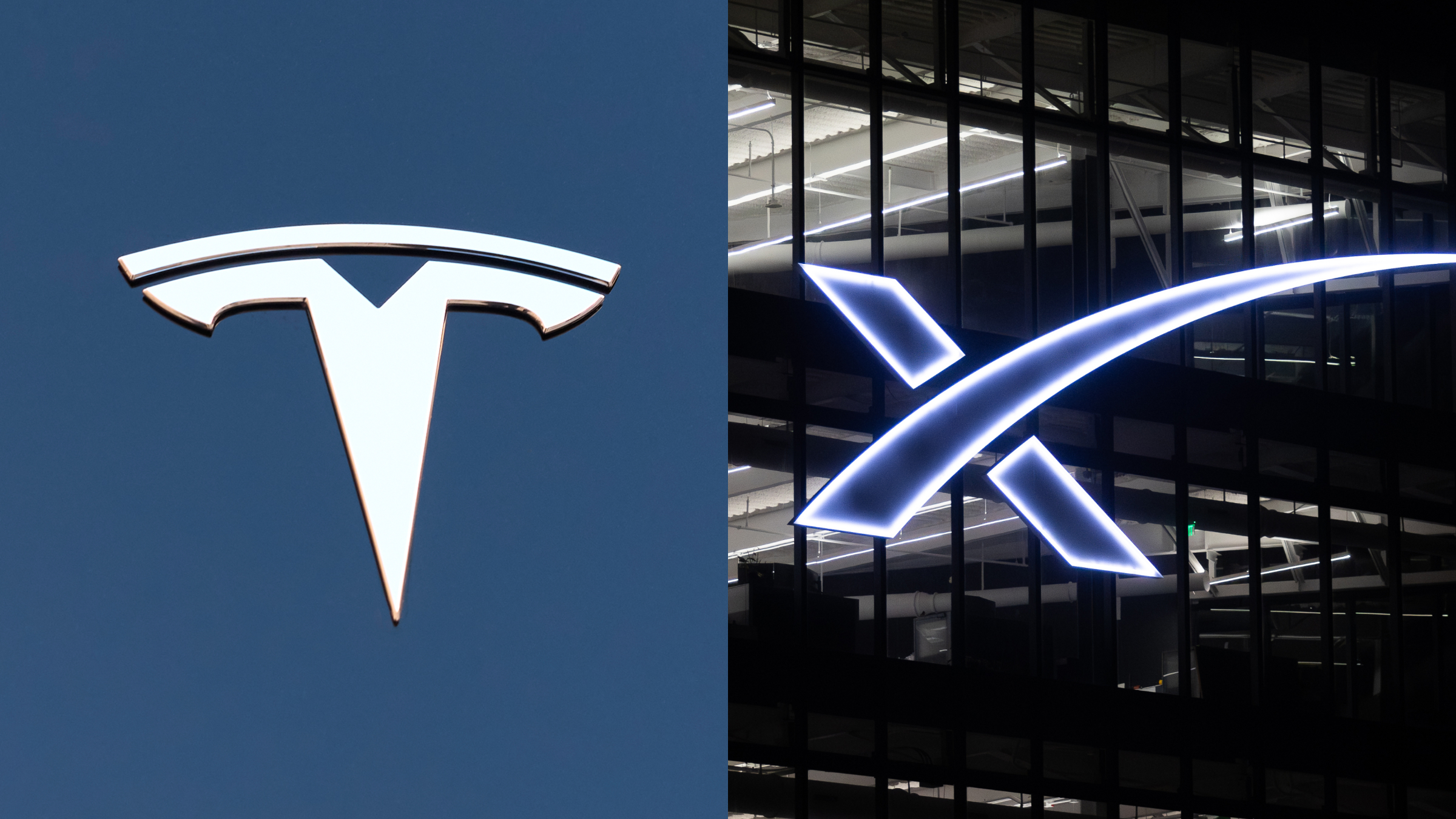
SpaceX and Tesla shares declined on Wednesday as the Democratic Party’s strong performance in the US midterm elections raised concerns about increased regulatory scrutiny of Elon Musk’s companies. The political uncertainty weighed on both stocks despite Morgan Stanley’s increasingly optimistic financial forecasts for SpaceX.
Investors are now evaluating how the changing political landscape could affect Musk’s artificial intelligence ambitions, government contracts, and a potential merger between SpaceX and Tesla.
SpaceX and Tesla Stocks Fall Following Democratic Election Victory
SpaceX shares dropped approximately 5%, while Tesla stock declined 5.6% during early trading on Wednesday.
The selloff followed significant Democratic gains in the US midterm elections, giving the party greater influence over congressional oversight and technology regulation.
The results represent a political setback for Elon Musk, who has maintained close ties with President Donald Trump.
Musk reportedly contributed nearly $450 million to Republican political campaigns and organizations ahead of the elections.
With Democrats gaining control of Congress, investors fear that Musk’s companies could face tougher investigations, stricter regulations, and additional obstacles to their expansion plans.
Elon Musk’s Political Influence Faces New Challenges
The Democratic election victory could reshape the regulatory environment surrounding Musk’s business interests.
SpaceX is particularly sensitive to changes in Washington because of its extensive relationships with the US government.
The aerospace company generates billions of dollars through federal contracts, including agreements involving satellite communications, national security, and space exploration.
Its Starlink satellite network has also become an important component of military communications and international geopolitical operations.
Greater congressional oversight could increase scrutiny of these activities, particularly as SpaceX expands into artificial intelligence and computing infrastructure.
Although the election results do not automatically threaten existing contracts, they introduce additional political uncertainty for investors.
Texas Data Center Regulations Could Affect Musk’s AI Expansion
The election results also created potential challenges for major artificial intelligence infrastructure projects in Texas.
Both SpaceX and Tesla maintain substantial operations in the state, which has emerged as an important destination for large-scale AI computing investments.
Barclays analysts highlighted the possible consequences of Democratic gains for the state’s rapidly expanding data center industry.
Texas Governor-elect Gina Hinojosa has proposed temporarily restricting new data center construction until lawmakers establish stronger regulatory standards.
Her proposals include greater community participation, improved transparency, and requirements involving union labor.
They also seek stronger protections for local electricity and water supplies.
Another objective is to ensure that data center operators cover the infrastructure costs associated with their facilities rather than transferring those expenses to taxpayers and households.
If implemented, these measures could increase development costs and delay planned AI infrastructure projects.
However, the proposals remain policy initiatives rather than enacted restrictions, and their eventual impact will depend on future legislative decisions.
Tesla-SpaceX Merger Faces Greater Political Uncertainty
Tesla investors are also assessing the implications of a possible combination between the electric vehicle manufacturer and SpaceX.
The potential merger has attracted attention because it could bring together several major businesses controlled by Elon Musk.
Tesla’s operations include electric vehicles, autonomous driving technology, robotics, and artificial intelligence.
SpaceX contributes launch systems, satellite communications, Starlink connectivity, and expanding computing infrastructure capabilities.
Combining these businesses could create opportunities to share technology, infrastructure, and financial resources.
However, such a transaction would involve substantial financial, regulatory, and corporate governance considerations.
A Democratic-controlled Congress could increase political scrutiny surrounding the proposed combination.
Reports suggest that discussions have explored the possibility of announcing a transaction during the first half of 2027, although no definitive agreement has been confirmed.
Tesla Stock Rally Faces a New Test
Before Wednesday’s decline, Tesla shares had gained approximately 34% from their late-July lows.
The advance was supported partly by investor expectations surrounding autonomous driving, robotics, and Musk’s broader artificial intelligence strategy.
Speculation about a potential SpaceX merger also contributed to interest in Tesla’s future growth opportunities.
However, the election results have introduced a new source of uncertainty.
Investors must now consider whether increased regulatory scrutiny could delay strategic initiatives or complicate transactions involving Musk’s companies.
Even without a merger, both businesses remain exposed to questions about AI infrastructure spending, government policy, and the profitability of their long-term expansion plans.
Morgan Stanley Raises SpaceX Revenue Forecasts Sharply
Despite the political concerns, Morgan Stanley has become significantly more optimistic about SpaceX’s financial prospects.
Analyst Adam Jonas recently increased the investment bank’s revenue and operating income projections following stronger expectations for the company’s major business divisions.
Morgan Stanley now forecasts SpaceX revenue of $175 billion in 2027, representing a 93% increase from its previous estimate.
For 2028, the bank expects revenue to reach approximately $289 billion, an 84% upward revision.
Its operating income estimate for 2028 has also increased by 72% to $119 billion.
The substantial revisions reflect growing confidence in SpaceX’s satellite connectivity, launch services, and artificial intelligence operations.
However, these figures remain analyst projections rather than guaranteed financial results.
SpaceX Could Reach Positive Free Cash Flow by 2031
Morgan Stanley also revised its expectations for SpaceX’s future cash generation.
The investment bank now anticipates that SpaceX will achieve positive free cash flow in 2031, four years earlier than its previous forecast of 2035.
This improvement reflects expectations of stronger revenue growth and more favorable operating performance.
The bank has also reduced its projected cumulative external borrowing requirements by approximately $280 billion.
Its latest estimate stands at roughly $390 billion, compared with an earlier projection of $670 billion.
Although the revised borrowing outlook is more favorable, the figures still indicate substantial financing requirements as SpaceX continues investing in infrastructure and advanced technologies.
The company’s ability to translate revenue growth into sustainable cash generation will therefore remain an important consideration for investors.
Starship Launch Could Become a Major Catalyst for SpaceX Stock
SpaceX’s upcoming Starship test flight represents another potentially important development.
The company is preparing for a launch expected in November, with plans to attempt the recovery of both the spacecraft and its Super Heavy booster.
Successfully catching both components would represent an important milestone in SpaceX’s efforts to develop a fully reusable launch system.
Greater reusability could eventually reduce launch expenses and improve the economics of deploying satellites and other space-based infrastructure.
According to Morgan Stanley’s research, Musk has expressed confidence in the likelihood of a successful demonstration.
However, the outcome remains uncertain, and technical challenges could delay progress.
A successful flight could strengthen investor confidence in the commercial prospects of Starship and SpaceX’s longer-term expansion strategy.
Morgan Stanley Sees 114% Potential Upside for SpaceX Stock
Morgan Stanley’s increasingly bullish outlook is also reflected in its valuation of SpaceX.
Analyst Adam Jonas maintained a $300 price target for the stock, implying approximately 114% potential upside from a reference share price of $140.
At that price, SpaceX carried an estimated market capitalization of $1.91 trillion.
According to the bank’s calculations, the shares traded at approximately 17.6 times projected 2028 adjusted earnings.
That valuation was slightly below Morgan Stanley’s estimated forward earnings multiple of 17.7 for the S&P 500.
Jonas believes the comparison is particularly noteworthy given SpaceX’s expected earnings expansion.
Morgan Stanley projects that the company’s earnings could grow at an annualized rate of approximately 150% between 2026 and 2030.
However, these estimates depend on substantial future business expansion and carry significant execution risks.
Is Wall Street Undervaluing SpaceX’s AI Business?
A central part of Morgan Stanley’s investment thesis is that the market may not fully recognize the value of SpaceX’s artificial intelligence operations.
Jonas estimates that the company’s established space launch and satellite connectivity businesses account for approximately $123 of its $140 reference share price.
Under that valuation framework, only around $17 per share is attributed to the AI business.
Morgan Stanley believes this allocation may underestimate the long-term growth opportunities associated with artificial intelligence infrastructure.
The company’s ability to combine satellite connectivity, advanced computing, and space technology could potentially create new revenue streams.
Nevertheless, the commercial success of these initiatives remains uncertain.
Investors will need to assess whether future AI revenue can justify the substantial capital investments required to develop and operate the infrastructure.
SpaceX and Tesla Outlook: Political Risks Versus AI Growth
The latest declines in SpaceX and Tesla shares highlight the growing importance of political developments in the valuation of Elon Musk’s businesses.
Democratic control of Congress could increase regulatory oversight, create obstacles for data center construction, and complicate a potential merger between the two companies.
At the same time, Morgan Stanley’s sharply higher financial projections suggest that SpaceX may benefit from significant long-term growth in satellite services, artificial intelligence, and commercial space operations.
For investors, the challenge is determining whether these growth opportunities can outweigh political uncertainty, substantial financing requirements, and technological execution risks.
The upcoming Starship launch, developments surrounding the potential Tesla-SpaceX merger, and changes in US technology regulation could become important catalysts for both stocks.
While short-term market sentiment remains vulnerable to political developments, the longer-term outlook will depend on whether Musk’s companies can convert their ambitious technological strategies into sustainable revenue and profitability.