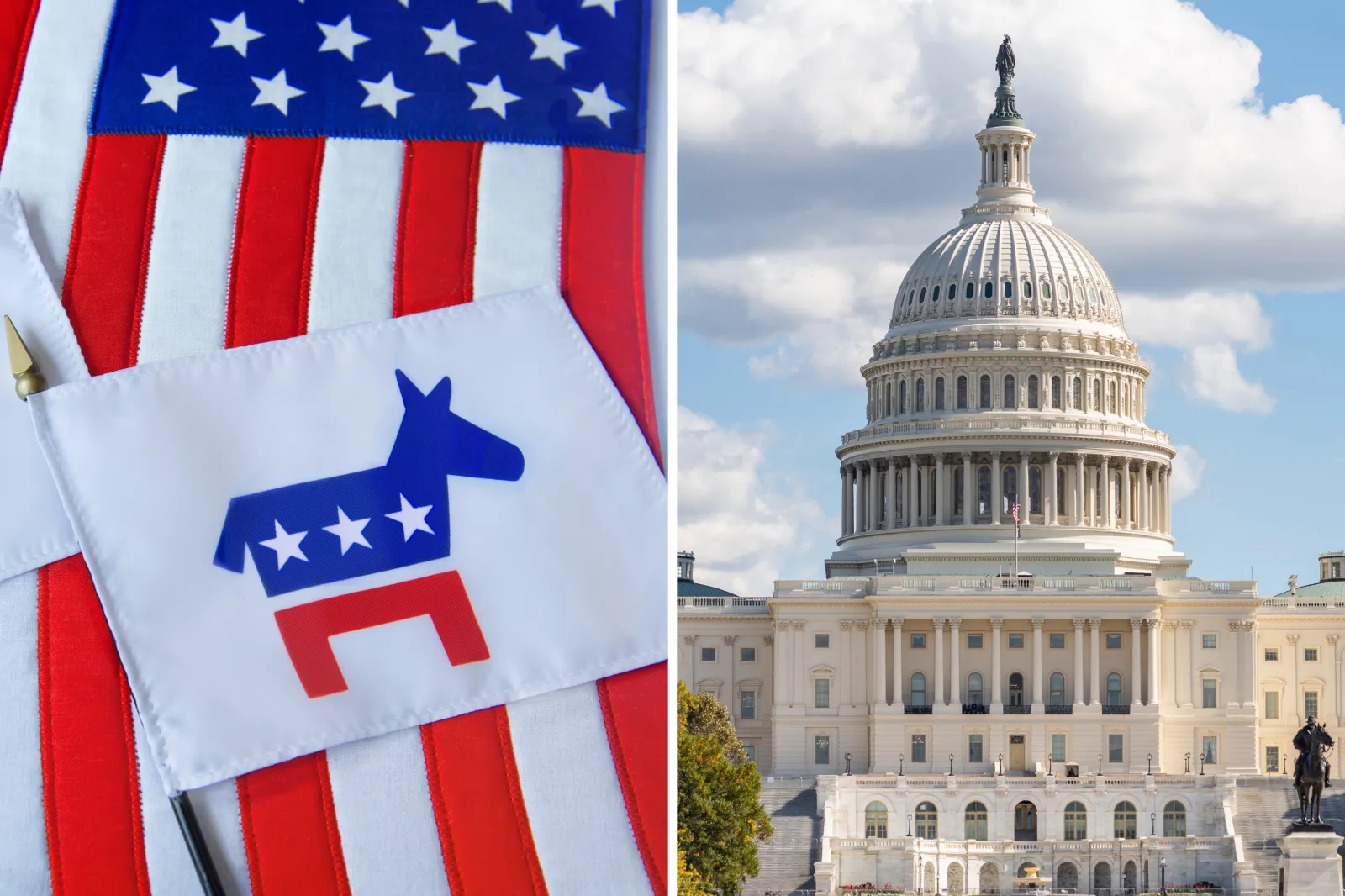
The Democratic Party’s victory in the US midterm elections has introduced fresh uncertainty for financial markets, particularly artificial intelligence stocks and data center companies. However, Wall Street analysts believe political gridlock could prevent major regulatory changes in the near term.
With Democrats securing control of both the House of Representatives and the Senate, investors are reassessing the potential consequences for technology regulation, government spending, and the broader US stock market.
Democratic Midterm Victory Raises Concerns for AI Stocks
Lori Calvasina, head of US equity strategy at RBC Capital Markets, suggested that the election results carried greater significance for stock market investors than previously anticipated.
According to Calvasina, the initial weakness in US equity futures appeared to reflect continued selling pressure in artificial intelligence and large-cap growth stocks rather than a widespread retreat from risk.
The relative resilience of Russell 2000 futures supported this interpretation, suggesting that investors were becoming more selective about their exposure to different market sectors.
Calvasina also highlighted growing public opposition to the rapid expansion of AI infrastructure.
An NBC News exit poll cited in her analysis indicated that 76% of voters opposed the construction of a new data center in their local community.
The findings suggest that resistance to large-scale computing facilities could become an increasingly important political issue.
AI Data Center Expansion Faces Growing Regulatory Pressure
The Democratic victory could lead to greater scrutiny of AI data center construction, particularly in states experiencing rapid infrastructure development.
Major technology companies have committed substantial capital to expanding computing capacity as demand for artificial intelligence services continues to grow.
However, concerns about electricity consumption, water resources, infrastructure expenses, and environmental impacts have increased public opposition to new projects.
Bank of America believes these challenges could become more significant at the state and local levels.
Economist Stephen Juneau suggested that additional regulatory requirements are unlikely to stop the expansion of AI infrastructure entirely.
Nevertheless, stricter rules could increase construction expenses and extend development timelines.
For companies investing billions of dollars in AI facilities, even relatively modest delays could affect profitability and expected investment returns.
Political Gridlock Could Limit Major Policy Changes
Despite the Democratic Party’s control of Congress, analysts expect significant obstacles to sweeping federal legislative reforms.
Bank of America’s central outlook assumes continued political gridlock because Democrats do not hold a sufficiently large Senate majority to override a presidential veto.
As a result, President Donald Trump’s administration would retain considerable influence over the direction of federal legislation.
This political balance could limit the immediate likelihood of major changes to taxation, technology regulation, and government spending.
However, state governments and local authorities may still introduce new restrictions affecting data centers and other infrastructure projects.
Such measures could create different regulatory conditions across the United States, increasing uncertainty for companies operating in multiple jurisdictions.
Bank of America Expects Stock Market Weakness to Be Temporary
Bank of America’s market strategists believe any immediate equity selloff following the election could prove short-lived.
Although investors may initially reduce exposure to technology and AI stocks, the bank does not expect the political shift to fundamentally undermine the broader US equity market.
The investment bank also considers the recent decline in the US dollar a near-term setback rather than evidence of a sustained change in the currency’s longer-term direction.
This assessment suggests that underlying economic conditions, corporate earnings, and Federal Reserve policy could remain more influential than the election results themselves.
Nevertheless, certain sectors may experience additional volatility as investors evaluate the possibility of stricter government oversight.
Democratic Senate Gains Could Reshape Future Tax and AI Policies
Capital Economics expects limited immediate changes to the US economic outlook following the midterm elections.
However, the research firm believes the Democratic Party’s success in traditionally Republican-leaning states could have important longer-term political implications.
The stronger Senate performance may improve Democrats’ prospects of advancing tax increases and tighter artificial intelligence regulations if the party also wins the next presidential election.
Such an outcome could create a significantly different environment for major technology companies and investors.
For now, these possibilities remain longer-term political scenarios rather than confirmed policy changes.
BMO Warns of Greater Volatility in AI Investments
BMO Capital Markets expects the election outcome to increase volatility across artificial intelligence-related stocks.
Investors are likely to remain sensitive to potential regulatory restrictions, rising infrastructure costs, and uncertainty surrounding future AI investment returns.
However, the bank maintains that the fundamental demand for electricity and computing infrastructure remains strong.
The continued expansion of data centers, alongside efforts to rebuild domestic manufacturing capacity, is expected to support long-term power demand.
This suggests that political uncertainty may create short-term market fluctuations without necessarily reversing the broader growth trends supporting AI infrastructure.
Divided Government May Help Stabilize Financial Markets
Lauren Hyslop of Mattioli Woods suggested that investors could eventually interpret the election outcome as a positive development for fiscal discipline.
Greater political constraints may reduce the probability of unexpected changes in government spending, taxation, or regulation.
This could be particularly important as financial markets become increasingly sensitive to federal budget deficits, persistent inflation, and elevated borrowing costs.
A divided government may make it harder to introduce large spending initiatives, potentially reducing some concerns about future government debt issuance.
However, political gridlock could also delay necessary reforms and create uncertainty surrounding the implementation of existing policies.
What the US Midterm Election Results Mean for Investors
The Democratic victory has introduced new political considerations for investors, particularly those exposed to artificial intelligence, technology stocks, and data center infrastructure.
Although tighter regulatory oversight could increase development costs and delay projects, analysts generally expect political gridlock to limit sweeping federal policy changes in the near term.
Meanwhile, the fundamental demand for AI computing capacity and electricity infrastructure remains an important source of longer-term growth.
For the broader US stock market, the election results may ultimately prove less important than corporate earnings, inflation trends, interest rates, and economic growth.
Investors will therefore need to distinguish between short-term political volatility and structural changes that could materially affect company valuations.
The coming months will provide greater clarity about whether Democratic control of Congress leads to meaningful policy adjustments or primarily creates temporary uncertainty across financial markets.