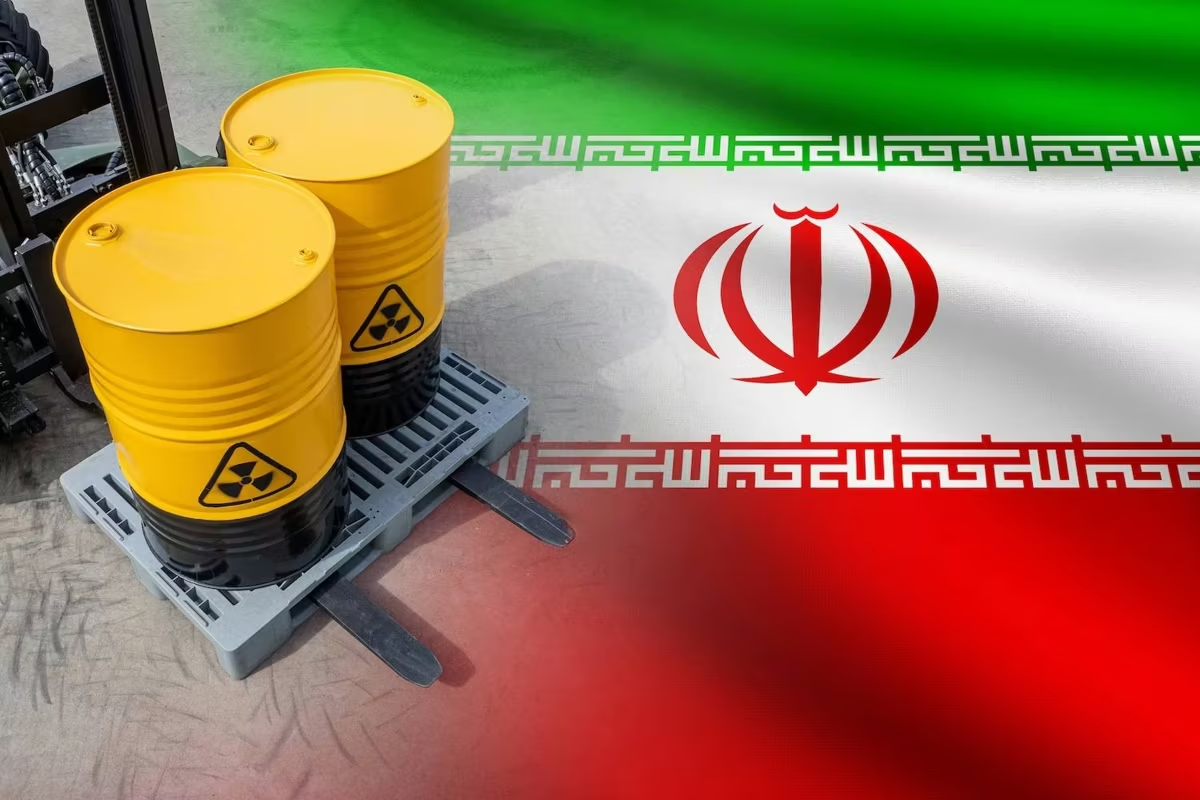
Iran has reaffirmed its refusal to abandon uranium enrichment or surrender its existing uranium stockpile, despite mounting pressure from the United States to scale back its nuclear activities.
According to Iranian state media, Mohammad Eslami, head of the Atomic Energy Organization of Iran, confirmed the country’s position on Thursday. His comments followed renewed U.S. demands for Tehran to make significant reductions to its uranium enrichment capabilities.
The announcement comes as Washington and Tehran continue diplomatic discussions aimed at ending the ongoing conflict and restoring access to the strategically important Strait of Hormuz.
Iran Defends Its Uranium Enrichment Program
Iranian nuclear officials remain firm in their position that uranium enrichment is an essential part of the country’s nuclear industry.
Eslami dismissed renewed American threats against Iranian nuclear facilities, arguing that such warnings were not a new development.
He emphasized that uranium enrichment forms a fundamental part of nuclear technology and is necessary for maintaining a functioning domestic nuclear sector.
According to Eslami, abandoning enrichment would undermine Iran’s ability to develop nuclear science and related technologies.
His statements reinforce Tehran’s longstanding opposition to international demands that it completely dismantle its uranium enrichment capabilities.
However, the disagreement remains a major obstacle to reaching a comprehensive nuclear agreement with Washington.
U.S.-Iran Nuclear Talks Continue Amid Middle East Conflict
Despite their differences over nuclear policy, Iran and the United States have continued exchanging diplomatic proposals in recent weeks.
The negotiations focus on ending the ongoing military conflict and reopening the Strait of Hormuz, a vital shipping corridor for global energy supplies.
Iranian Foreign Minister Abbas Araqchi said Thursday that Tehran was reviewing Washington’s response to its latest proposal.
According to Araqchi, Iran could provide an official response within the coming days.
The Iranian proposal reportedly includes provisions allowing the Strait of Hormuz to reopen within seven days, provided that certain conditions are satisfied.
Restoring shipping through the waterway could help ease pressure on global oil markets, which have faced significant disruptions because of the regional conflict.
Trump Signals Progress in Iran Negotiations
U.S. President Donald Trump offered a more optimistic assessment of the diplomatic situation later Thursday.
Trump said Washington was holding productive discussions with Tehran, suggesting that negotiations were making progress despite unresolved disagreements.
He also stated that the United States would not launch military attacks against Iran before the November U.S. midterm congressional elections.
The comments could temporarily reduce concerns about an immediate military escalation.
Nevertheless, significant differences remain between the two countries, particularly regarding Iran’s nuclear capabilities and uranium stockpile.
As a result, investors and international policymakers continue monitoring the negotiations for signs of a potential agreement.
Western Countries Raise Concerns Over Iran’s Nuclear Activities
Iran’s uranium enrichment program remains a major source of concern for the United States, Israel, and several other Western governments.
These countries have accused Tehran of pursuing capabilities that could eventually support the development of nuclear weapons.
A central concern involves Iran’s decision to enrich uranium to 60% purity, a level significantly higher than what is typically required for civilian nuclear power generation.
Weapons-grade uranium is generally enriched to approximately 90% purity.
Although uranium enriched to 60% is not considered weapons-grade, reaching that level represents a significant technical step toward higher enrichment concentrations.
Western governments argue that these capabilities raise questions about the intended purpose of Iran’s nuclear activities.
However, Tehran has consistently rejected allegations that it is attempting to develop nuclear weapons.
Iranian officials maintain that the country’s nuclear program serves civilian, scientific, and technological purposes.
Iran Signals Possible Flexibility on Uranium Stockpile
Despite refusing to abandon uranium enrichment, Iranian authorities have previously suggested that certain compromises could be possible.
Officials have indicated that Tehran might consider diluting portions of its most highly enriched uranium, potentially reducing the concentration of material currently held in its stockpile.
Such an arrangement could become part of a broader diplomatic agreement involving nuclear restrictions and other negotiated commitments.
However, Iran has not indicated that it is willing to eliminate its uranium enrichment program entirely.
This distinction remains central to the negotiations, as Washington continues pushing for stronger limitations on Iran’s nuclear capabilities.
Iran Nuclear Dispute Keeps Global Markets on Alert
The ongoing disagreement over Iran’s uranium enrichment program carries implications beyond nuclear diplomacy.
Continued uncertainty surrounding U.S.-Iran relations could influence geopolitical risk sentiment, particularly across global energy and financial markets.
The Strait of Hormuz remains especially important because of its role in transporting crude oil and petroleum products from the Middle East to international consumers.
Any progress toward reopening the waterway could help reduce concerns about energy supply disruptions.
Conversely, a breakdown in negotiations or renewed military confrontation could increase volatility in oil prices and other financial assets.
For now, Iran’s refusal to abandon uranium enrichment highlights the challenges facing diplomatic efforts.
Investors will closely watch Tehran’s response to the latest U.S. proposal, future statements from Washington, and developments surrounding the Strait of Hormuz.