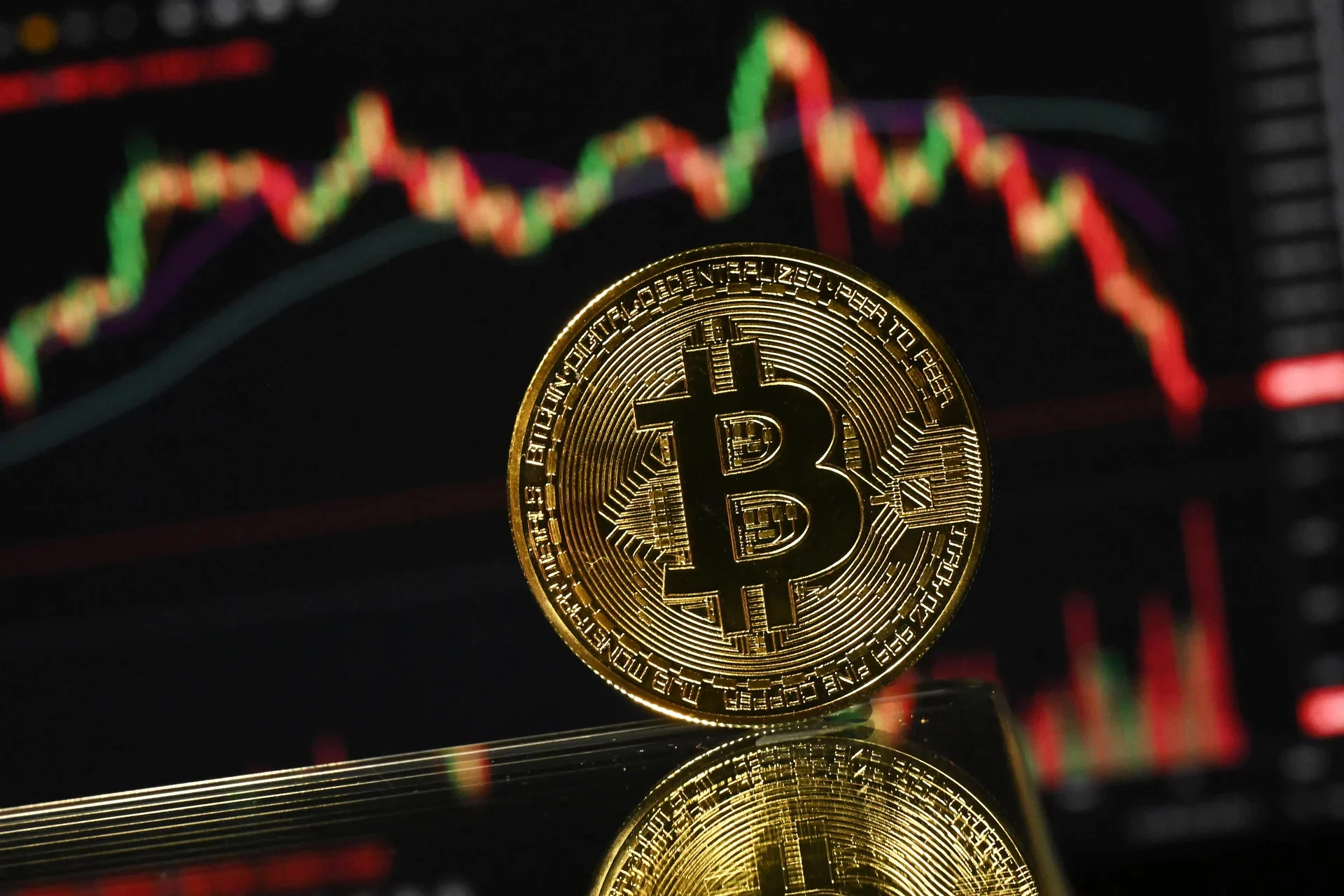
Bitcoin price fell below $81,000 on Thursday, reaching its lowest level in nearly three weeks as renewed fears of military confrontation between the United States and Iran unsettled financial markets.
The cryptocurrency faced growing selling pressure following reports of potential U.S. military strikes against Iran. Meanwhile, rising oil prices, higher Treasury yields, and expectations of further Federal Reserve interest rate increases added to market uncertainty.
Bitcoin also slipped below the important $82,500 support level, raising concerns about the sustainability of its recent recovery.
Bitcoin Price Falls as U.S.-Iran Tensions Escalate
Bitcoin (BTC) declined toward $81,000 during Thursday’s Wall Street trading session, according to TradingView data from the Bitstamp exchange.
The move marked Bitcoin’s weakest price level since September 21, highlighting renewed bearish pressure across the cryptocurrency market.
Geopolitical concerns intensified after NBC News reported that the United States could be preparing additional military strikes against Iran.
The report cited a Pentagon official and another source familiar with the situation, fueling uncertainty over the possibility of renewed military confrontation.
Consequently, energy prices climbed as traders assessed the potential impact on global oil supplies.
West Texas Intermediate (WTI) crude rose to $93.20 per barrel, its highest level since October 2. Meanwhile, Brent crude advanced to $105.88 per barrel.
Higher energy prices increased concerns about inflation and the possibility of further monetary tightening by the Federal Reserve.
Trump Comments on Potential Iran Peace Agreement
Speaking at a rally in San Antonio, Texas, President Donald Trump indicated that diplomatic efforts involving Iran were continuing.
Trump said Middle East envoy Steve Witkoff was making progress toward a potential agreement, although the president expressed limited enthusiasm for a diplomatic settlement.
Nevertheless, Trump suggested that the conflict could end relatively soon.
Despite those comments, financial markets remained cautious as investors evaluated the possibility of further military escalation.
U.S. Treasury Yields Surge as Inflation Concerns Return
Rising oil prices also contributed to renewed pressure in the U.S. bond market.
The 30-year U.S. Treasury yield climbed to 5.73%, reaching its highest level in approximately 24 years, before retreating to around 5.65%.
Investors remained concerned that prolonged geopolitical tensions could keep energy prices elevated and complicate efforts to control inflation.
Higher Treasury yields can also reduce demand for risk-sensitive assets, including cryptocurrencies, as investors reassess borrowing costs and potential returns.
As a result, Bitcoin faced additional pressure from an increasingly challenging macroeconomic environment.
Federal Reserve Signals More Interest Rate Hikes
Comments from Federal Reserve Governor Christopher Waller reinforced expectations that U.S. monetary policy could tighten further.
Speaking at a central banking forum in Istanbul, Turkey, Waller indicated that additional interest rate increases may be necessary to return inflation toward the Fed’s 2% target.
However, he emphasized that further rate hikes would not necessarily need to occur at consecutive policy meetings.
Instead, the timing would depend on incoming economic data and the broader inflation outlook.
Markets Increase Bets on December Fed Rate Hike
According to CME Group’s FedWatch Tool, financial markets raised their expectations for another Federal Reserve interest rate increase in December.
The probability of a 25-basis-point rate hike exceeded 70% on Thursday.
Meanwhile, expectations for the October Federal Open Market Committee meeting continued to favor keeping interest rates unchanged within the current 3.75% to 4.00% target range.
These developments created additional uncertainty for Bitcoin and other speculative assets.
Higher interest rates generally make traditional yield-bearing investments more attractive, potentially reducing investor appetite for cryptocurrencies.
Bitcoin’s $82,500 Support Level Faces Critical Test
Beyond geopolitical and macroeconomic concerns, Bitcoin traders are closely monitoring the cryptocurrency’s technical outlook.
The $82,500 price level has emerged as an important reference point for Bitcoin’s broader market structure.
Trader and market analyst Rekt Capital highlighted this level as a critical threshold that could help determine the direction of Bitcoin’s next major price movement.
According to the analyst, Bitcoin remains in a transitional market phase, with the $82,500 region playing a significant role in determining whether its recovery can continue.
The level has attracted particular attention because of similarities between Bitcoin’s current price structure and historical market developments following the 2022 cryptocurrency bear market.
Bitcoin had previously recovered from multiyear lows near $57,000, making the sustainability of its rebound an important consideration for traders.
A sustained move below $82,500 could strengthen bearish sentiment. Conversely, a recovery above that level may help restore confidence among buyers.
Crypto Liquidations Reach $430 Million
Bitcoin’s decline also triggered significant liquidations across the broader cryptocurrency market.
According to CoinGlass data, long-position liquidations reached approximately $430 million as Bitcoin traded below $82,000.
These liquidations occur when leveraged bullish positions are automatically closed because traders can no longer meet margin requirements.
Large liquidation events can intensify selling pressure, particularly during periods of heightened volatility.
Consequently, Bitcoin’s decline contributed to broader weakness across cryptocurrency markets as leveraged traders faced forced position closures.
Bitcoin Price Outlook: What Comes Next?
Bitcoin’s near-term direction remains closely tied to geopolitical developments, Federal Reserve policy expectations, and important technical support levels.
Further escalation between the United States and Iran could increase volatility across energy markets and reinforce inflation concerns.
Meanwhile, expectations of additional Federal Reserve interest rate hikes may continue to weigh on risk appetite.
From a technical perspective, the $82,500 level remains a key area to monitor. A sustained recovery above this threshold could improve short-term sentiment, while continued weakness may encourage additional selling.
For now, investors will be watching developments in the Middle East, U.S. Treasury yields, and upcoming economic data for clues about Bitcoin’s next major move.