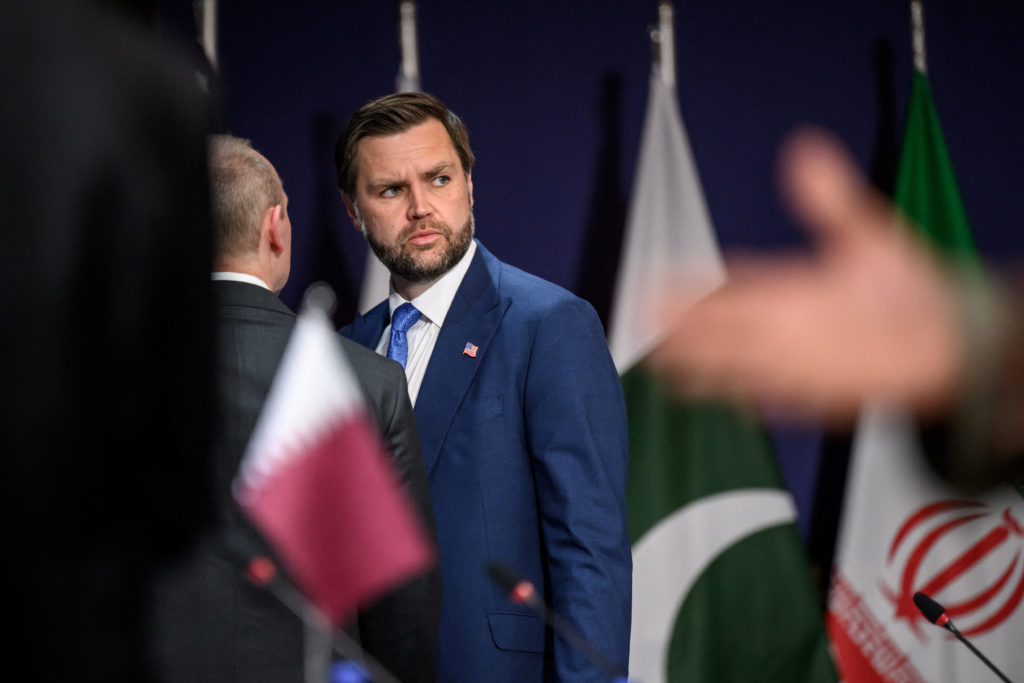
U.S. Vice President JD Vance said Iran must significantly reduce its nuclear enrichment capacity if it wants to reach an agreement with Washington and help bring the seven-month conflict to an end.
Vance said the United States is looking for concrete nuclear concessions rather than promises about what Tehran may do in the future. His comments suggest that Iran’s enrichment program will remain a central issue in any potential diplomatic settlement.
Vance Calls for Concrete Nuclear Concessions
Speaking in an interview with Reuters, Vance said Washington would not consider verbal commitments alone sufficient.
Instead, the United States wants Iran to take measurable steps to reduce its uranium enrichment capacity.
Vance questioned Iran’s need to maintain uranium enriched to 60% if Tehran does not intend to develop a nuclear weapon.
He argued that reducing enrichment would provide tangible evidence of Iran’s commitment to limiting its nuclear ambitions.
Iran Nuclear Enrichment Remains Central to Negotiations
Iran’s nuclear program has become one of the main obstacles to reaching a broader diplomatic agreement.
Washington wants Tehran to demonstrate through action that its nuclear activities will not lead to the development of a nuclear weapon.
The U.S. position therefore places significant emphasis on reducing Iran’s enrichment capabilities as part of any potential settlement.
Vance said Washington remains open to negotiations, but any agreement would require meaningful action from Tehran rather than assurances alone.
U.S. and Iran Exchange Proposals to End Conflict
The United States and Iran have exchanged proposals in recent weeks as both sides explore possible terms for ending the conflict.
Negotiations have also focused on reopening the Strait of Hormuz, one of the world’s most important routes for oil and gas shipments.
Disruptions around the waterway have had wider consequences for global energy markets and remain an important part of the negotiations.
Trump Rejects Iran’s Latest Proposal
President Donald Trump has rejected Tehran’s latest offer.
The U.S. president has also warned that military operations could intensify following the November midterm elections if diplomatic efforts fail to produce an agreement.
Despite those tensions, Vance indicated that Washington has not closed the door to negotiations with Iran.
Washington Questions Iran’s Decision-Making Structure
Another challenge facing the negotiations is uncertainty within Washington over Iran’s decision-making process.
Vance said U.S. officials remain unsure about who ultimately has the authority to make major decisions in Tehran.
Washington has held discussions with Iranian President Masoud Pezeshkian and Foreign Minister Abbas Araqchi.
However, U.S. officials continue to question how final decisions are made within Iran’s political leadership.
Nuclear Issue Could Determine Path to an Agreement
Iran’s nuclear enrichment capacity is likely to remain a critical issue as negotiations continue.
The United States is demanding measurable reductions, while Tehran’s response could determine whether diplomacy gains momentum or the conflict continues.
For now, Washington appears willing to pursue an agreement, but Vance has made clear that significant nuclear concessions from Iran would be required for a settlement.