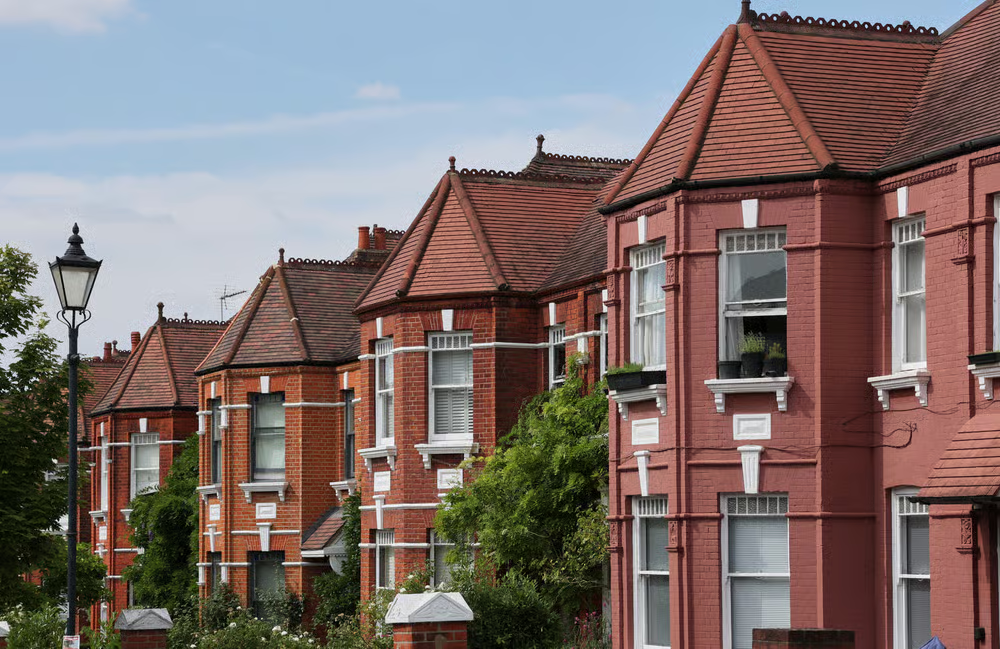
UK house prices were unchanged in September as the housing market remained resilient despite higher mortgage rates and continued economic uncertainty.
According to Lloyds Banking Group, average property prices were broadly stable compared with August, when they fell by 0.3%.
UK House Prices Remain Flat in September
The average UK home was valued at £298,441 in September, compared with £298,395 in August.
On an annual basis, house prices were also unchanged. Over the latest three-month period, prices slipped by 0.2%.
Lloyds mortgages director Andrew Asaam said the housing market had remained relatively resilient during a period of elevated mortgage rates.
Household spending has also held up better than many economists expected, despite higher energy costs and wider cost-of-living pressures.
Mortgage Rates Continue to Weigh on Buyers
Higher mortgage rates and economic uncertainty are encouraging some potential buyers to remain cautious.
However, Lloyds said new buyer enquiries have climbed to their highest level since February. This could help support housing market activity in the coming months.
Even so, the bank expects any changes in UK house prices to remain relatively modest.
The outlook will also depend on how households view current cost-of-living pressures and whether consumers believe they are temporary or likely to persist.
First-Time Buyer Prices Remain Stable
The average price paid by first-time buyers was largely unchanged in September.
First-time buyer properties averaged £236,779, compared with £236,568 in August. However, this remained below the February record of £241,244.
Lloyds said government support schemes and low-deposit mortgages could provide additional assistance to buyers.
The government’s Your First Home scheme is expected to target eligible new-build properties in England, although further details are due around the October Budget.
Northern Ireland Leads UK House Price Growth
Regional performance continued to vary significantly across the UK.
Northern Ireland recorded the strongest annual house price growth, with prices rising 7.4%, up from 6.8% previously. The average property price reached a record £231,917.
Scotland also performed strongly, with prices increasing 3.4% to an average of £223,330.
In Wales, average prices rose 1.2% to £231,287.
Northern England Outperforms Southern Regions
Several regions in northern England continued to record annual house price growth.
The North East saw prices rise 2.4% to an average of £184,546, while the North West recorded growth of 1.9% to £248,932.
The West Midlands posted a smaller increase of 0.8%, taking average prices to £260,892.
By contrast, the housing market remained under pressure across much of southern England, where higher property values continue to create affordability challenges.
London House Prices Fall 2.2%
Greater London recorded one of the largest annual declines.
Average London house prices fell 2.2% to £531,548.
The South East also experienced a 2.1% decline, bringing the average property price to £380,829.
Meanwhile, prices in Eastern England dropped 1.6% to an average of £330,151.
These declines highlight the growing affordability gap between higher-priced southern regions and more affordable parts of the UK.
UK Property Transactions Decline
Activity across the UK property market also weakened in August.
Seasonally adjusted residential property transactions fell 1.5% to 95,220, according to provisional HMRC estimates.
Without seasonal adjustment, transactions declined by 10.6%.
Over a three-month period, residential transactions were down 3.9% and stood 1.9% below the level recorded a year earlier.
Mortgage Approvals Point to Further Weakness
Bank of England figures also showed a slowdown in mortgage approvals.
Mortgage approvals for house purchases fell to 54,918, representing a 1.8% decline from July.
Compared with the same period a year earlier, approvals were down 16%.
Lloyds said the decline could point to further softening in housing market activity.
Buyer Demand Improves but Remains Weak
Data from the Royal Institution of Chartered Surveyors also showed some signs of improvement in August, although overall market conditions remained subdued.
The balance for new buyer enquiries improved to -19% from -26%.
Agreed sales also improved to -17% from -28%, while new property instructions increased to zero from -2%.
Although these indicators remain weak, the improvement suggests that some areas of the UK housing market may be beginning to stabilise.
UK Housing Market Outlook Remains Cautious
The latest figures suggest that UK house prices are holding up despite higher borrowing costs and weaker transaction volumes.
Demand remains under pressure, particularly in more expensive regions such as London and the South East.
However, improving buyer enquiries and relatively stable national property prices indicate that the market has not experienced a significant downturn.
For now, mortgage rates, affordability and economic uncertainty are likely to remain the main factors influencing UK house prices.