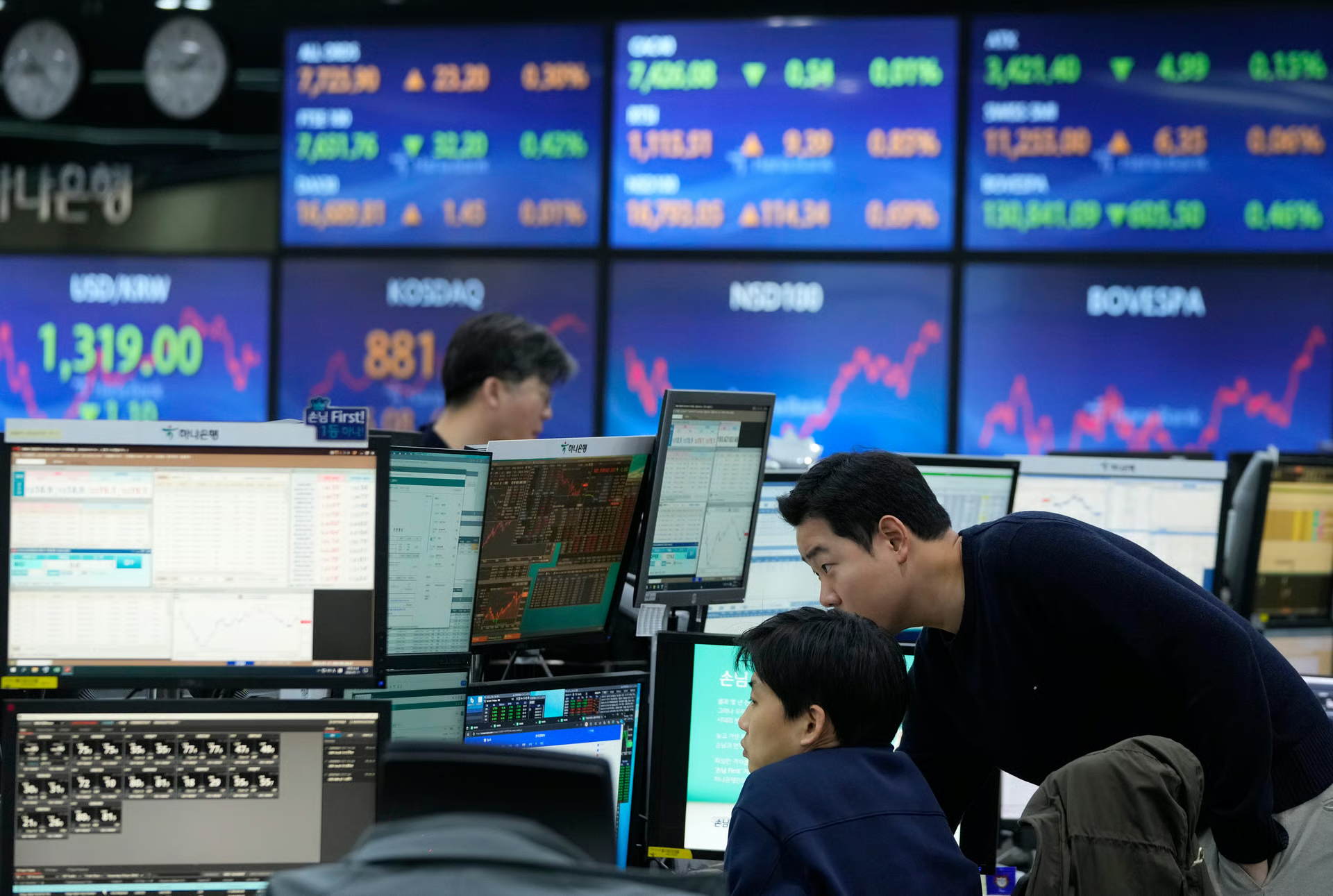
Asian stocks moved higher on Monday after softer U.S. labor-market data reduced expectations for additional Federal Reserve interest rate hikes.
The shift in rate expectations helped lift technology shares and provided some relief to global bond markets.
The MSCI Asia Pacific Index rose around 1.1%, while Japan’s Nikkei 225 surged 2.6% to 70,074. Markets in China and South Korea were closed for public holidays.
U.S. Stock Futures Move Higher
U.S. equity futures also advanced during Asian trading.
Nasdaq 100 futures gained around 0.4% to 31,187.25, while S&P 500 futures edged approximately 0.1% higher.
The gains followed a record close for the Nasdaq 100 on Friday, extending the strong performance of technology and artificial intelligence-related stocks.
Investor sentiment improved as markets reassessed the outlook for U.S. interest rates.
Weak U.S. Jobs Data Reduce Fed Hike Bets
Friday’s U.S. employment report showed that companies added fewer workers than economists expected in September.
Wage growth also slowed, suggesting that pressure in the labor market may be easing.
Following the report, money markets priced in a probability of less than 25% for an October Federal Reserve rate hike.
The change in expectations provided relief after months of concern that persistent inflation would force the Fed to keep raising borrowing costs.
Treasury Yields Ease
U.S. government bonds also strengthened as expectations for additional monetary tightening declined.
The U.S. 10-year Treasury yield fell around two basis points to 5.25%.
The move offered some relief following an extended bond-market selloff driven by concerns over inflation, rising government spending and increased corporate borrowing.
Companies have also been raising significant amounts of capital to finance the rapid expansion of artificial intelligence infrastructure.
Japan Stocks Surge as Technology Shares Rally
Japan was one of the strongest-performing markets in Asia.
The Nikkei 225 jumped 2.6%, while the broader TOPIX gained around 1%.
Technology stocks led the advance as investors reacted positively to lower U.S. rate expectations and improving global risk appetite.
Japan’s rally also benefited from the strong performance of U.S. technology stocks at the end of last week.
TSMC Gains on AI and Semiconductor Optimism
Taiwan Semiconductor Manufacturing Company rose around 3% following reports of a potential collaboration with Elon Musk’s Terafab.
The move added to broader strength across Asia’s semiconductor sector.
Investor optimism surrounding artificial intelligence remains an important driver for chipmakers, especially after the Nasdaq 100 reached another record high.
Nippon Paint Rises on Acquisition Deal
Gains in Japan extended beyond the technology sector.
Nippon Paint shares rose around 1% after the company agreed to acquire Akzo Nobel’s Southeast Asian operations.
The transaction is valued at approximately $1.35 billion.
The deal added to signs of renewed corporate activity in the region while Japanese equities benefited from improving market sentiment.
Asian Markets Deliver Mixed Performance
Elsewhere, performance across Asian markets was mixed.
Hong Kong’s Hang Seng Index fell around 0.4%, while Singapore’s Straits Times Index gained approximately 0.3%.
Australia’s S&P/ASX 200 also rose around 0.3%, while Thailand’s SET Index gained approximately 0.5%.
Malaysia’s KLCI edged higher, while India’s Nifty 50 futures remained broadly unchanged.
Markets in China and South Korea were closed for holidays.
Oil Prices Retreat After Early Gains
Oil prices reversed an earlier advance during the session.
Brent crude futures for December delivery fell around 0.6% to $101.60 per barrel after trading above $103 earlier.
Prices initially rose following news that Saudi-backed forces in Yemen had launched an operation aimed at retaking territory controlled by the Iran-aligned Houthis.
However, crude later moved lower as traders reassessed the potential impact of the conflict on regional energy supplies.
Asian Market Outlook Improves, but Risks Remain
The combination of weaker U.S. employment data, lower Treasury yields and renewed strength in technology stocks has improved investor sentiment across Asia.
Reduced expectations for an immediate Fed rate hike could continue to support risk assets, particularly technology and growth stocks.
However, high long-term bond yields, instability in European debt markets and ongoing geopolitical tensions remain important risks.
Investors will continue to monitor U.S. economic data and Federal Reserve signals for clues about the next direction of global interest rates.