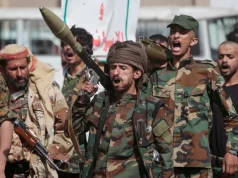
Yemen’s Saudi-backed, internationally recognised government announced on Sunday that it had launched a major military offensive aimed at recapturing all territory controlled by the Iran-backed Houthis.
The campaign marks a significant new phase in Yemen’s long-running conflict, which has increasingly become linked to wider regional tensions involving Iran, the United States and Israel.
Yemen Government Vows to Retake Houthi Territory
Rashad al-Alimi, head of Yemen’s Presidential Leadership Council, said the offensive would continue until government forces had regained control of the country.
In a televised address, Alimi said the campaign would continue until Yemen was freed from Houthi control.
A military spokesman later called on Houthi forces to surrender their weapons.
Houthis Retain Control of Sanaa and Northwest Yemen
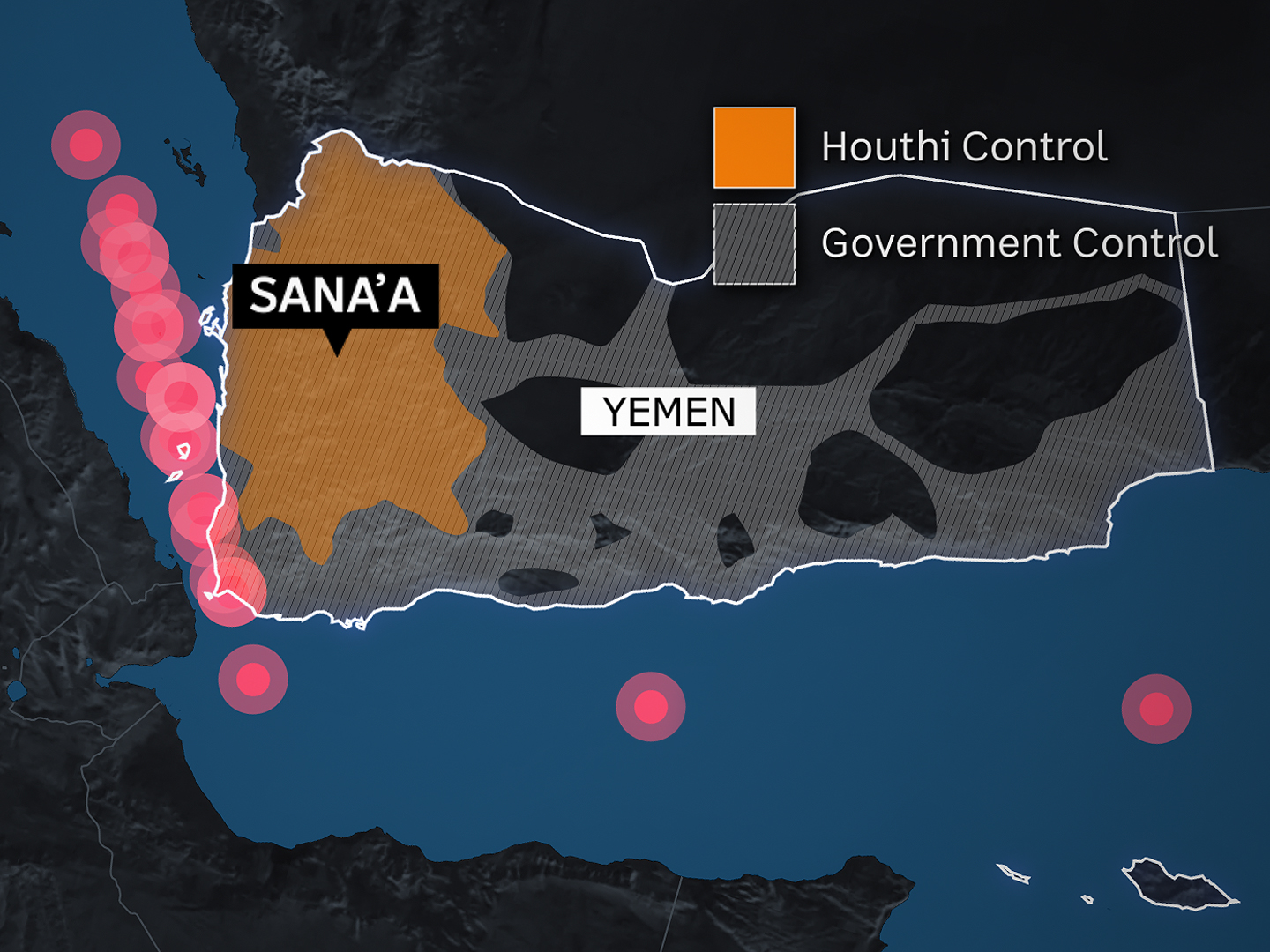
The Houthis have controlled the capital, Sanaa, and much of Yemen’s heavily populated northwest since 2014.
Their position strengthened further last month after they launched a surprise offensive.
That operation allowed Houthi forces to seize territory around the Bab el-Mandeb Strait and approximately 150 kilometres of coastline along the Red Sea.
Control of the area gives the group additional influence over one of the world’s most important maritime trade routes.
Houthis Claim Attacks on Saudi Aramco Sites
Houthi military spokesman Yahya Saree said the group launched ballistic missiles and drones at Saudi Aramco facilities in Riyadh and the Khurais region.
He said the attacks were carried out in response to around 60 Saudi air strikes over a 24-hour period.
The Saudi-led coalition disputed the Houthi account, describing it as misleading.
Saudi authorities and Saudi Aramco had not confirmed whether a fire reported at an Aramco refinery on Saturday was connected to an attack.
Saudi Arabia Announces New Yemen Funding
Saudi Arabia also announced additional financial support for Yemen’s internationally recognised government.
The Saudi Press Agency said Riyadh would provide another 224 million riyals, equivalent to roughly $59.8 million.
Yemeni Prime Minister Shaya al-Zindani also called on the United Nations to increase its humanitarian response as displacement rises.
The renewed fighting has added further pressure to an already severe humanitarian situation.
Strait of Hormuz Remains a Major Regional Flashpoint
Regional tensions are also affecting the Strait of Hormuz.
Iranian Parliament Speaker Mohammad Bagher Ghalibaf said the strait would remain closed until Washington accepted seven conditions linked to the Islamabad Memorandum.
Later, Iranian Deputy Foreign Minister Kazem Gharibabadi said the United States had responded to Iran’s seven-day proposal through intermediaries.
The response is now under review by Iranian officials.
Iran Pushes Plan to End Fighting
Iranian Foreign Minister Abbas Araghchi said the proposal is designed to end the conflict, reopen the Strait of Hormuz and restart negotiations toward a broader peace agreement.
The terms are said to closely resemble a June memorandum that collapsed after fighting resumed in July.
Separately, the UK Maritime Trade Operations agency said a tanker in the Strait of Hormuz had been struck by an unidentified projectile.
The vessel’s crew was reported to be safe.
Iran Appoints Acting Oil Minister
Iranian President Masoud Pezeshkian also appointed Hamid Bord as acting oil minister.
Bord previously served as head of the National Iranian Oil Company.
The appointment followed the resignation of Mohsen Paknejad, according to Iranian state media.
OPEC+ Keeps November Oil Production Targets Unchanged
OPEC+ agreed on Sunday to maintain its current oil production targets for November.
The decision was broadly in line with market expectations, with further major policy changes considered unlikely before next year.
Several Gulf producers remain well below their production targets because of export disruptions linked to regional conflict.
Exports from some producers are running at only 60% to 80% of normal levels.
OPEC+ Production Remains Well Below Prewar Levels
The seven core OPEC+ members produced around 25 million barrels per day in August.
That was approximately 5 million barrels per day below prewar production levels.
The group has also delayed its capacity review for 2027 production quotas.
OPEC+ is scheduled to meet again on November 1.
Regional Conflict Keeps Oil and Shipping Risks Elevated
The new Yemen offensive adds another layer of uncertainty to an already fragile regional environment.
Fighting around Yemen, continued tensions involving Iran and risks to shipping routes such as Bab el-Mandeb and the Strait of Hormuz could remain important drivers for oil prices and global trade.
Investors and governments are likely to monitor the situation closely for signs of further escalation or disruption to energy supplies.