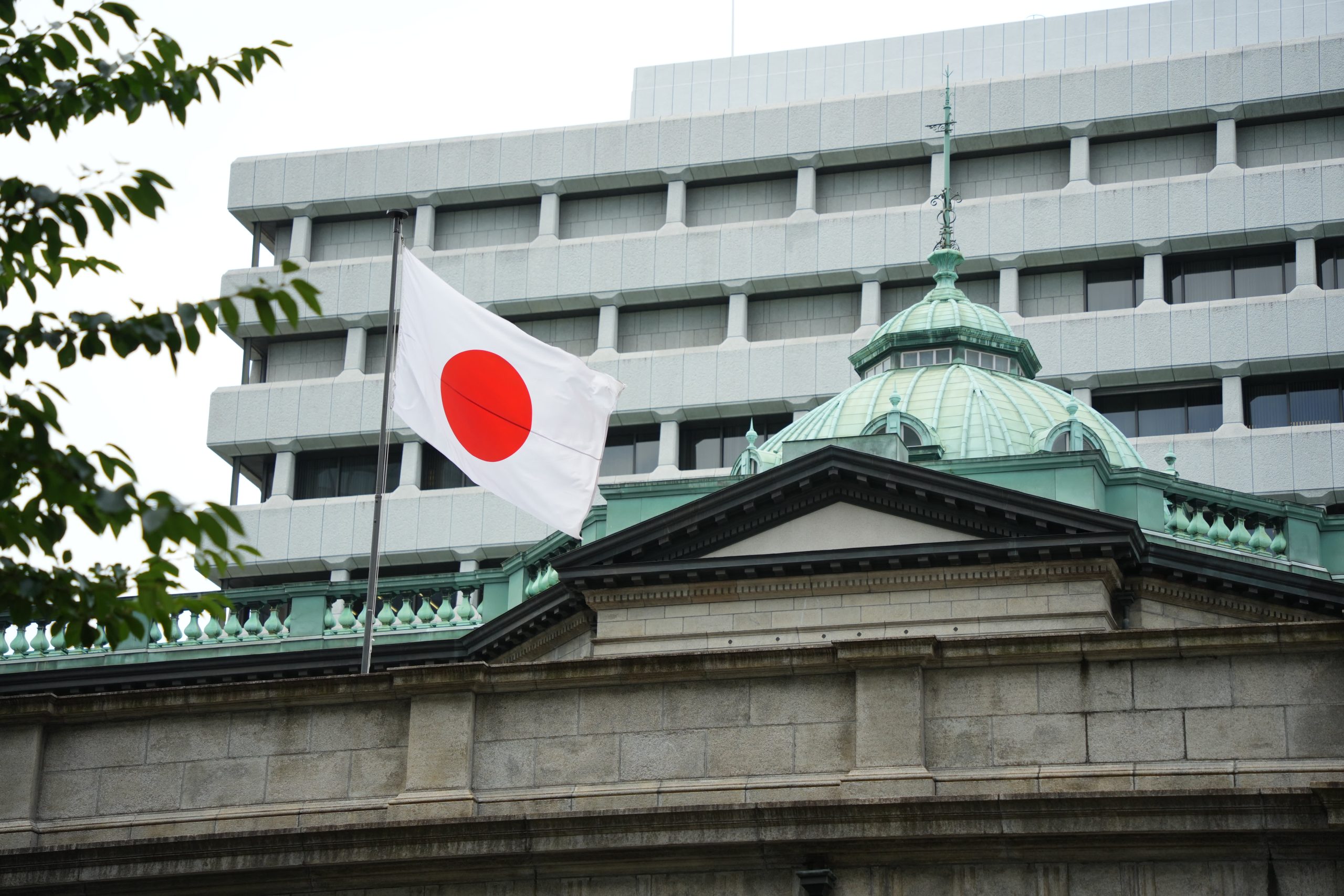
The Bank of Japan is widely expected to raise interest rates by 25 basis points when its two-day policy meeting concludes on September 18.
Markets expect the BOJ to increase its benchmark rate to 1.25%, which would take borrowing costs to their highest level since 1993.
The move would also mark the central bank’s sixth rate increase since it began moving away from ultra-loose monetary policy in 2024.
Sticky Inflation Supports Another BOJ Rate Hike
Expectations for another BOJ rate hike have strengthened as Japanese inflation remains persistent.
Underlying inflation has moved back toward the Bank of Japan’s 2% annual target.
Higher oil and gas prices linked to geopolitical tensions have contributed to renewed price pressures.
Government fuel subsidies have helped limit the impact on consumer inflation. However, producer prices have risen sharply.
Japan’s producer price inflation reached a three-and-a-half-year high in August, raising concerns that higher business costs could eventually feed into consumer prices.
Wage Growth Could Keep Inflation Elevated
Strong wage growth is another factor supporting expectations for tighter monetary policy.
Recent data has shown resilience in Japanese household income.
That could make it easier for companies to pass higher production costs on to consumers.
If businesses continue raising prices while wages remain firm, inflation could stay above the BOJ’s preferred level for longer.
This would increase pressure on policymakers to continue normalizing interest rates.
Yen Weakness Adds Pressure on the BOJ
Persistent weakness in the Japanese yen has also strengthened the case for higher rates.
Japan and the United States recently carried out coordinated intervention in currency markets to support the yen.
A weaker currency makes imported goods more expensive and can add to inflationary pressure.
As a result, stabilizing the yen has become an increasingly important consideration for Japanese policymakers.
Ueda’s Guidance May Matter More Than the Rate Hike
Because a 25-basis-point increase is already widely expected, investors may focus more closely on comments from BOJ Governor Kazuo Ueda.
Ueda is scheduled to speak shortly after the rate decision.
Markets will be looking for clues about whether the Bank of Japan plans to accelerate the pace of future rate increases.
Analysts at OCBC have suggested that the key question is whether the central bank signals faster policy normalization in response to persistent inflation.
BOJ Faces Political and Economic Challenges
The Bank of Japan must also balance inflation risks against concerns about economic growth.
Prime Minister Sanae Takaichi has supported looser monetary conditions as part of efforts to strengthen the Japanese economy.
At the same time, concerns about Japan’s fiscal position have increased because of planned subsidies and tax reductions.
Rising Japanese government bond yields have added another layer of pressure.
The benchmark 10-year yield recently reached its highest level in more than three decades.
How Could USD/JPY React to the BOJ Decision?
The USD/JPY pair could move lower if the Bank of Japan raises rates and signals further tightening.
A decline in USD/JPY would indicate a stronger Japanese yen against the U.S. dollar.
Higher Japanese interest rates generally make yen-denominated assets more attractive and can support the currency.
However, much will depend on the tone of Ueda’s comments.
If the BOJ raises rates but avoids signaling further tightening, the yen could face renewed pressure.
Markets Watch for a Hawkish BOJ Surprise
Money market rates have already risen sharply in recent months.
This means investors may be expecting the Bank of Japan to maintain a relatively aggressive stance.
If the central bank fails to confirm expectations for additional tightening, the yen could weaken even after a rate increase.
Conversely, stronger guidance on future hikes could provide additional support for the currency.
How Could the Nikkei 225 React?
Higher interest rates could create headwinds for Japanese stocks.
Tighter monetary policy reduces liquidity and can make risk assets less attractive.
Technology shares may be especially sensitive because higher borrowing costs can put pressure on growth-stock valuations.
Tech companies have played an important role in supporting the Nikkei 225 this year.
Nikkei Remains Strong Despite Recent Weakness
The Nikkei 225 remains up around 24% in 2026, despite recent weakness in technology shares.
The index has also moved below the record highs reached earlier in the year.
If the Bank of Japan adopts a more hawkish stance, equity markets could face additional pressure.
However, a measured approach to future rate hikes may help limit the downside.
Markets Focus on Ueda’s Next Signal
The September BOJ decision is therefore about more than whether rates rise by 25 basis points.
The main focus will be on the future path of Japanese monetary policy.
Investors will closely watch Ueda’s comments for signals on inflation, the yen and the pace of additional rate increases.
For USD/JPY and the Nikkei 225, the tone of the BOJ’s guidance could ultimately have a larger market impact than the expected rate hike itself.