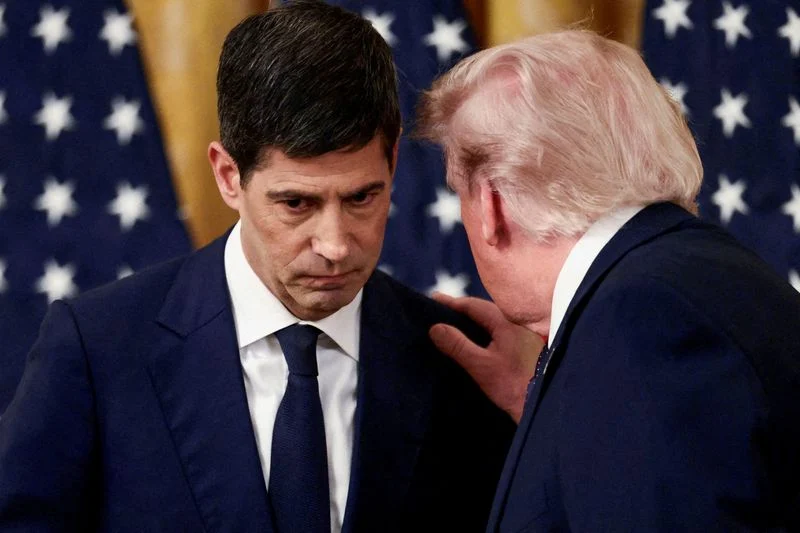
U.S. President Donald Trump sharply criticized the Federal Reserve after policymakers raised interest rates, putting fresh attention on his relationship with Fed Chair Kevin Warsh.
Trump has repeatedly pushed for significantly lower borrowing costs. Following Wednesday’s decision, he argued that U.S. interest rates should be 1% or lower and called on the central bank to cut rates quickly.
Trump Pushes Fed for Lower Interest Rates
In a post on Truth Social, Trump renewed his demand for substantially lower U.S. interest rates.
His comments represented one of his strongest criticisms of monetary policy since Warsh, whom Trump selected to lead the central bank, took office.
Despite disagreeing with the Fed’s decision, Trump later told reporters that he continued to have confidence in Warsh.
Trump said he had spoken with the Fed chair and suggested that Warsh should vote alongside the broader Federal Open Market Committee because the decision would otherwise have gone ahead regardless.
Fed Raises Rates by 25 Basis Points
The Federal Reserve raised interest rates by 25 basis points on Wednesday, bringing the federal funds target range to 3.75%–4.00%.
The Federal Open Market Committee approved the decision unanimously in a 12-0 vote. It marked the first U.S. interest rate increase in more than three years and the first hike under Warsh’s leadership.
The Fed said economic activity continued to expand at a solid pace. However, policymakers remain concerned about inflation, which continues to run above the central bank’s 2% target.
According to the Fed, tighter monetary policy should help bring inflation back toward its target more quickly.
Warsh Defends the Fed’s Decision
Warsh defended the rate increase following the meeting, emphasizing that inflation remains too high and has persisted for longer than policymakers would like.
He also said recent inflation data had not provided enough evidence that underlying price pressures were improving.
Warsh has stressed that the Federal Reserve will remain focused on restoring price stability while assessing economic conditions as new data becomes available.
His position places him in a difficult policy environment. Trump continues to favor much lower borrowing costs, while Fed officials are concerned that persistent inflation could require tighter monetary policy.
More Fed Rate Hikes Could Follow
The latest Federal Reserve projections suggest that Wednesday’s increase may not be the final rate hike of 2026.
Most policymakers indicated that they expect at least one additional quarter-percentage-point increase before the end of the year.
Warsh, however, has been reluctant to provide detailed forward guidance about future interest rate decisions. Instead, he has emphasized that monetary policy should respond to economic conditions as they develop.
That approach means upcoming inflation, employment and economic growth data could play a major role in determining the Fed’s next move.
Trump Links Rates to US Trade Deficits
Trump also renewed his criticism of U.S. trade deficits while discussing Federal Reserve policy.
The president argued that the United States continues to run large deficits with many trading partners and again connected the issue with his demands for lower borrowing costs.
Trump has previously threatened tougher trade measures against countries running large surpluses with the United States.
The comments highlight how interest rates and trade policy have become increasingly prominent parts of the administration’s broader economic agenda.
Fed Independence Remains in Focus
Warsh took over as Federal Reserve chair in June after being selected by Trump earlier in the year to replace Jerome Powell.
During the transition, Warsh pledged to preserve the central bank’s independence when setting monetary policy while maintaining communication with the White House on broader economic issues.
Since taking office, Warsh initially supported keeping rates unchanged. However, persistent inflation eventually led policymakers to conclude that tighter monetary policy was necessary.
When asked whether he planned to discuss Wednesday’s decision directly with Trump, Warsh declined to provide details about any conversations with the president.
Markets Watch Trump-Fed Tensions
The disagreement between Trump and the Federal Reserve adds another layer of uncertainty for financial markets.
Higher interest rates can affect stocks, bonds, the U.S. dollar, gold and cryptocurrencies by increasing borrowing costs and changing investor expectations for economic growth and inflation.
Following Wednesday’s decision, the U.S. dollar strengthened, while short-term Treasury yields moved higher. Gold also fell as investors reacted to the prospect of additional monetary tightening.
Investors will now closely watch upcoming inflation data and comments from Fed officials for clues about whether another rate hike could arrive before the end of 2026.