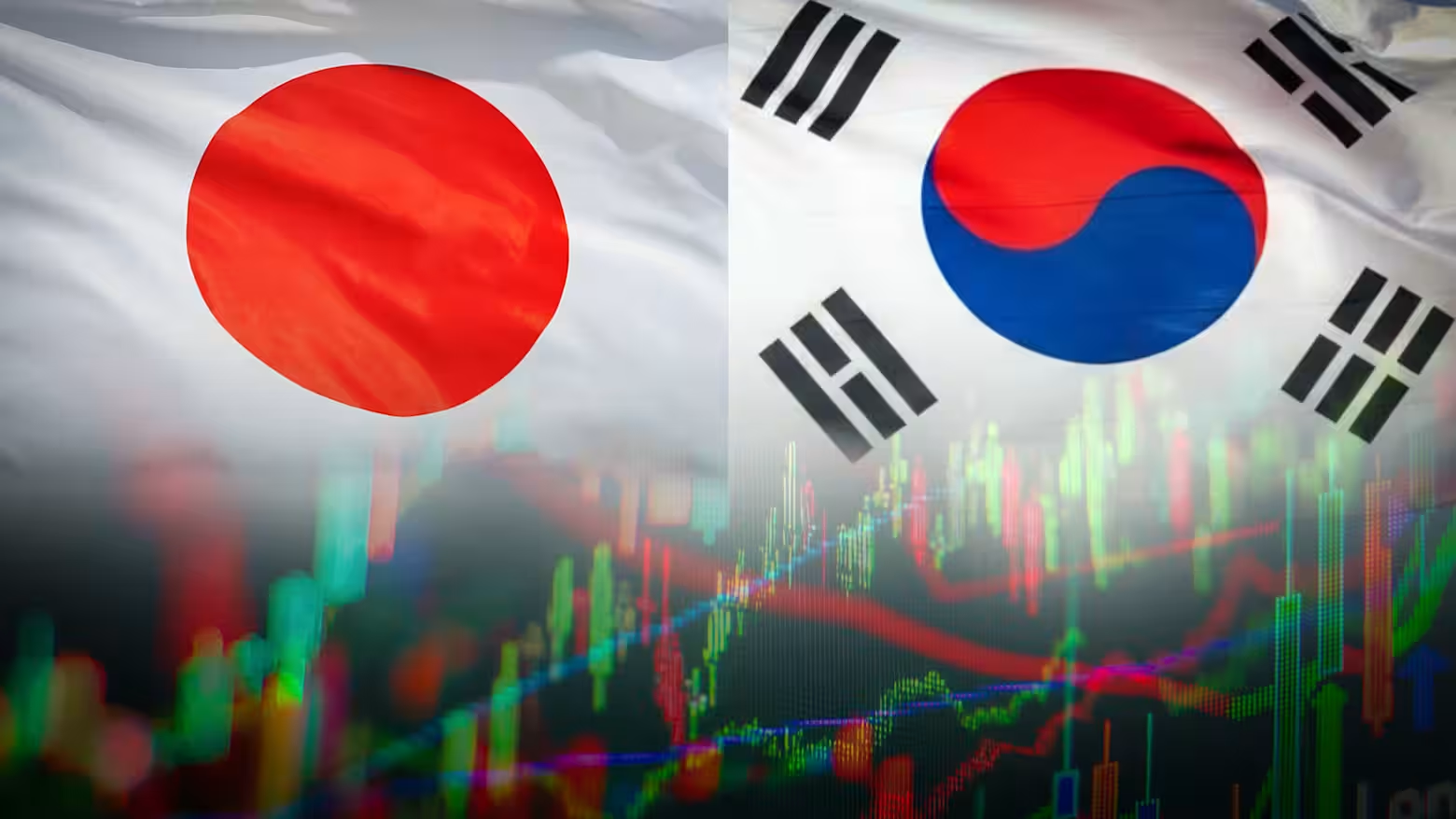
Asian stock markets mostly advanced on Thursday as renewed strength in technology shares pushed South Korea’s KOSPI into a technical bull market. Sentiment also improved after softer U.S. inflation data reduced expectations for a Federal Reserve interest-rate hike.
The positive tone followed modest gains on Wall Street. The S&P 500 rose 0.26%, while the Nasdaq gained 0.54%, keeping both indexes close to record levels.
In Asian trading, Nasdaq 100 futures and S&P 500 futures edged 0.1% higher, while the MSCI Asia Pacific index advanced around 0.8%.
Softer U.S. CPI Supports Technology Stocks
The latest U.S. Consumer Price Index report helped lift risk appetite across global markets.
Consumer prices increased 0.1% in July, in line with expectations. Core CPI, which excludes food and energy, rose 0.2% month-on-month and 2.5% year-on-year.
Following the report, money markets lowered the estimated probability of a September Federal Reserve rate hike to around 40%, down from roughly 54% a week earlier.
Lower rate expectations provided fresh support for technology stocks, which tend to benefit when borrowing costs are expected to remain stable or fall.
KOSPI Enters Bull Market After Sharp July Selloff
South Korea’s KOSPI surged 4.22% to 6,856.54, extending its recovery from the late-July low to approximately 23%.
A gain of more than 20% from a recent low is commonly considered a technical bull market.
The rebound marks a dramatic turnaround after the KOSPI plunged 22% in July, its worst monthly performance since the global financial crisis.
Despite the recent recovery, the index remains around 24% below its late-June peak, although it is still more than 60% higher for the year.
July’s selloff was accompanied by extreme volatility, with frequent trading halts and daily price swings exceeding 5%.
Market Volatility Begins to Ease
Volatility in South Korean stocks has eased as regulators tightened restrictions around single-stock leveraged exchange-traded funds.
New measures included higher cash-deposit requirements and mandatory mock-trading rules for some investors.
Retail traders have also reduced margin borrowing, while daily trading volumes in leveraged products have fallen sharply.
These changes have helped push market volatility to its lowest level since April.
Samsung and SK Hynix Lead Chip Rally
Semiconductor stocks were the main drivers of the KOSPI rebound.
Samsung Electronics jumped 5.09%, while SK Hynix surged 7.58%. LG Innotek also gained 4.47%.
Japanese semiconductor suppliers joined the rally. Kioxia Holdings climbed 8.50%, Murata Manufacturing soared 10.55% and TDK gained 4.30%.
Sony moved in the opposite direction, falling 1.86%.
Strong demand for artificial intelligence infrastructure continues to support semiconductor companies across Asia.
Shareholder Returns Add Support to Korean Stocks
Investors are also focusing on potential improvements in shareholder returns.
Expectations that Samsung Electronics and SK Hynix could announce stronger payout plans have provided additional support for South Korean equities.
Higher dividends or share buybacks could make these companies more attractive to investors after the recent market correction.
Japan Stocks Gain as AI Sentiment Improves
Japanese equities also advanced.
The Nikkei 225 rose 1.88%, while the broader TOPIX gained 0.71%.
Improving sentiment toward artificial intelligence and semiconductor spending supported several technology and chip-related companies.
Recent earnings reports from major global technology firms have reinforced expectations that spending on AI computing infrastructure remains strong.
China Stocks Rise but Tech Performance Remains Mixed
Chinese markets also moved higher.
The CSI 300 gained 0.49%, while the Shanghai Composite rose 0.42%.
However, performance among Chinese technology shares remained mixed as investors continued to assess competition within the global AI industry.
China’s growing semiconductor and artificial intelligence capabilities have previously weighed on enthusiasm for South Korean memory-chip producers.
Australia and Other Asian Markets Struggle
Elsewhere in the region, performance was weaker.
Australia’s S&P/ASX 200 declined 0.46%, although several individual companies posted strong moves following earnings releases.
Singapore’s Straits Times Index fell 0.77%, while India’s Nifty 50 slipped 0.39%.
This mixed performance showed that the technology-driven rally was not evenly distributed across Asian markets.
Oil Prices Ease After Six-Session Rally
Oil prices also provided some relief for investors after ending a six-session winning streak.
Brent crude slipped below $89 a barrel as markets assessed the latest developments between the United States and Iran.
However, elevated energy prices remain an important inflation risk and could influence future central-bank policy.
KOSPI Recovery Still Faces Risks
The return of the AI trade has helped stabilize South Korea’s stock market, but the rebound follows an unusually sharp correction.
Although the KOSPI has technically moved out of bear-market territory, it remains well below its June peak.
The recovery could therefore remain vulnerable to changes in artificial intelligence sentiment, foreign capital flows and retail investor activity.
For now, strong semiconductor demand and lower expectations for a Federal Reserve rate hike are providing support, but market volatility could return if confidence in the AI trade weakens again.