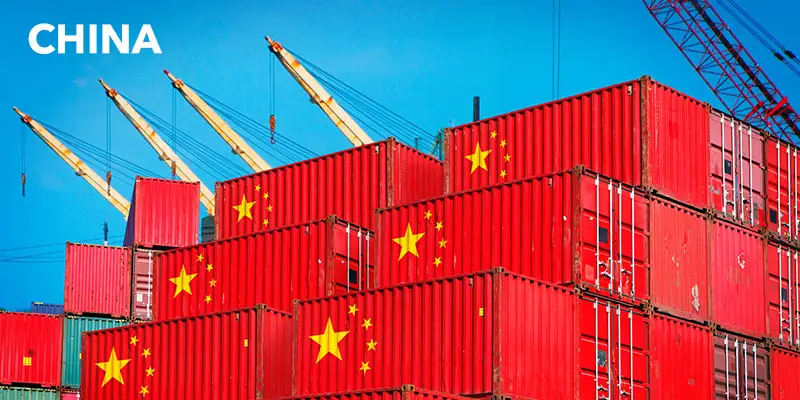
China recorded a larger-than-expected trade surplus in July, supported by strong export growth and resilient overseas demand.
However, imports also increased sharply during the month, while export growth slowed compared with June. As a result, the overall trade surplus narrowed on a month-to-month basis.
China Trade Surplus Beats Forecasts
China posted a trade surplus of $112.50 billion in July, according to official data released on Friday.
The figure came in above market expectations of $107.10 billion. However, it was lower than the $125.62 billion surplus recorded in the previous month.
The data showed that China’s external trade remained strong, even as the pace of growth began to cool.
Export Growth Remains Strong but Slows
Chinese exports rose 23.9% year-on-year in July.
That exceeded expectations for a 23.0% increase, but marked a slowdown from the 27% growth recorded in June.
The figures suggest that overseas demand for Chinese goods remains solid, although momentum may be starting to weaken after a strong performance during much of the year.
Overseas Demand Could Cool Further
Part of this year’s export growth was driven by foreign buyers bringing forward orders amid uncertainty surrounding the U.S.-Iran conflict.
That trend could fade in the coming months as overseas inventories remain elevated.
Analysts at Capital Economics said China’s trade boom slowed slightly in July. However, they noted that export and import values remain high, helped by strong global demand for electronics and green technology products.
China’s Domestic Economy Shows Signs of Slowing
Recent economic indicators have also pointed to weaker domestic momentum.
China’s purchasing managers index data for July showed that local business activity slowed compared with previous months.
That adds to broader concerns over the strength of domestic demand, particularly as consumer spending and private investment remain under pressure.
Chinese Imports Rise Sharply
Imports increased 27.5% year-on-year in July.
That was below expectations for a 29.7% rise and also slower than the 36.0% increase recorded in June.
Despite the slowdown, import growth remained strong by historical standards.
AI Investment and Oil Prices Support Imports
China’s imports have been boosted this year by growing domestic demand for components used in artificial intelligence infrastructure.
Higher oil prices have also contributed to the increase in import values by raising the cost of energy purchases.
These factors have helped keep overall import demand elevated despite signs of weaker business activity elsewhere in the economy.
Exports Remain a Key Driver of China’s Economy
Exports have become one of the main sources of economic growth for China in recent quarters.
Strong overseas demand has helped offset persistent weakness in household consumption and private-sector investment.
For now, China’s trade sector remains resilient. However, slower export growth and high overseas inventories could become important factors to watch in the coming months.