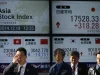
Currency markets traded cautiously on Thursday. The Japanese yen gave back part of its intervention-driven gains, while the U.S. dollar moved slightly higher from a six-week low.
Investors remained focused on two major developments: a possible agreement involving the United States and Iran, and Friday’s closely watched U.S. employment report.
Japanese Yen Gives Back Some Intervention Gains
The yen weakened slightly to around 157.85 against the dollar after recording modest losses during the previous two sessions.
Earlier in the week, the Japanese currency strengthened to 155.20 per dollar following intervention in the foreign exchange market. However, it has since surrendered part of that advance.
Despite the pullback, the yen remains stronger than the multi-decade low of nearly 164 per dollar recorded in July.
Jonas Goltermann, chief markets economist at Capital Economics, said several factors could help the latest intervention support the yen for longer than previous efforts.
These factors include stretched market positioning, direct U.S. involvement and the yen’s historically low valuation.
Dollar Index Recovers From Six-Week Low
The U.S. dollar gained modestly against a basket of major currencies.
The dollar index rose approximately 0.1% to 99.77. The index measures the dollar’s performance against six leading global currencies.
The move followed a decline to a six-week low on Monday.
Meanwhile, the euro slipped around 0.1% to $1.1542. The British pound also fell by a similar amount, trading near $1.3460.
Markets Await News on Proposed U.S.-Iran Deal
Investors continued to monitor developments in the Gulf as uncertainty surrounding the U.S.-Iran conflict remained elevated.
A proposed agreement involving Iran and Oman could reportedly help bring the conflict closer to an end. However, the proposal may also allow Tehran to control incoming traffic through the Strait of Hormuz.
There was no immediate official response from the United States.
President Donald Trump has said that an agreement to reopen the strait could be reached soon. Nevertheless, U.S. officials have repeatedly stated that they would not accept Iranian control over access to the strategically important trade route.
The Strait of Hormuz is one of the world’s most important shipping routes for oil and energy supplies. Therefore, any change to its operation could have major consequences for global markets.
Oil Prices Remain Below July Highs
Brent crude oil moved slightly higher to approximately $80.20 per barrel.
However, prices remain well below the nearly $100 level reached in July, when tensions between the United States and Iran intensified.
Ray Attrill, head of foreign exchange strategy at National Australia Bank, noted that oil market volatility had recently declined.
This reduction in volatility has also removed one of the main forces influencing currency and financial markets during recent weeks.
U.S. Payroll Report Takes Centre Stage
Attention is now turning towards Friday’s U.S. employment report.
The payroll figures could offer important clues about the Federal Reserve’s next interest rate decision.
Recent economic data showed that the U.S. services sector remained resilient in July. However, employment growth within the sector slowed.
The Federal Reserve left interest rates unchanged at its latest meeting. At the same time, Fed Chair Kevin Warsh maintained a firm position on reducing inflation.
As a result, markets have not ruled out a possible interest rate increase in September.
Francesco Pesole, an FX strategist at ING, said economic reports published after the July Federal Reserve meeting would carry significant importance.
He added that a stronger-than-expected payroll report could have a major effect on the USD/JPY exchange rate.
A strong employment figure could encourage traders to rebuild speculative long positions in the dollar against the yen.
Economists Expect Moderate Employment Growth
A Reuters survey of economists forecast that U.S. nonfarm payrolls increased by 80,000 jobs in July.
That would represent an improvement from the 57,000 jobs reportedly added in June.
The U.S. unemployment rate is expected to remain unchanged at 4.2%.
A stronger-than-expected report could support the dollar and strengthen expectations of tighter Federal Reserve policy.
In contrast, weaker employment growth could reduce the likelihood of a September rate increase and place renewed pressure on the U.S. currency.
Federal Reserve Officials Remain Focused on Inflation
Federal Reserve Governor Lisa Cook said she was open to the possibility that the central bank may need to increase short-term interest rates.
She pointed to inflation levels that remain too high within the U.S. economy.
San Francisco Fed President Mary Daly also supported the recent decision to leave interest rates unchanged.
However, she stressed that policymakers need to examine additional economic data before making a decision at the September meeting.
For currency traders, the upcoming payroll report could therefore become an important catalyst for the dollar, the yen and wider foreign exchange markets.