The U.S. dollar moved slightly lower on Monday as investors waited for a new round of negotiations between the United States and Iran.
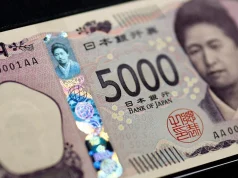
Meanwhile, the Japanese yen extended its recent gains amid expectations that Tokyo and Washington could intervene again if excessive currency volatility returns.
U.S. Dollar Index Edges Lower
The U.S. Dollar Index fell 0.1% to 99.80 during Asian trading.
The greenback had already lost around 1.5% during the previous week after the Federal Reserve kept interest rates unchanged and offered few clues about its next policy move.
Uncertainty surrounding future U.S. interest rates continued to limit demand for the dollar.
Investors Await Fresh U.S.-Iran Talks
Market attention remained focused on the latest negotiations between Washington and Tehran.
U.S. President Donald Trump said discussions would resume on Monday. However, he did not set a deadline for reaching an agreement.
The talks are expected to focus on Iran’s nuclear programme and efforts to protect shipping through the Strait of Hormuz after weeks of conflict disrupted regional oil flows.
Trump also warned that the United States remained prepared to take stronger action if diplomacy failed. As a result, investors remained cautious ahead of the negotiations.
Lower Oil Prices Add Pressure on the Dollar
ING analysts said falling oil prices were also weighing on the U.S. currency.
Markets have interpreted Trump’s latest comments as a sign that Washington currently prefers negotiations with Iran over further military action.
Lower oil prices can reduce inflation concerns and weaken expectations for tighter Federal Reserve policy, which may place additional pressure on the dollar.
Yen Extends Its Recovery
The Japanese yen continued to strengthen after posting sharp gains during the previous week.
USD/JPY fell around 0.5% to 156.76 after briefly reaching 155.21 earlier in the session. The currency pair had already declined by more than 3% across the previous two trading days.
Traders continued to anticipate possible coordinated action by Japan and the United States to support the yen.
Bessent Signals Support for Further Intervention
The yen’s latest advance followed comments from U.S. Treasury Secretary Scott Bessent.
Bessent said Washington would not hesitate to participate in further joint intervention if disorderly movements in the Japanese currency returned.
The yen had faced severe pressure in recent months and fell to its weakest level against the dollar in around 40 years before authorities entered the foreign exchange market.
Analysts Question How Far USD/JPY Can Fall
ING analysts said the joint intervention may struggle to push USD/JPY sustainably below the 155 level.
However, they argued that the action could discourage investors from pushing the pair above 160.
The intervention may also give Japanese authorities more time to introduce policies that provide longer-term support for the yen.
Bank of Japan Maintains Hawkish Tone
The Bank of Japan kept its benchmark interest rate unchanged at 1% on Friday.
Despite leaving rates steady, the central bank maintained a relatively hawkish stance. Policymakers said they remained prepared to tighten monetary policy further if inflation developed in line with their forecasts.
Faster interest-rate increases in Japan could help narrow the yield gap with the United States and strengthen the yen over time.
U.S. Employment Data Comes Into Focus
Investors are now preparing for a busy week of U.S. economic releases.
Tuesday’s JOLTS job openings report will be followed by Wednesday’s ADP private payrolls data and ISM services survey.
Weekly jobless claims are due on Thursday, while Friday’s nonfarm payrolls report will provide the week’s most closely watched labour-market update.
The figures could influence expectations for the Federal Reserve’s next interest-rate decision and determine whether the dollar can regain momentum.
For Monday, markets will also monitor July’s ISM manufacturing report for further evidence about the health of the U.S. economy.