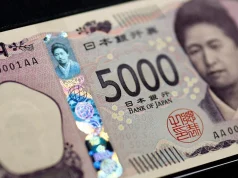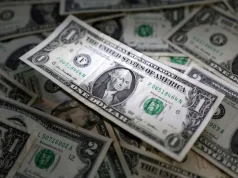
USD/JPY could become one of the most closely watched currency pairs during the remainder of 2026.
The pair is trading near 163.86, only slightly below its 52-week high of 164.00. It has gained approximately 10.37% over the past year and is approaching a level that some analysts believe could prompt intervention from Japanese authorities.
With the Federal Reserve announcing its latest interest-rate decision on July 29, 2026, traders are preparing for potentially significant volatility. Markets are pricing in roughly a 33% probability of a rate increase, meaning the Fed’s decision could influence USD/JPY well beyond today’s session.
USD/JPY Tests a Critical Resistance Area
USD/JPY is trading close to 163.86, placing it directly beneath its annual high near 164.00.
This area is important because several major economic and political forces are affecting the pair at the same time. The Federal Reserve’s policy decision, the threat of Japanese intervention and concerns over Japan’s fiscal outlook are creating an unusually sensitive market environment.
Fed Decision Could Push USD/JPY Above 164
The first major catalyst is the Federal Reserve’s interest-rate announcement.
Markets currently estimate a 33% chance that the Federal Open Market Committee will raise rates. A hike would widen the already significant interest-rate gap between the United States and Japan.
Higher US interest rates generally increase the appeal of the dollar compared with the yen. Therefore, a surprise rate increase could push USD/JPY above the 164.00 resistance level.
Even without a rate hike, a hawkish statement could support the dollar. If the Fed signals that interest rates will remain elevated for longer, USD/JPY may continue trading near its yearly high.
Japanese Intervention Risk Is Rising
The second major factor is the possibility of intervention from Japan’s Ministry of Finance.
Some analysts have identified the 164.00 area as a potential intervention threshold. Japanese authorities have previously entered the currency market when excessive yen weakness created economic concerns.
A decisive move above 164.00 following the Fed announcement could increase pressure on Tokyo to respond.
Intervention would normally involve selling dollars and buying yen. Such action could produce a sudden decline in USD/JPY, potentially causing a reversal of several hundred pips within a short period.
This creates considerable two-way risk. The pair could break higher following a hawkish Fed decision, but intervention concerns may limit the sustainability of any rally.
Japan’s Fiscal Plans Add Further Uncertainty
Japan’s fiscal policy is also influencing the yen outlook.
Prime Minister Takaichi’s reported plan to reduce the country’s food sales tax from 8% to 1% beginning in April 2027 has increased concerns about government spending and public finances.
These concerns have contributed to rising Japanese government bond yields, with some maturities reaching their highest levels in decades.
A major fiscal stimulus package could also increase inflationary pressure. If inflation continues to rise, the Bank of Japan may face stronger pressure to increase interest rates.
A more aggressive Bank of Japan could strengthen the yen and trigger a significant decline in USD/JPY. Such a move could unwind part of the currency pair’s strong rise over the previous year.
Bullish USD/JPY Scenario
The bullish outlook mainly depends on continued strength in the US dollar.
USD/JPY could move above 164.00 if:
- The Federal Reserve unexpectedly raises interest rates.
- Fed officials deliver a hawkish message.
- US interest rates remain higher for longer.
- The Bank of Japan maintains a cautious monetary policy.
- Japanese authorities avoid direct currency intervention.
Under these conditions, the interest-rate advantage of the US dollar would remain a major source of support.
However, any move above 164.00 would need to overcome the growing risk of intervention from Japanese policymakers.
Bearish USD/JPY Scenario
Several possible developments could strengthen the yen and push USD/JPY lower.
The bearish catalysts include:
- A surprise interest-rate increase from the Bank of Japan.
- Direct intervention by Japan’s Ministry of Finance.
- A more dovish Federal Reserve policy outlook.
- Increased demand for the yen during periods of global uncertainty.
- A reduction in the US–Japan interest-rate gap.
An official intervention near 164.00 could cause a rapid decline. Market estimates suggest such action could potentially produce an immediate move of between 300 and 500 pips.
A Bank of Japan policy shift could create an even more lasting reversal, particularly if traders begin unwinding positions that benefited from years of yen weakness.
Key USD/JPY Scenarios
| Scenario | Main Driver | Possible USD/JPY Reaction |
|---|---|---|
| Fed raises interest rates | Wider US–Japan rate gap | Break above 164.00 |
| Fed keeps rates unchanged but remains hawkish | Continued dollar strength | Pair remains elevated |
| Bank of Japan unexpectedly raises rates | Japanese policy normalization | Sharp decline |
| Japan intervenes in the currency market | Dollar selling and yen buying | Fast 300–500 pip reversal |
| Geopolitical tensions increase | Safe-haven demand for the yen | Downward pressure |
USD/JPY Could Become a Major Volatility Event
At approximately 163.86, USD/JPY is positioned at the intersection of monetary policy, fiscal uncertainty and intervention risk.
The pair has risen by around 10.37% over the past 12 months. However, the risk-to-reward outlook is becoming increasingly complicated.
Further upside may be limited by the possibility of Japanese intervention. At the same time, several downside catalysts are developing, including a potential Bank of Japan rate increase, a shift in Federal Reserve policy and stronger safe-haven demand for the yen.
For this reason, USD/JPY may be better viewed as a potential volatility event rather than a straightforward directional opportunity.
The reaction around 164.00 could determine whether the pair extends its long-term rally or begins a significant reversal before the end of 2026.