US Dollar Holds Near a Five-Week Peak
The U.S. dollar remained close to a five-week high on Tuesday as investors assessed the possibility of a Federal Reserve interest-rate increase.
Meanwhile, a sharp decline in crude oil prices helped reduce concerns about further inflationary pressure.
The U.S. Dollar Index, which measures the greenback against six major currencies, was broadly unchanged at 101.49. It remained near its highest level since June 25.
Euro and Pound Gain Against the Dollar
The euro advanced by 0.5% to $1.1373, while the British pound edged 0.1% higher to $1.3302.
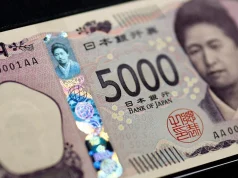
Against the Japanese yen, the dollar gained 0.1% to 163.83.
Although oil prices continued to fall amid signs of possible diplomatic progress between Washington and Tehran, the dollar maintained its strength.
Federal Reserve Expectations Support the Dollar
The greenback continued to benefit from persistent core inflation expectations and elevated U.S. Treasury yields.
Financial markets were pricing in an estimated 38% probability of a 25-basis-point Federal Reserve rate hike.
Although the Fed was widely expected to leave its benchmark rate unchanged, traders believed U.S. borrowing costs could remain elevated for longer.
Recent trade tariffs and supply constraints have added to inflation concerns, increasing expectations that the central bank will maintain a restrictive policy stance.
Investors Prepare for a Hawkish Fed
Chris Turner, global head of markets at ING, said demand for the dollar remained strong as investors positioned themselves for a potentially hawkish Federal Reserve announcement.
He noted that foreign exchange traders appeared to be taking the possibility of a rate increase more seriously.
Limited communication from Fed officials also created additional uncertainty and encouraged speculation about the central bank’s next move.
Euro Traders Assess ECB Policy Signals
The euro later traded near $1.1370, remaining below its recent highs.
Investors balanced encouraging Eurozone business survey data against hawkish comments from European Central Bank officials.
ECB Governing Council member Peter Kazimir said a September rate increase could still be necessary, even if Eurozone economic growth strengthens.
His comments suggested that European interest rates may also remain elevated.
Sterling Awaits Bank of England Decision
The British pound was little changed near $1.3280 ahead of the Bank of England’s policy decision later in the week.
Investors were looking for signals about whether UK borrowing costs would remain high as policymakers continue to address inflation.
Japanese Yen Remains Under Pressure
The Japanese yen remained near multi-decade lows at approximately 163.8 per dollar.
Warnings from Japanese financial authorities have so far failed to reverse the currency’s prolonged decline against higher-yielding currencies.
Attention has now shifted to the Bank of Japan’s upcoming policy meeting for signs that officials may accelerate the normalization of monetary policy.
Asian Currencies Deliver Mixed Performance
Currency trading across Asian emerging markets was mixed.
Indonesia’s rupiah remained under pressure following the unexpected resignation of Bank Indonesia Governor Perry Warjiyo earlier in the week.
The leadership change increased uncertainty surrounding the country’s monetary policy outlook.
US GDP and Core PCE Data in Focus
Investors are now awaiting several major U.S. economic reports.
These include preliminary second-quarter gross domestic product figures and the Core Personal Consumption Expenditures Price Index, the Federal Reserve’s preferred measure of underlying inflation.
The data could provide fresh clues about whether persistent inflation will keep interest rates elevated into late 2026.