U.S. Dollar Remains Near Two-Month High as Middle East Risks Support Demand
The U.S. dollar edged lower on Thursday but remained close to its highest level in two months as ongoing tensions in the Middle East continued to weigh on investor sentiment and boost demand for safe-haven assets.
The U.S. Dollar Index, which measures the greenback against a basket of major currencies, slipped 0.2% to 99.31. Meanwhile, the euro rose 0.3% to $1.1633, while the British pound gained 0.2% to trade at $1.3449.
According to analysts at ING, the dollar continues to benefit from a combination of resilient U.S. economic data and renewed geopolitical uncertainty linked to the conflict involving Iran.
Ceasefire Developments Offer Hope for Regional Stability
Israel and Lebanon have agreed to renew their fragile ceasefire, raising hopes that broader diplomatic progress could eventually pave the way for a deal between the United States and Iran.
Negotiations remain closely tied to the situation in Lebanon, where Israeli forces have been engaged in conflict with Iran-backed Hezbollah fighters.
Following a fourth round of U.S.-mediated talks, Israel and Lebanon stated that the ceasefire would depend on a complete halt to Hezbollah attacks and the withdrawal of Hezbollah personnel from areas south of the Litani River.
Officials described the measures as an important step toward a wider peace and security agreement. Hezbollah was not directly involved in the negotiations.
Trump Signals Potential Progress in Iran Talks
On Wednesday, U.S. President Donald Trump indicated that meaningful progress in negotiations with Iran could emerge as soon as this weekend.
Meanwhile, Iran’s foreign minister stated that communication channels with Washington remain open despite earlier reports suggesting Tehran had suspended contact through mediators.
Additional reports indicated that Trump has informed advisers that military action against Iran would not resume unless American forces are directly targeted.
Political Pressure Builds in Washington
The White House is also facing growing domestic pressure to avoid further escalation of the conflict.
In a notable development, the U.S. House of Representatives approved a resolution aimed at preventing the president from continuing military operations against Iran. However, the measure still requires Senate approval and would need significant bipartisan support to overcome a potential presidential veto.
Oil Prices Ease But Remain Elevated
Oil markets moved lower on Thursday, although prices remain well above levels seen before the conflict began.
Brent crude futures fell 1.5% to $96.30 per barrel, while U.S. West Texas Intermediate crude declined 1.2% to $94.84 per barrel.
Despite the pullback, supply disruptions linked to the Strait of Hormuz continue to support energy prices. The strategically important waterway has experienced significant restrictions to commercial shipping since military operations involving the United States and Israel intensified earlier this year.
Inflation Concerns Keep Markets Alert
Investors remain concerned that higher energy prices could fuel a new wave of inflation across major economies.
Such a scenario could force central banks, including the Federal Reserve, to maintain higher interest rates or even tighten monetary policy further if inflationary pressures intensify.
The dollar has benefited from these concerns throughout the conflict, as many investors view the United States as relatively insulated from global energy shocks due to its status as a major energy producer and exporter.
Strong U.S. Data Supports the Dollar
Recent economic indicators have reinforced confidence in the U.S. economy.
Data released on Wednesday showed solid private-sector hiring and resilient activity in the services sector, suggesting that economic growth remains intact despite geopolitical uncertainty.
Attention is now turning to the upcoming U.S. employment report, which is expected to provide fresh insight into the strength of the labor market and the future path of Federal Reserve policy.
Japanese Yen Approaches Key Intervention Level
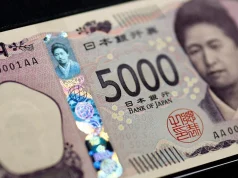
Elsewhere in the foreign exchange market, the Japanese yen remained under pressure, trading near 160 per dollar.
This level is widely viewed as a potential trigger point for intervention by Japanese authorities seeking to stabilize the currency.
Bank of Japan Governor Kazuo Ueda recently stated that policymakers could consider additional interest rate increases if inflation risks become more pronounced.
Although widening yield differences between Japan and the United States continue to weigh on the yen, expectations for further policy tightening by the Bank of Japan have helped limit deeper losses.
Market analysts believe traders may continue testing higher levels in the USD/JPY pair, particularly as June has historically been a challenging month for the Japanese currency.