Citi Remains Bullish on Oil as U.S.-Iran Talks Stall
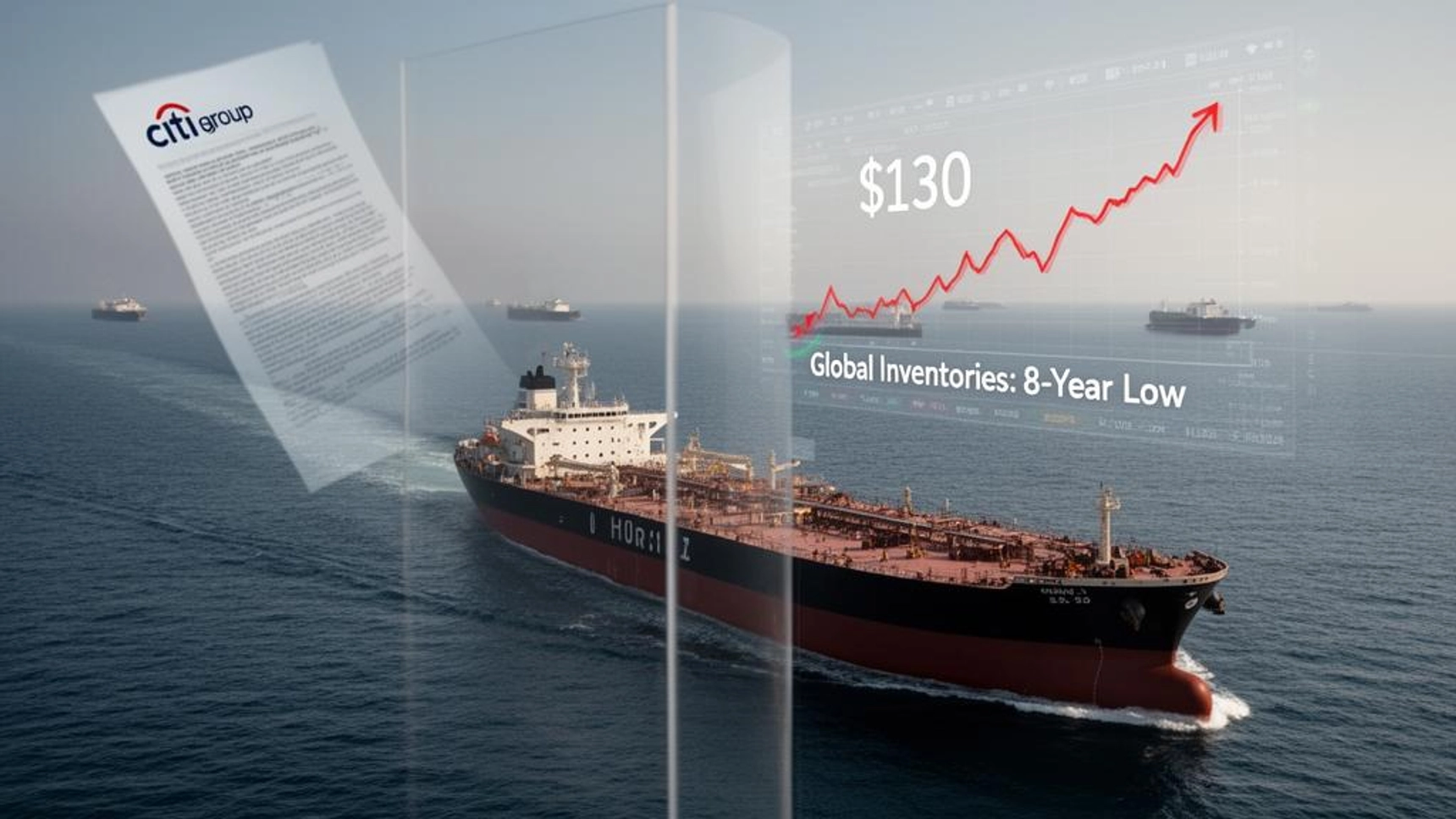
Brent crude oil rebounded from recent lows near $91 per barrel this week as expectations for a swift U.S.-Iran agreement faded. The renewed strength in oil prices has reinforced Citi’s bullish short-term outlook, with analysts warning that global energy inventories remain unusually tight.
According to the bank, limited stockpiles and ongoing geopolitical uncertainty could keep oil prices elevated even if supply disruptions eventually ease.
Middle East Tensions Continue to Support Oil Prices
Oil markets have remained sensitive to developments in the Middle East.
Recent hostilities included an Iranian strike on Kuwait’s airport and U.S. military operations near the Strait of Hormuz, highlighting the fragile nature of the ceasefire that has been in place for several weeks.
At the same time, negotiations between Washington and Tehran remain stalled. Key disagreements continue over control of the Strait of Hormuz, the future of Iran’s highly enriched uranium stockpile, and whether Lebanon should be included in a broader ceasefire framework.
Ceasefire Hopes Limit Further Oil Gains
A separate ceasefire agreement between Israel and Lebanon announced on Wednesday provided some optimism for a wider regional settlement.
As a result, oil prices remained relatively contained despite ongoing tensions. On Thursday, Brent crude traded at $94.88 per barrel, while West Texas Intermediate (WTI) crude stood at $96.65 per barrel.
Iran has reportedly linked any broader agreement to a complete halt in hostilities between Israel and Hezbollah, adding another layer of complexity to negotiations.
Citi Expects Higher Oil Prices Through the Third Quarter
Despite hopes for eventual progress, Citi believes negotiations could drag on for an extended period.
The bank’s base-case scenario assumes a gradual normalization of shipping flows through the Strait of Hormuz during the third quarter. However, analysts expect depleted inventories to take considerable time to rebuild, keeping upward pressure on prices.
Citi forecasts Brent crude to average $110 per barrel during the third quarter before declining to $90 in the fourth quarter. The bank expects prices to ease further toward $80 by 2027 while maintaining a backwardated market structure throughout the period.
Low Global Inventories Remain a Major Concern
A key pillar of Citi’s bullish outlook is the uneven distribution of global oil inventories.
While total global liquid fuel inventories appear broadly in line with historical averages, the bank notes that crude oil stocks across Asia excluding China, along with several refined fuel inventories, have already fallen below their five-year average range.
Analysts warn that continued inventory drawdowns could push stock levels to unprecedented lows, forcing buyers to compete aggressively for available supply and supporting higher prices even after normal shipping operations resume.
China Demand and Emergency Reserves Have Offset Supply Losses
Citi estimates that more than one billion barrels of oil supply have been affected since disruptions began around the Strait of Hormuz.
However, two factors have helped prevent a more severe tightening of physical markets.
First, China’s crude oil imports declined by approximately 4.3 million barrels per day between February and May. Second, the International Energy Agency’s emergency reserve releases added an estimated 3.3 million barrels per day during April and May.
The bank cautions that once these emergency stock releases end, potentially by late July, oil markets could tighten significantly.
Refined Fuel Inventories Flash Warning Signs
Beyond crude oil, refined fuel inventories are becoming an increasing concern for market participants.
Stocks of diesel, gasoline, and residual fuel have already fallen to or below the lower end of their historical trading ranges. This shortage has helped maintain strong refinery profit margins despite recent fluctuations in crude prices.
The International Energy Agency recently reiterated its warning that global inventories could reach critically low levels ahead of peak summer demand if current inventory drawdowns continue.
With supply concerns, geopolitical risks, and low stock levels all remaining in focus, Citi believes oil markets could stay supported well into the second half of the year.