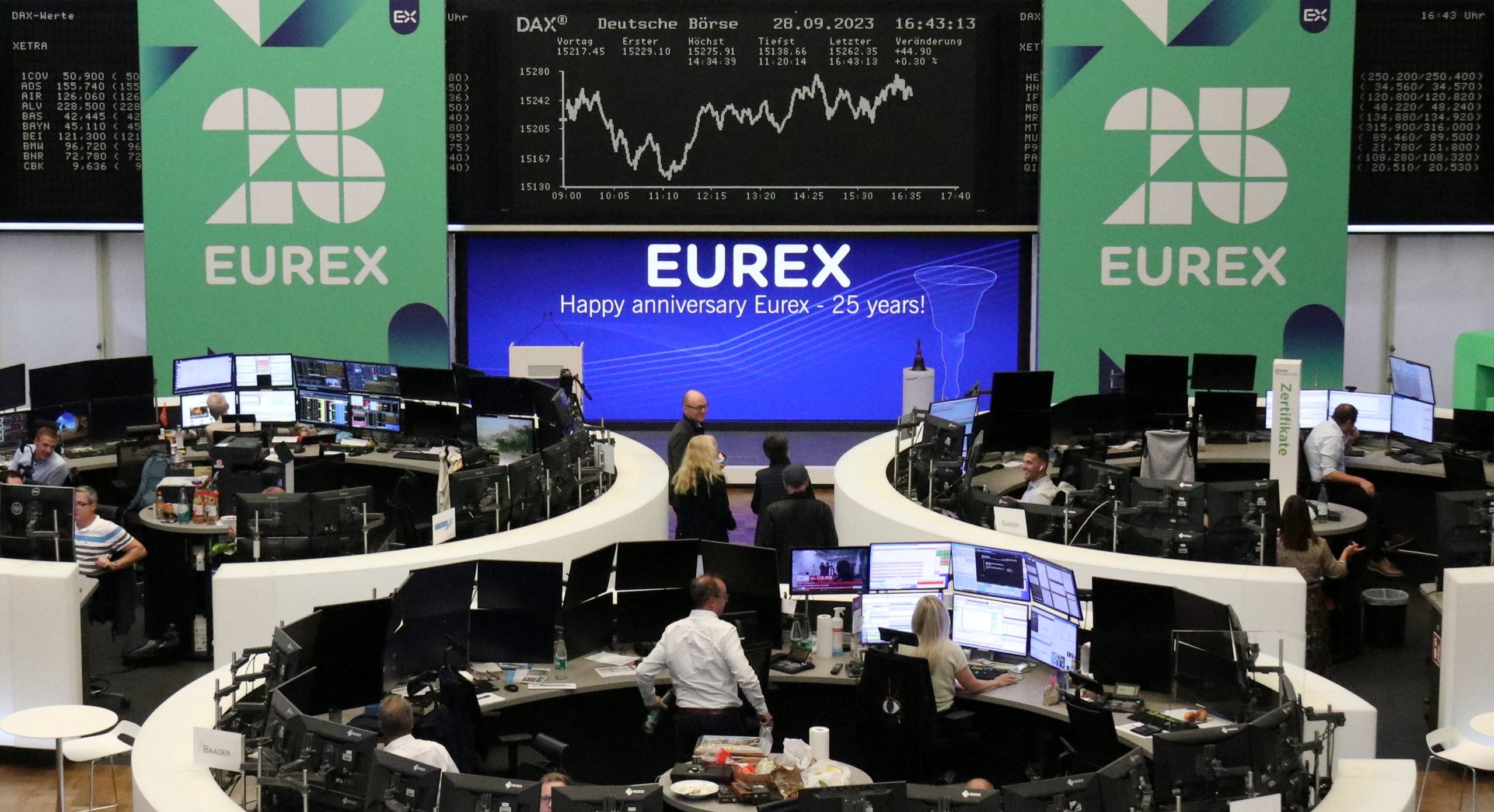
European Stocks Open Lower Amid Iran Tensions
European stock markets started the week on a weaker note as investors reacted to the failure of U.S.-Iran ceasefire talks and renewed geopolitical uncertainty. Concerns intensified after U.S. President Donald Trump signaled plans for an immediate blockade of the Strait of Hormuz.
Major Indexes Decline Across Europe
By 03:13 ET (07:13 GMT), the pan-European Stoxx 600 fell 0.8%. Germany’s DAX dropped 1.2%, France’s CAC 40 declined 1.0%, and the UK’s FTSE 100 slipped 0.6%, reflecting broad-based market weakness.
Hormuz Blockade Threat Weighs on Sentiment
Trump announced that the U.S. would move to restrict vessels entering or leaving the Strait of Hormuz, a critical global shipping route. He warned that ships paying tolls to Iran would not be guaranteed safe passage.
However, the Pentagon later clarified that the blockade would primarily target vessels linked to Iranian ports, allowing other ships to continue transiting the strait. Approximately 20% of global oil supply passes through this key waterway.
Analysts See Softer Stance on Blockade
Market analysts noted that the updated guidance appeared less aggressive than initial statements. What first seemed like a complete shutdown of maritime traffic now appears to be more narrowly focused on Iranian vessels.
Rising Risk of Military Action
Reports suggest that the U.S. administration is considering limited strikes against Iran, indicating a potential shift away from a full-scale military campaign. This has added another layer of uncertainty for global markets.
Failed Talks Signal Ongoing Conflict
The latest developments follow 21 hours of negotiations between U.S. and Iranian officials in Pakistan, which ended without an agreement to extend a temporary ceasefire. The lack of progress points to continued instability in the region.
Inflation Data in Focus for Europe
Investors are now turning their attention to upcoming Eurozone inflation data for March. The figures are expected to provide insight into how rising energy costs from the Iran conflict are affecting prices across the region.
Europe remains heavily reliant on energy imports from the Persian Gulf, particularly natural gas from Qatar, where infrastructure has been impacted by the ongoing conflict.
ECB Outlook and Interest Rate Expectations
The European Central Bank has indicated it will closely monitor inflationary pressures linked to geopolitical developments. Market expectations now point to approximately three interest rate hikes of 25 basis points each by the ECB by the end of 2026.
Oil Prices Surge Above $100
Oil markets reacted strongly to the escalating tensions, with Brent crude climbing back above $100 per barrel. Prices had briefly fallen below that level last week following the announcement of a temporary ceasefire.
Sector and Stock Highlights
In corporate news, shares of French luxury group Kering resumed trading after being temporarily halted following an early decline of over 3%. Morgan Stanley downgraded the stock, citing limited upside from its turnaround strategy.
Travel and leisure stocks across Europe moved lower, while energy company Eni and defense firm Leonardo posted gains amid the rising geopolitical risks.