Gold Prices Fall as Strong Dollar Weighs on Markets
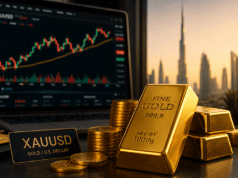
Gold prices declined on Monday, pressured by a stronger U.S. dollar as ceasefire talks between the United States and Iran failed to produce a meaningful breakthrough. The breakdown in negotiations pushed investors toward the dollar as a preferred safe-haven asset, reducing demand for bullion.
Inflation Data Reduces Rate Cut Expectations
Additional pressure came from stronger-than-expected U.S. consumer price index (CPI) data released on Friday. The figures dampened expectations for any near-term interest rate cuts by the Federal Reserve, further weighing on gold prices.
Gold and Precious Metals Performance
Spot gold dropped 0.6% to $4,720.67 per ounce, while gold futures declined 0.9% to $4,743.20 per ounce. Other precious metals also moved lower, with platinum easing slightly to $2,047.06 per ounce and silver falling nearly 2% to $74.3975 per ounce.
Dollar Strengthens as US-Iran Talks Collapse
The U.S. dollar gained momentum, with the dollar index rising approximately 0.4% as investors increased safe-haven positioning. The move followed unsuccessful U.S.-Iran negotiations, which failed to deliver progress on key geopolitical issues.
Strait of Hormuz Blockade Raises Tensions
High-level talks held over the weekend highlighted ongoing disagreements over Iran’s nuclear program, its regional influence, and control of the Strait of Hormuz. U.S. President Donald Trump announced plans for a naval blockade, later clarifying that the measures would specifically target Iranian ports and vessels.
The blockade is scheduled to begin at 10:00 ET (14:00 GMT) and could mark a further escalation in the conflict. Iran has strongly opposed the move, increasing uncertainty across global markets.
Rising Inflation Driven by Energy Prices
U.S. inflation data showed a notable increase in March, largely driven by rising energy costs linked to the Iran conflict. Consumer prices rose 3.3% year-on-year, up significantly from 2.4% in February, although slightly below expectations of 3.4%.
The ongoing disruption in energy supply, particularly through the Strait of Hormuz, has contributed to higher oil and gas prices, fueling inflationary pressures globally.
Higher Rates Outlook Weighs on Gold
The latest inflation data has led markets to scale back expectations for Federal Reserve rate cuts over the coming year. According to CME FedWatch data, interest rates are now likely to remain elevated for longer, a scenario that typically pressures non-yielding assets such as gold.
Concerns over prolonged high rates have overshadowed gold’s traditional safe-haven appeal. Additionally, the strong rally in gold prices during late 2025 has reduced buying momentum in the current environment.
Markets Await US Producer Price Data
Investors are now looking ahead to the upcoming U.S. producer price index (PPI) data later this week, which could provide further direction on inflation trends and monetary policy expectations.