What Moves Gold Prices?
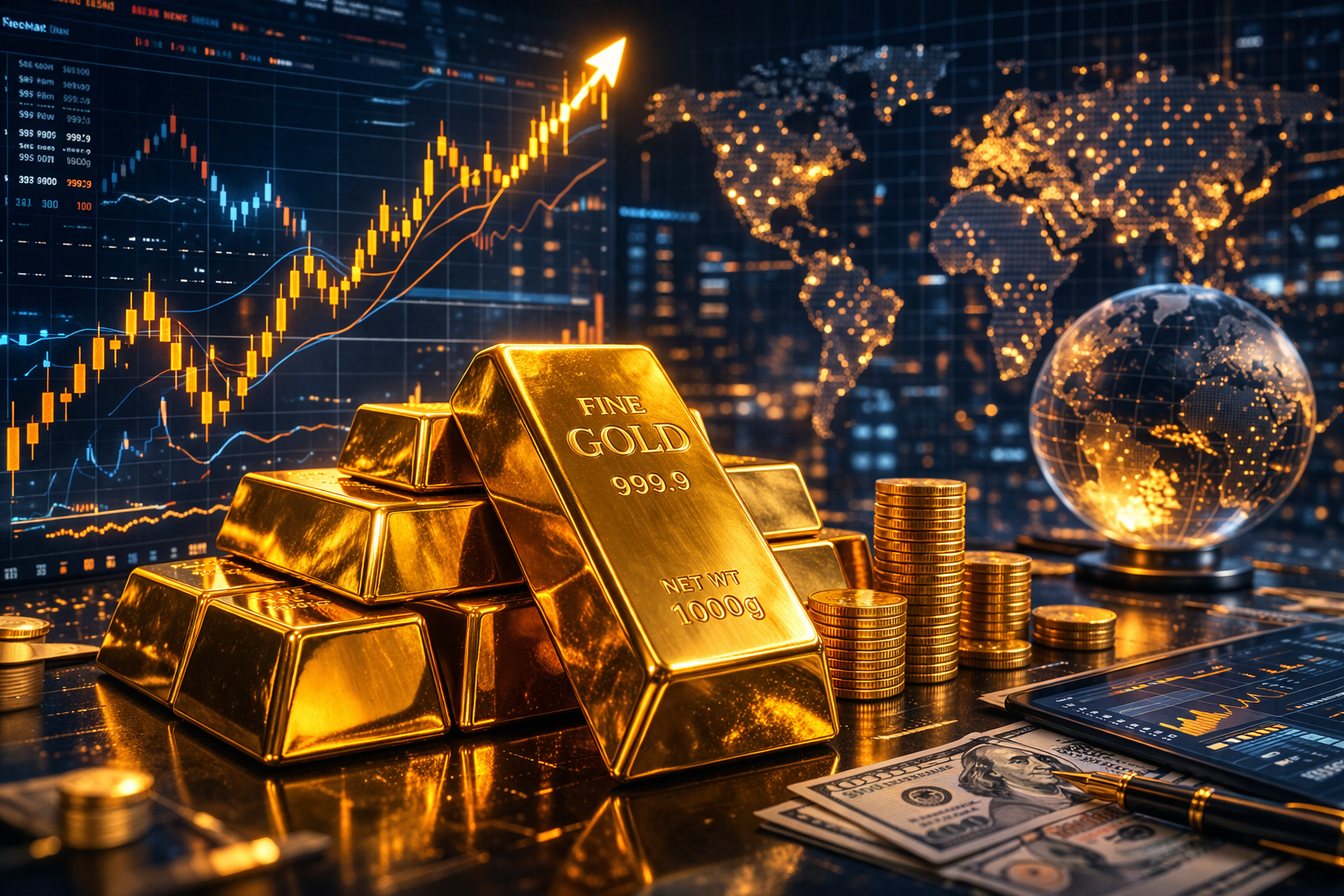
Gold is one of the most closely watched assets in global financial markets. Unlike stocks or currencies, gold does not produce cash flow or yield. Its value is driven primarily by macroeconomic forces, investor sentiment, and global uncertainty. Understanding what moves gold prices is essential for traders and investors who want to anticipate market shifts and make informed decisions.
Gold has historically acted as a store of value and a hedge against economic instability. When confidence in traditional financial systems declines, demand for gold tends to rise. However, its price is influenced by multiple interconnected factors rather than a single driver.
Gold and the US Dollar
One of the strongest relationships in financial markets is the inverse correlation between gold and the US dollar. Since gold is priced in dollars globally, a stronger dollar makes gold more expensive for foreign buyers, reducing demand and often pushing prices lower.
Conversely, when the dollar weakens, gold becomes more affordable internationally, increasing demand and supporting higher prices. This is why traders closely monitor the US Dollar Index when analyzing gold.
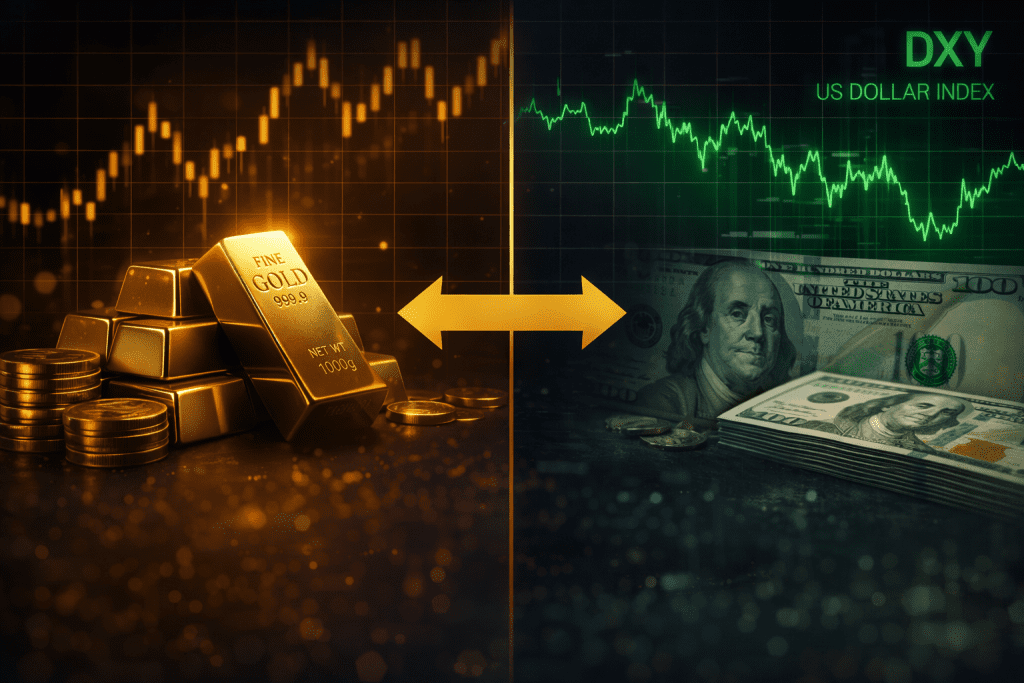
Movements in the dollar are often driven by interest rate expectations, economic data, and central bank policies, making gold indirectly sensitive to these factors as well.
Interest Rates and Real Yields
Interest rates play a critical role in determining gold prices. Because gold does not generate income, it becomes less attractive when interest rates rise, as investors can earn returns from bonds or savings accounts instead.
However, what truly matters is not just nominal interest rates but real yields, which are adjusted for inflation. When real yields are low or negative, gold becomes more attractive because the opportunity cost of holding it decreases.
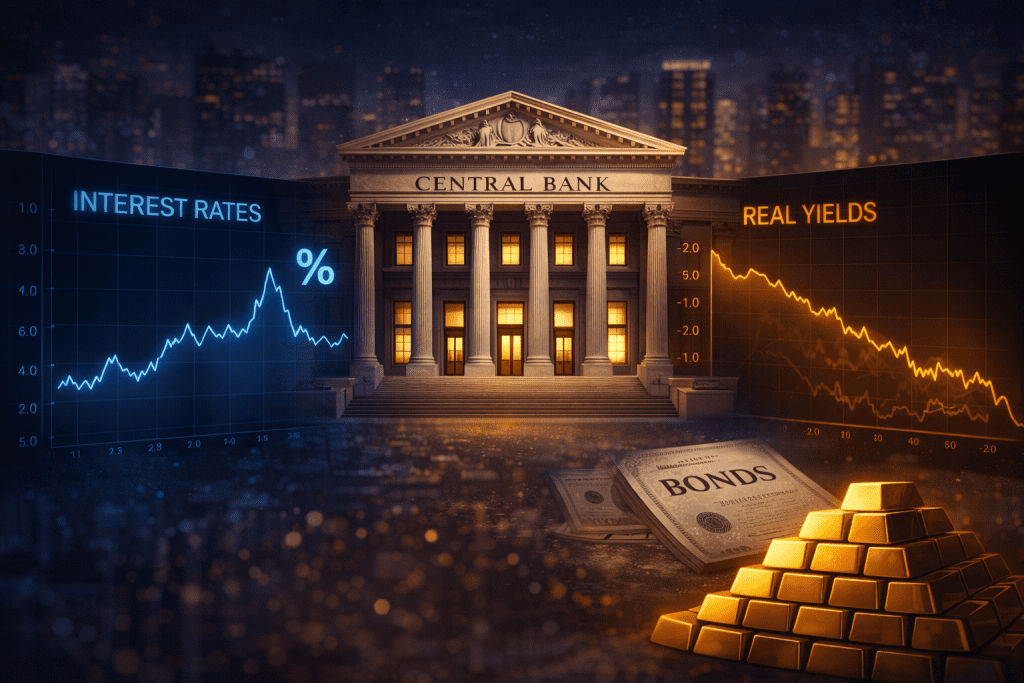
For example, if inflation rises faster than interest rates, real yields fall, and gold prices often increase as investors seek to preserve their purchasing power.
Inflation Expectations
Gold is widely considered a hedge against inflation. When investors expect inflation to rise, they often turn to gold to protect their wealth from currency devaluation.
Periods of high inflation or rising inflation expectations typically lead to increased demand for gold. However, the relationship is not always straightforward. If central banks respond aggressively to inflation by raising interest rates, gold may face downward pressure despite inflation concerns.
This dynamic makes it essential to analyze inflation in conjunction with monetary policy rather than in isolation.
Safe Haven Demand
Gold is known as a safe haven asset, meaning it tends to attract demand during times of uncertainty and crisis. Geopolitical tensions, financial market instability, and economic downturns often lead investors to move capital into gold.
Events such as wars, banking crises, or major stock market declines can trigger sharp increases in gold prices. In these situations, gold is viewed as a reliable store of value when other assets become volatile or risky.

Safe haven demand is often driven by emotion and fear, which can cause rapid and sometimes unpredictable price movements.
Central Banks and Gold Demand
Central banks are major participants in the gold market. They hold gold as part of their foreign exchange reserves and may buy or sell it based on economic strategies and geopolitical considerations.
In recent years, many central banks have increased their gold reserves as a way to diversify away from the US dollar and strengthen financial stability. Large-scale purchases by central banks can support gold prices over the long term.
How Traders Analyze Gold
Traders typically combine both technical and fundamental analysis when trading gold. From a fundamental perspective, they track macroeconomic indicators such as inflation data, interest rate decisions, and currency movements.
At the same time, technical analysis is used to identify trends, key levels, and potential entry and exit points. Gold often reacts strongly to important price levels, making technical structures highly relevant.
Successful gold trading requires understanding how macroeconomic forces interact with price action. For example, a breakout in gold prices during a period of falling real yields can signal a strong trend supported by fundamentals.
Final Thoughts
Gold is a complex asset influenced by multiple global factors. The US dollar, interest rates, inflation, safe haven demand, and central bank activity all play a role in shaping its price movements.
By understanding these drivers, traders and investors can develop a clearer framework for analyzing gold and anticipating market behavior.