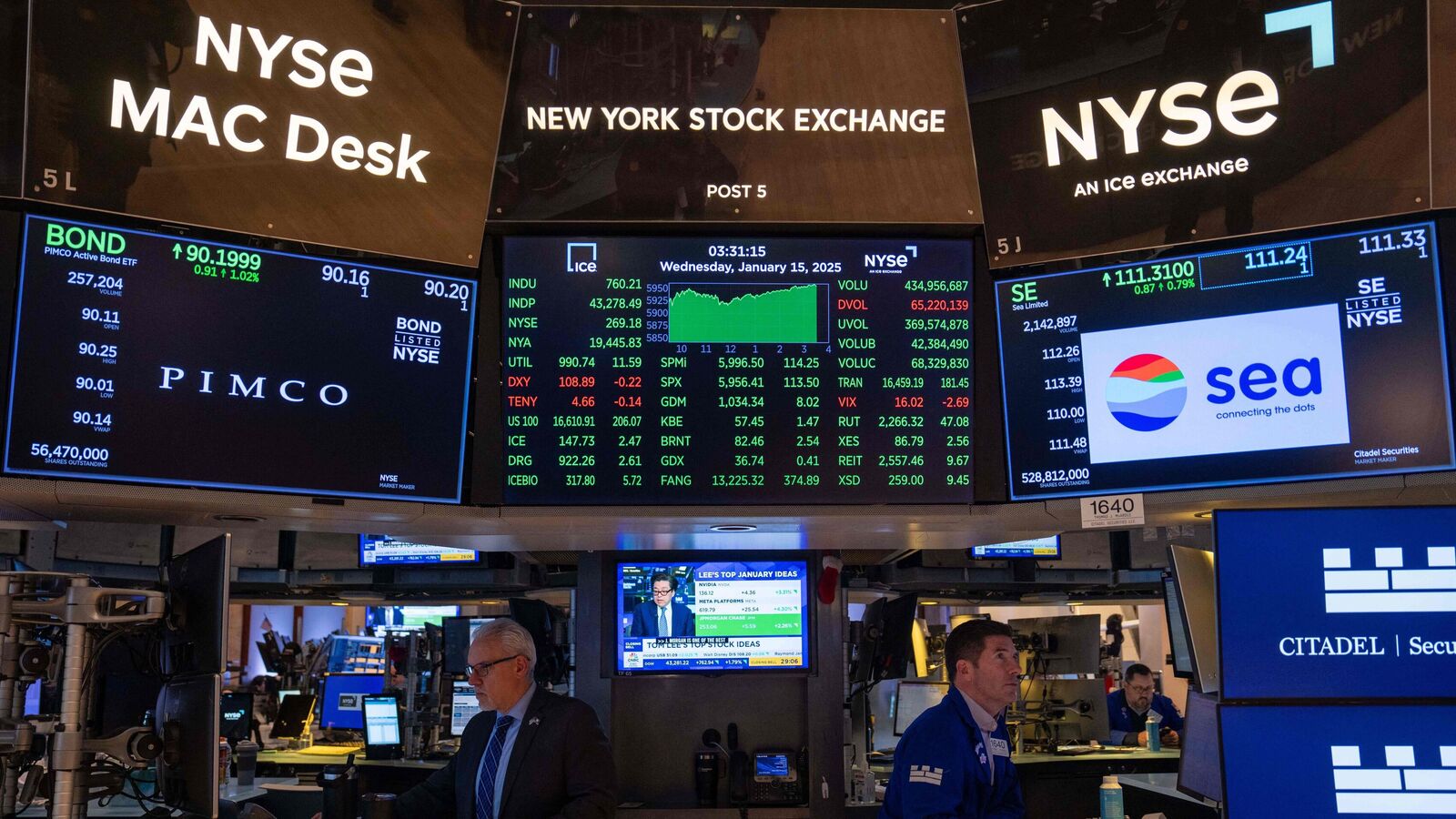
U.S. stocks trimmed earlier losses on Monday, but investor sentiment remained cautious after Washington launched air strikes on Iran over the weekend. The escalation triggered a move away from riskier assets, while oil prices surged on fears of a potential supply shock if the conflict expands into a broader Middle East war.
At 10:25 ET (15:25 GMT), the S&P 500 was down 0.3% at 6,856.33. The NASDAQ Composite slipped 0.1% to 22,635.62, and the Dow Jones Industrial Average fell 0.3% to 48,844.16.
Wall Street had already closed lower on Friday, as concerns about artificial intelligence valuations and persistent inflation weighed on risk appetite. The latest geopolitical developments added further pressure to equities.
U.S.–Iran escalation hits markets
Over the weekend, the United States and Israel carried out a series of strikes on Iran, reportedly killing hundreds, including Supreme Leader Ayatollah Ali Khamenei. Iran responded with attacks targeting Israel as well as Bahrain, Qatar and the United Arab Emirates.
The strikes mark a significant escalation in tensions between Washington and Tehran. Recent negotiations over Iran’s nuclear enrichment program had failed to produce a clear agreement, increasing uncertainty around the region’s stability.
President Donald Trump said military operations would continue until all objectives were achieved. He also warned of the possibility of additional U.S. casualties following the deaths of three American service members.
Iran’s leadership signaled a tougher stance. Senior official Ali Larijani said Tehran would not negotiate with the United States, reinforcing expectations of further retaliation. Larijani, who now heads Iran’s security council, has emerged as a key power figure following Khamenei’s death.
U.S. Defense Secretary Pete Hegseth described the operation as decisive, stating its objectives were to eliminate missile threats, neutralize naval capabilities and prevent nuclear development.
Market participants are increasingly concerned about the risk of a prolonged conflict. Analysts warn that extended instability in the Middle East could have significant economic consequences.
Oil prices jump on supply concerns
Oil markets reacted sharply to the escalation. Investors fear disruptions to shipping routes, particularly through the Strait of Hormuz, a critical channel for global crude flows.
Brent crude futures surged 7.9% to $78.64 per barrel after earlier reaching their highest level since January 2025. U.S. West Texas Intermediate (WTI) crude climbed 6.7% to $71.50 per barrel, touching its strongest level since June.
Higher oil prices raise concerns about renewed inflation pressures. Increased energy costs affect everything from transportation expenses to industrial production, potentially complicating the Federal Reserve’s interest rate outlook.
Dan Coatsworth, head of markets at AJ Bell, said rising crude prices could dampen expectations for near-term rate cuts if inflation risks intensify. Central banks may need to maintain tighter policy settings if energy-driven price pressures persist.
However, some analysts urge caution. Afdhal Rahman of OCBC noted that markets largely absorbed the previous U.S.–Iran confrontation in 2025, when Washington targeted Iranian nuclear facilities. The speed at which that conflict de-escalated helped limit market fallout.
For now, investors appear to be taking a wait-and-see approach. While equities remain in negative territory, losses have only erased a small portion of recent gains. Historical market trends suggest that maintaining a long-term investment strategy during periods of volatility can be more effective than reacting impulsively to short-term shocks.