Wall Street futures dropped sharply early Monday after the United States and Israel carried out military strikes on Iran over the weekend. The escalation triggered a surge in oil prices and prompted investors to pull back from risk-sensitive assets.
Although futures briefly pared losses during Asian trading hours, they fell again after Iran’s National Security Council Chief, Ali Larijani, stated that Tehran would not negotiate with Washington. His comments reinforced concerns about a prolonged conflict.
U.S. President Donald Trump said on Sunday that military operations against Iran will continue for now, with multiple reports indicating that hostilities extended into Monday.
The latest decline follows a weak Friday session on Wall Street, where worries about artificial intelligence-related disruptions and persistent inflation pressures had already dampened investor sentiment.
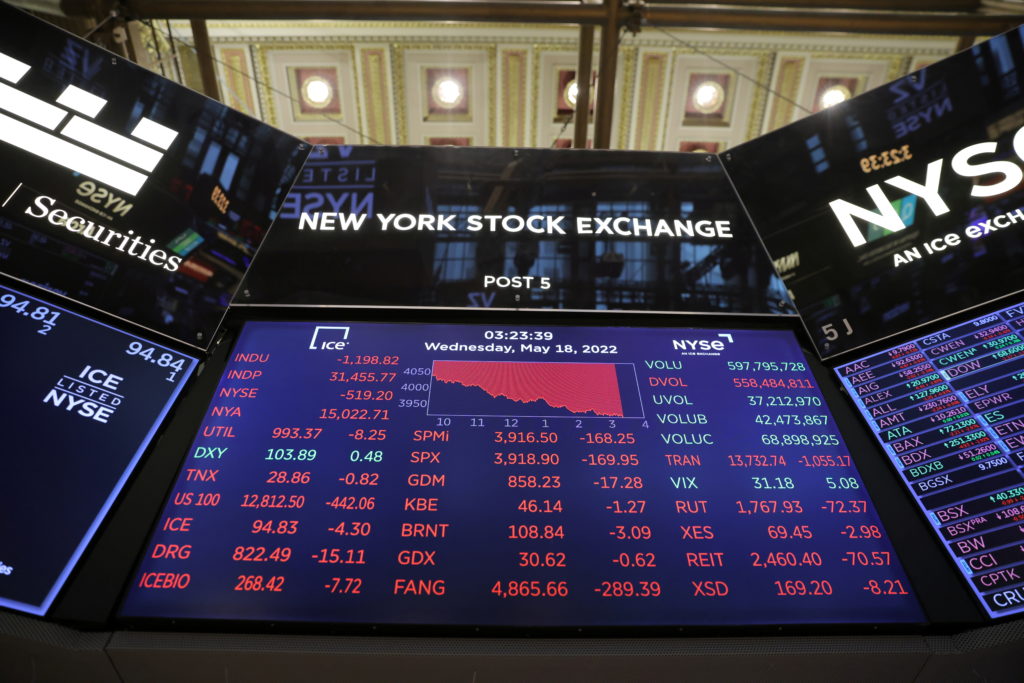
By 01:06 ET (06:06 GMT), S&P 500 Futures were down 1% at 6,818.25 points. Nasdaq 100 Futures fell 1.2% to 24,699.0 points, while Dow Jones Futures dropped 1% to 48,511.0 points.
US-Iran Escalation Weighs on Risk Appetite
Over the weekend, the U.S. and Israel launched coordinated strikes on Iran, reportedly killing hundreds, including Supreme Leader Ayatollah Ali Khamenei. Iran responded with attacks targeting Israel and several Middle Eastern countries, including Bahrain, Qatar and the United Arab Emirates.
The confrontation marks a significant escalation in tensions between Washington and Tehran, particularly after recent negotiations over Iran’s nuclear program failed to deliver clear progress.
President Donald Trump said operations would continue until all objectives are achieved. He also warned that more American casualties are possible following the deaths of three U.S. service members.
Larijani, who has emerged as a key figure in Iran’s leadership following Khamenei’s death, rejected reports suggesting Tehran was seeking renewed talks with the United States. He accused Washington of destabilizing the region.
Investors are increasingly concerned about the possibility of a broader Middle East conflict, especially as Iran has vowed further retaliation.
Oil Prices Surge as Strait of Hormuz in Focus
Oil prices jumped after the weekend attacks, as markets assessed the risk of disruptions to the Strait of Hormuz — a critical shipping route that handles roughly 20% of global oil consumption.
Afdhal Rahman, Executive Director of Wealth Advisory at OCBC, noted that geopolitical shocks typically have limited long-term impact unless they lead to substantial economic fallout. However, he cautioned that the duration of the conflict and its effect on trade and crude supply remain uncertain, potentially driving near-term market volatility.
Rahman added that markets largely absorbed the previous major conflict in 2025, when Washington struck Iran’s nuclear facilities, partly because it was resolved relatively quickly.
Wall Street Also Faces AI and Rate Concerns
Beyond geopolitical tensions, Wall Street has been dealing with broader challenges. In February, equities came under pressure due to concerns about AI-related disruptions and ongoing inflation.
Technology stocks were hit hardest, with the Nasdaq Composite posting a decline of more than 3% last month. The S&P 500 fell 0.9%, while the Dow Jones Industrial Average ended the month roughly flat.
Persistent inflation readings and strong labor market data have fueled expectations that the Federal Reserve may keep interest rates higher for longer. Additional uncertainty surrounding President Trump’s tariff agenda also weighed on sentiment after the Supreme Court ruled that many of the proposed duties were unlawful.