Over the past month, financial markets have been dominated by a bleak narrative often described as the “SaaSpocalypse.” As agentic AI technologies advanced rapidly, investors rotated out of major software stocks such as Salesforce, ServiceNow, SAP, Cadence, Synopsys and IBM. The concern was straightforward: if AI agents can write code and automate workflows, traditional software companies could become obsolete.
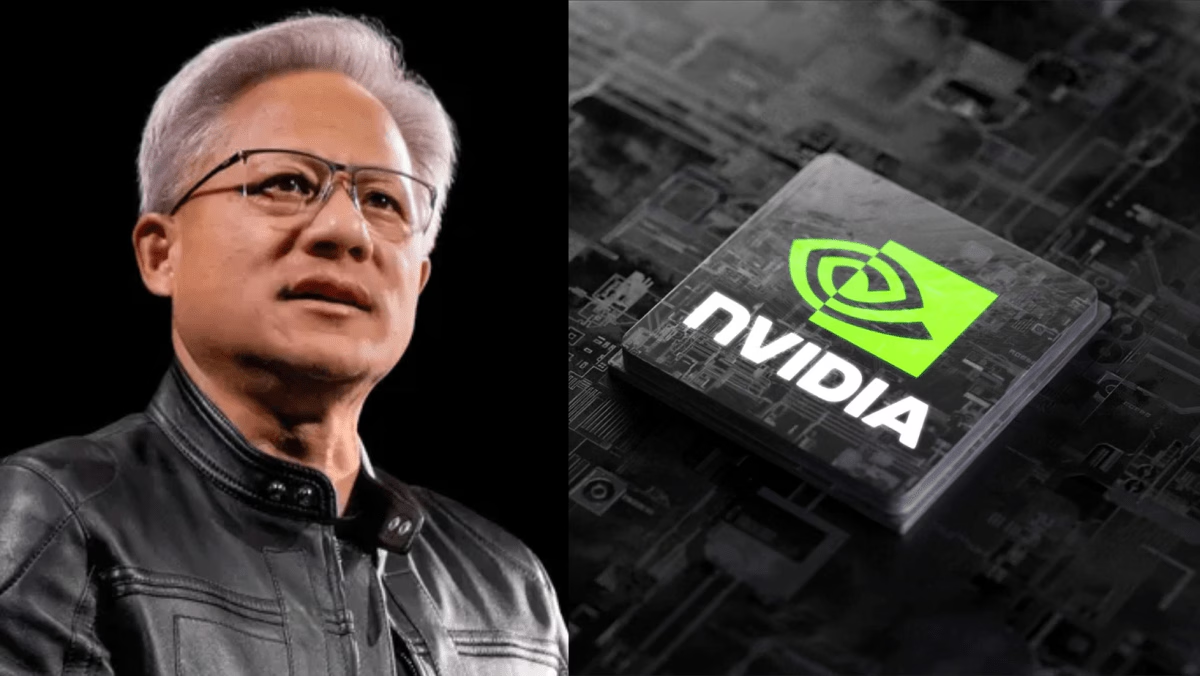
In an interview with CNBC, Nvidia CEO Jensen Huang firmly rejected that view. He described the thesis as not only premature, but based on a deep misunderstanding of how AI will actually function inside enterprises.
AI agents will use software, not eliminate it
Huang’s central argument is counterintuitive. AI agents will not replace software platforms. Instead, they will rely on them more intensively than human users ever have.
According to Huang, agentic AI marks a major inflection point. These systems can now perceive information, reason through problems and execute tasks independently. They can write code, organize data, plan projects and build digital products. That capability has fueled fears that software companies could lose relevance.
However, enterprises are unlikely to rebuild their digital infrastructure from scratch. Businesses have spent decades developing browsers, databases, workflow engines and systems of record. Rather than replacing those systems, AI agents will operate within them.
In practical terms, an AI customer service agent would use platforms such as ServiceNow. A design-focused AI would rely on tools like Cadence or Synopsys. Finance and operations agents would continue to input and manage data within SAP. Agents are advanced users of software, not substitutes for it.
Increased tool usage at machine scale
Huang argues that AI agents will increase overall software usage. As digital workers scale into the thousands or even hundreds of thousands, their reliance on existing enterprise tools will expand dramatically.
At Nvidia itself, Huang said the number of compilers, scripts and software instances is rising. This growth is driven not by more human employees, but by the growing presence of AI agents performing tasks alongside them.
From this perspective, the adoption of AI could boost demand for enterprise software rather than weaken it.
Systems of record remain essential
Another concern behind the software sell-off is that AI could diminish the importance of systems of record — the core databases where companies store official data.
Huang sees the opposite outcome. AI agents require reliable data sources to function effectively. They need authoritative systems to read from and write to. Human organizations still require accountability, clarity and verified records.
As AI agents act on behalf of employees, they will interact continuously with these platforms. That dynamic could make systems of record even more critical in an AI-driven enterprise.
AI shifts the abstraction layer, not the purpose of work
Huang also addressed fears that AI will displace human workers entirely. While certain repetitive tasks may be automated, he believes the purpose of human work will not disappear. Instead, it will shift.
Software engineers, for example, do not exist merely to type code. Their role is to solve problems and create new solutions. In an AI-powered environment, humans will define objectives and strategy, while agents handle execution.
This shift could raise productivity and expand innovation rather than reduce the need for software or engineering talent.
Market reaction may reflect misplaced fears
If Huang’s view proves correct, the recent sell-off in software stocks may reflect outdated assumptions about technological disruption.
AI agents are not a replacement for SaaS platforms. They may become the next major demand driver for them. The future may not be a battle between software and AI, but a combination of both — software enhanced by AI, operating at unprecedented scale.