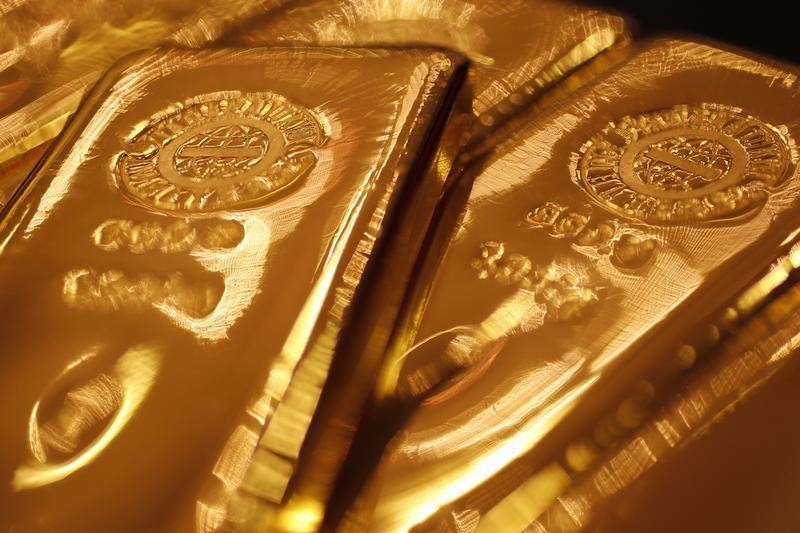
Gold prices were broadly steady on Thursday as ongoing U.S. tariff uncertainty continued to support safe-haven demand. At the same time, investors closely monitored renewed nuclear talks between Washington and Tehran taking place in Switzerland.
At 08:55 ET (13:55 GMT), spot gold edged 0.1% higher to $5,171.27 per ounce. Meanwhile, U.S. gold futures declined 0.8% to $5,186.66 per ounce, reflecting cautious positioning ahead of further geopolitical and trade developments.
U.S.-Iran nuclear talks and tariff concerns support gold
Market focus remains on diplomatic negotiations in Geneva, where U.S. and Iranian officials have resumed discussions over Iran’s nuclear program. Any sign of stalled progress or escalating tensions could strengthen demand for gold as a safe-haven asset.
In parallel, traders are assessing the implications of new U.S. trade tariffs. A recent U.S. Supreme Court ruling altered the legal basis for certain emergency trade measures, increasing uncertainty around future tariff policy.
Fresh global levies of up to 15% have added to concerns about the global trade outlook, reinforcing gold’s appeal as a hedge against economic and political risk.
Economic data released earlier in the session showed that initial jobless claims in the United States rose modestly. New applications for unemployment benefits increased by 4,000 to a seasonally adjusted 212,000 in the week ended February 21. The data pointed to a still-resilient labor market but did little to shift overall sentiment.
So far in 2026, gold has remained well supported by persistent geopolitical tensions, steady central bank purchases and portfolio diversification flows. Analysts at ING noted that bullion has recovered more than half of the losses recorded during last month’s sharp sell-off. They added that geopolitical risks remain a key upside driver, particularly if tensions involving Iran intensify.
Supreme Court ruling seen as marginally positive for gold
Analysts at Deutsche Bank said the U.S. Supreme Court decision to strike down President Donald Trump’s broad “reciprocal” tariffs could be mildly supportive for gold prices.
However, they cautioned that the overall impact may be limited. While the ruling removed the use of the 1977 International Emergency Economic Powers Act to impose certain tariffs, the White House is reportedly exploring alternative legal avenues. These include temporary levies under Section 122 of separate U.S. trade legislation.
According to Deutsche Bank, tariff revenue still plays a role in offsetting fiscal pressures linked to the One Big Beautiful Bill Act, which reduces government revenue more than spending. As a result, the net effect on the broader U.S. fiscal outlook — and on gold — may be modest.
Silver, platinum and copper retreat
Other precious and industrial metals pulled back after recent gains. Silver prices fell 4% to $87.315 per ounce, reversing part of the previous session’s advance. Platinum declined 2.1% to $2,282.95 per ounce following a surge of more than 5% on Wednesday.
In base metals, copper futures on the London Metal Exchange slipped 0.1% to $13,311.85 per ton. U.S. copper futures also eased 0.2% to $6.0348 per pound, as investors reassessed demand prospects amid ongoing trade uncertainty.