Asian currencies traded in a narrow range on Thursday as investors remained cautious amid ongoing uncertainty surrounding U.S. trade policy. While most regional currencies showed limited movement, the Chinese yuan and Japanese yen outperformed due to domestic developments.
The U.S. Dollar Index slipped 0.1% during Asian trading hours, with U.S. Dollar Index futures also down 0.1% as of 00:22 ET (05:22 GMT), reflecting mild pressure on the greenback.
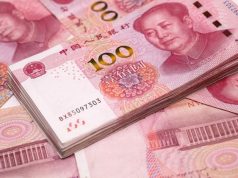
The Chinese yuan strengthened significantly, with the onshore USD/CNY pair falling 0.5% to 6.834, marking its lowest level in 34 months. The move comes ahead of China’s annual parliamentary session, the National People’s Congress, where investors are anticipating growth targets and possible fiscal stimulus measures. The offshore USD/CNH pair also declined, touching its weakest level since mid-April 2023. Market participants expect the meeting to outline Beijing’s economic priorities for the year, boosting confidence in potential policy support.
Across the broader region, currency markets remained cautious as concerns over U.S. tariffs persisted. Earlier this week, President Donald Trump implemented a 10% global tariff, with the administration signaling plans to raise rates to 15%, adding to trade-related uncertainty.
In South Korea, the won was largely unchanged after the Bank of Korea kept its benchmark interest rate steady at 2.5%, in line with expectations. Meanwhile, the Singapore dollar edged 0.1% lower, and the Indian rupee gained 0.1%. The Australian dollar advanced 0.2% against the U.S. dollar.
The Japanese yen strengthened, with USD/JPY falling 0.4% after Kazuo Ueda, Governor of the Bank of Japan, stated in an interview with Yomiuri Shimbun that policymakers would carefully assess incoming data at their March and April meetings. He noted that another rate hike remains possible if inflation and wage growth stay firm, reinforcing expectations that Japan may continue its gradual monetary policy normalization.
The yen had weakened a day earlier following reports that Prime Minister Sanae Takaichi adopted a cautious stance on further rate increases, alongside the nomination of two dovish-leaning candidates to the BOJ board.
Analysts at ING Group commented that while the addition of new board members will broaden the range of views in policy discussions, no single perspective is likely to dominate decisions. They added that a rate hike in June appears more likely than in April, pending confirmation of wage growth above 5% in the Spring Wage Negotiations and upcoming inflation data.