Wall Street Rises as Semiconductor Stocks Rebound
U.S. stocks moved higher on Tuesday as semiconductor shares recovered from recent losses.
However, investors remained cautious after a similar rally faded during the previous session, leaving the major indexes lower by the closing bell.
With few major economic reports scheduled and the Federal Reserve in its communications blackout period, second-quarter earnings are expected to drive market sentiment this week.
S&P 500, Nasdaq and Dow Move Higher
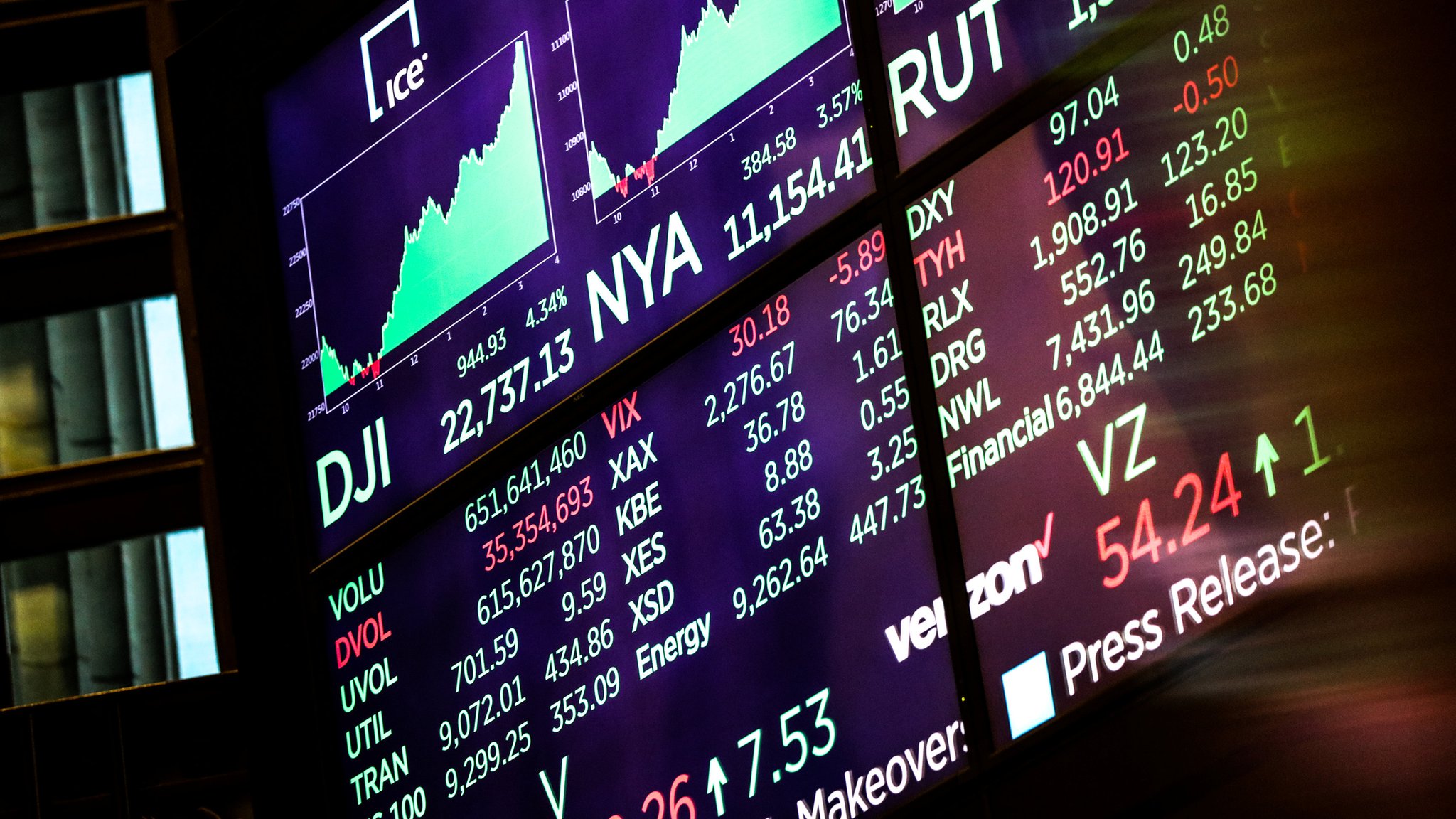
At 11:14 ET, or 15:14 GMT, the S&P 500 was up 0.7% at 7,496.51 points.
The technology-heavy Nasdaq Composite gained 1.3% to reach 25,830.96 points.
Meanwhile, the Dow Jones Industrial Average advanced 0.6% to 52,127.73 points.
AI Spending Concerns Continue to Weigh on Markets
Wall Street’s major indexes ended lower during the previous session despite posting early gains.
Investors remain concerned about whether the enormous amount of spending on artificial intelligence infrastructure will generate sufficient long-term returns.
These concerns have placed pressure on semiconductor companies that supply the chips used to train and operate AI systems.
A semiconductor stock index closed only 0.6% higher on Monday after gaining more than 3% earlier in the session.
Chinese AI Competition Pressures Sentiment
New competition from Chinese artificial intelligence developers has also affected investor confidence.
Recent Chinese models have challenged the assumption that U.S. companies will maintain a clear technological advantage.
As a result, investors are taking a closer look at the growth expectations and valuations of leading American AI and semiconductor companies.
Major Technology Earnings Take Center Stage
Investors are now preparing for a busy week of corporate results.
Alphabet, the parent company of Google, and semiconductor manufacturer Texas Instruments are scheduled to release quarterly earnings on Wednesday.
Their results could provide important information about the strength of the AI boom and the pace of spending on data centers, chips and other supporting infrastructure.
General Motors and Other Companies Report
Several major companies are also expected to release earnings on Tuesday.
The list includes General Motors, Danaher and Charles Schwab.
Philip Morris International, Gevo, Moody’s and CME Group are among the other companies scheduled to report during the week.
The results may help investors assess corporate demand, consumer spending and the broader health of the U.S. economy.
U.S.-Iran Conflict Remains a Market Risk
Geopolitical tensions in the Middle East continued to influence financial markets.
Iran reportedly attacked a tanker in the Strait of Hormuz on Tuesday. At the same time, the United States carried out another round of strikes against Iranian targets.
The latest developments extended the cycle of attacks between Washington and Tehran.
Tanker Crew Abandons Vessel
The United Kingdom Maritime Trade Operations center reportedly said that a tanker was attacked near Oman.
The incident forced the ship’s crew to abandon the vessel.
Iran’s Islamic Revolutionary Guard Corps later claimed responsibility for the attack.
The event renewed concerns about the security of commercial shipping through the Strait of Hormuz.
Iran Targets U.S. Military Facilities
Iran’s Revolutionary Guard also said it had launched drone attacks against three major U.S. military facilities in Kuwait.
Additional strikes were reportedly directed at American bases in Jordan, Syria and Bahrain.
Meanwhile, the U.S. military said it had completed a tenth consecutive day of operations against Iran on Monday evening.
U.S. Continues Strikes on Iranian Targets
U.S. Central Command said it had attacked Iranian military sites to reduce the country’s ability to threaten commercial ships in the Strait of Hormuz.
Explosions were reported in Bandar Abbas, Qeshm Island and Konarak.
The continued military activity has increased concerns that the conflict could cause lasting disruption to one of the world’s most important energy routes.
Oil Prices Climb Above Recent Highs
Oil prices moved higher as the conflict continued.
Brent crude futures rose 2.1% to around $91.08 per barrel.
U.S. West Texas Intermediate crude gained 2% to trade near $84.15 per barrel.
Oil prices had already reached five-week highs on Monday as the fighting restricted traffic through the Strait of Hormuz.
Supply and Inflation Concerns Support Crude
Reduced shipping activity through the strait has raised fears of tighter global oil supplies and falling inventories.
A prolonged disruption could also push energy prices higher and create a new wave of global inflation.
Such a development could affect central bank policy and place additional pressure on stock markets.
Mediation Reports Limit Oil Gains
Oil prices later gave back part of their advance after reports suggested that regional mediators were still working to restart peace negotiations.
Officials from both the United States and Iran also indicated that they may eventually be willing to resume talks.
These comments provided some hope that the conflict could de-escalate, although military operations continued.
Earnings and Geopolitics Drive the Market Outlook
Wall Street’s near-term direction is likely to depend on two major factors.
Investors will closely monitor technology earnings for evidence that AI spending remains sustainable.
At the same time, developments in the U.S.-Iran conflict and the Strait of Hormuz could affect oil prices, inflation expectations and broader risk appetite.