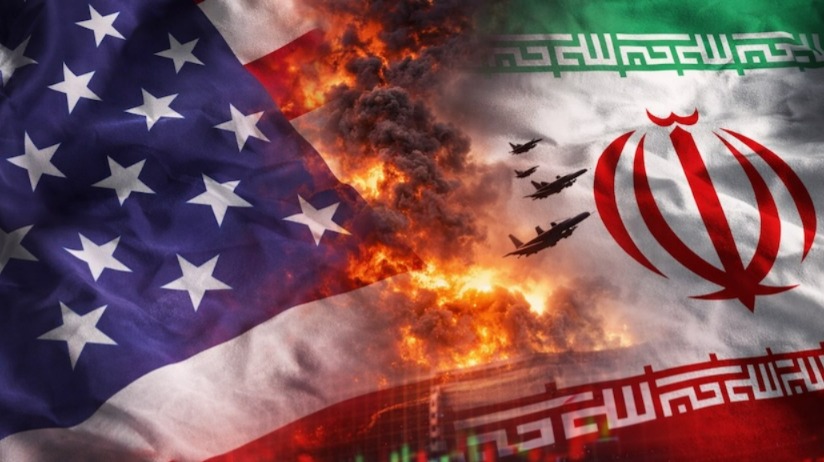
Brent crude traded above $93 per barrel on Tuesday after U.S. Central Command announced new strikes against Islamic Revolutionary Guard Corps targets inside Iran.
CENTCOM said the operation began at noon ET on September 1 and followed recent attacks on commercial shipping in the Strait of Hormuz, as well as attacks targeting U.S. service members in the region.
The latest military action has intensified concerns about security around one of the world’s most important oil transit routes.
CENTCOM Links Strikes to Strait of Hormuz Security
U.S. Central Command said the strikes were aimed at responding to recent IRGC activity around the Strait of Hormuz.
CENTCOM spokesman Capt. Tim Hawkins emphasized the importance of protecting international shipping routes and maintaining freedom of navigation.
He said U.S. forces had recently completed efforts to remove sea mines from international shipping lanes and would not allow Iran to deploy additional mines in the area.
The Strait of Hormuz remains a critical route for global energy markets, with a significant share of the world’s oil supply passing through the waterway.
U.S.-Iran Escalation Has Accelerated
Tuesday’s announcement marked another significant escalation in the conflict within a matter of days.
On August 30, U.S. forces struck two Iranian rocket launchers on Larak Island.
The operation reportedly followed observations that IRGC forces were preparing rockets capable of deploying sea mines into the Strait of Hormuz.
Those strikes were described as the first known U.S. attacks inside Iran since late July.
Iran Responds With Missile and Drone Attacks
Iran responded the following day with ballistic missile and drone attacks targeting the King Hussein and Muwaffaq Salti air bases in Jordan.
Jordanian authorities said eight missiles were intercepted.
U.S. officials also reported that most of the incoming attacks were neutralized and that no significant damage was recorded.
The exchange increased fears that the conflict could broaden further across the region.
Trump Warns of Further U.S. Response
President Donald Trump signaled that Washington was prepared to respond forcefully following Iran’s attacks on bases in Jordan.
Speaking on Fox News, Trump warned that the United States would retaliate.
His comments reinforced expectations that additional military action could follow if Iranian attacks continue.
CENTCOM Reportedly Prepared Limited Strike Strategy
Axios reported, citing U.S. officials, that CENTCOM had developed a strategy involving periodic limited strikes against Iranian military capabilities near the Strait of Hormuz.
The reported plan was designed to weaken radar systems, air defenses and anti-ship missile infrastructure over time.
Defense Secretary Pete Hegseth reportedly supported the strategy.
However, the plan had not been formally approved by Trump before the latest escalation, according to the report.
Oil Markets React to Hormuz Risk
The worsening conflict has had an immediate impact on energy markets.
Brent crude climbed above $93 per barrel as traders priced in the growing risk of disruptions to oil shipments through the Strait of Hormuz.
Any prolonged disruption to the waterway could significantly affect global crude supplies and increase transportation and insurance costs.
That risk has added a geopolitical premium to oil prices as investors assess the likelihood of further military escalation.
Uncertainty Remains Over U.S. Strategy
It remains unclear whether Tuesday’s wider strikes signal the beginning of a broader U.S. strategy against Iranian military infrastructure or represent a limited response to recent IRGC attacks.
For now, markets are closely watching developments in the Strait of Hormuz.
Further escalation between the United States and Iran could keep upward pressure on oil prices and increase volatility across global financial markets.