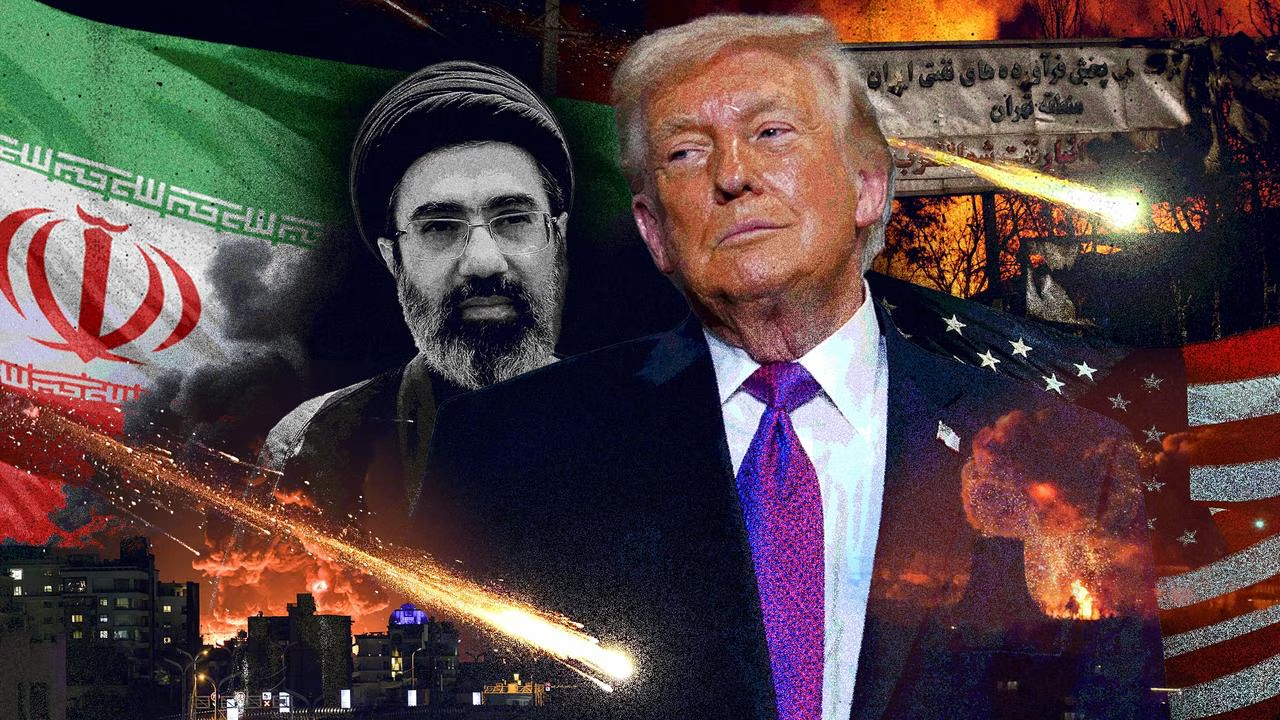
President Donald Trump said on Friday that he had not yet decided whether to authorize major new military strikes against Iran. However, he added that negotiations with Tehran were becoming increasingly serious.
His comments followed reports that the White House was considering a significant expansion of U.S. military operations in Iran. American forces have already carried out strikes for 13 consecutive days as tensions between Washington and Tehran continue to escalate.
Trump Keeps Military and Diplomatic Options Open
Speaking to reporters in the Oval Office, Trump said the United States could continue its current campaign and gradually weaken Iran’s military capabilities.
He also suggested that Washington could accelerate the operation or pursue a negotiated settlement.
When asked directly whether he had approved massive new strikes, Trump said he had not made a final decision.
The president claimed that Iranian officials were showing greater interest in negotiations as the conflict continued. He described diplomacy as the smarter option but warned that the United States was fully prepared to intensify military action.
U.S. Forces Target Iranian Military Sites
American forces have attacked several Iranian military assets during the recent campaign.
The targets reportedly included drone storage facilities and coastal surveillance posts.
The goal of the strikes is to reduce Iran’s ability to attack commercial vessels travelling through the Strait of Hormuz.
The waterway is one of the world’s most important energy routes. A large share of global oil supplies passes through the strait, making any disruption a serious risk for international markets.
Iran Reportedly Rejects Ceasefire Proposal
Iran has reportedly rejected a U.S.-supported ceasefire plan delivered by Iraqi Prime Minister Ali al-Zaidi.
The New York Times cited Iranian and Iraqi officials who said Tehran was unwilling to accept a temporary agreement that failed to resolve control of the Strait of Hormuz.
The proposal was reportedly the only ceasefire framework under active consideration.
However, the lack of progress has increased concerns that the conflict could continue or expand into other parts of the Gulf region.
Iraqi Prime Minister Attempts to Mediate
Al-Zaidi recently visited the White House before travelling to Tehran.
During the trip, he reportedly met Iranian President Masoud Pezeshkian, Foreign Minister Abbas Araghchi and other senior officials.
The discussions were intended to create a diplomatic path between Washington and Tehran.
However, Araghchi argued that Iran did not require additional intermediaries. He said the main obstacle was the U.S. approach to negotiations rather than a lack of communication between the two countries.
Iran Prepares for a Wider Conflict
Iranian officials are reportedly preparing for the possibility of a broader war if the United States carries out larger attacks against Tehran or critical infrastructure.
Under such a scenario, Iran could respond by targeting Tel Aviv.
Tehran could also request support from the Iran-backed Houthi movement in Yemen.
The Houthis may attempt to disrupt shipping through the Bab el-Mandeb Strait, another strategically important maritime route linking the Red Sea with the Gulf of Aden.
Red Sea Attacks Raise Oil Supply Risks
The conflict took another serious turn after the Houthis claimed responsibility for attacks on two Saudi oil tankers in the Red Sea.
Trump responded by promising major military punishment against Iran and the Yemeni group.
The attacks created concerns that oil shipments could face disruptions in both the Strait of Hormuz and the Bab el-Mandeb Strait.
Threats to both routes could significantly reduce the flow of crude oil and other goods through the region.
Brent Oil Briefly Climbs Above $100
Oil prices have risen sharply as traders assess the risk of supply shortages.
Brent crude, the global oil benchmark, briefly moved above $100 per barrel for the first time since May.
Prices pulled back below that level on Friday. However, Brent still recorded a weekly gain of nearly 12%.
The benchmark also remained far above the $70 level reached after the previous U.S.-Iran ceasefire framework signed in June.
That agreement now appears to have been temporary.
Trump Considers Expanding Military Operations
Axios reported that Trump was seriously considering restarting large-scale military operations against Iran.
The potential attacks would reportedly be more extensive than those launched at the beginning of the conflict in late February.
Trump reportedly believes Iranian leaders want to negotiate but are not yet ready to make sufficient concessions.
The administration may therefore view further military pressure as a way to strengthen its position in future talks.
Conflict Risks Spreading Across the Gulf
The dispute between Washington and Tehran has intensified sharply in recent weeks.
Military action has already expanded beyond direct attacks on Iranian territory. U.S. bases, shipping routes and regional allies are also facing growing security risks.
A wider conflict could involve Israel, Yemen, Saudi Arabia and other Gulf countries.
Such an escalation would increase the risk of oil supply disruptions, shipping delays and further instability across global financial markets.
Rising Oil Prices Increase Inflation Concerns
The surge in energy prices is also creating political and economic pressure inside the United States.
Higher oil prices can quickly raise gasoline, transportation and production costs.
This could lead to another increase in inflation at a sensitive time for American consumers.
Republican lawmakers are preparing for important midterm elections. As a result, voters’ concerns about energy costs and inflation may influence the debate over the war.
House Demands Congressional Authorization
The Republican-controlled House of Representatives voted for a second time to require Trump to seek congressional approval for the military campaign.
However, Republican lawmakers in the Senate blocked the measure.
The dispute reflects growing divisions over the administration’s Iran strategy and the president’s authority to continue military operations without formal authorization from Congress.
Iran Talks Could Determine the Next Phase
Trump has not yet approved a major escalation against Iran.
Nevertheless, the United States remains prepared to expand its military campaign if negotiations fail.
The next phase of the conflict may depend on whether Washington and Tehran can reach an agreement over the Strait of Hormuz, regional security and the conditions of a ceasefire.
Until meaningful diplomatic progress emerges, oil prices and global markets are likely to remain highly sensitive to military developments in the Middle East.