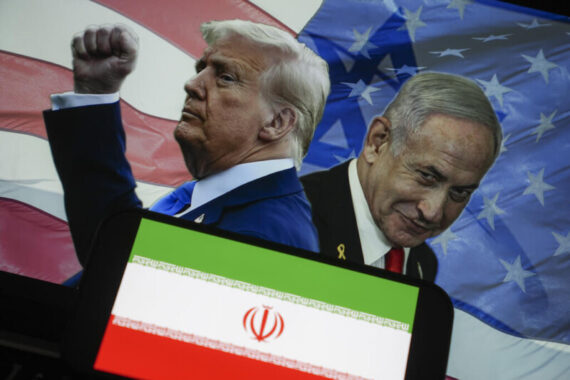
Trump Says Netanyahu Did Not Defy Him Over Iran Strike
U.S. President Donald Trump has rejected suggestions that Israeli Prime Minister Benjamin Netanyahu acted against his wishes by launching strikes on Iran over the weekend in response to Iranian attacks on Israel.
In an interview with the BBC, Trump said he advised Netanyahu to use “common sense” because the White House was close to finalizing what he described as a powerful and highly beneficial agreement.
The president also stated that missiles were already en route to Iran during his conversation with Netanyahu, but emphasized that the Israeli leader follows his guidance when instructed.
Trump Claims Victory in Iran Conflict Is Near
Speaking during a virtual rally on Monday evening, Trump expressed confidence that the United States was approaching a decisive outcome in the ongoing conflict with Iran.
He claimed that U.S. military actions had significantly weakened Iran’s military infrastructure and leadership, arguing that a resolution to the conflict could be achieved in the near future.
According to Trump, a formal declaration of victory could come within the next two weeks.
“I think we are winning that battle, but you’re really going to win it over the next two weeks when we declare total victory,” Trump said.
He also predicted that global oil prices would fall sharply once the conflict is brought under control.
Helicopter Incident in the Strait of Hormuz
Trump’s remarks came shortly after reports emerged of a U.S. helicopter crash in the Strait of Hormuz.
The president confirmed that the pilots involved in the incident were safe and stated that an official report detailing the circumstances of the crash would be released on Tuesday.
The Strait of Hormuz remains one of the most strategically important energy corridors in the world, carrying a significant portion of global oil shipments.
Iran and Israel Agree to Pause Hostilities
Recent tensions appeared to ease after Iran and Israel agreed to suspend their latest round of military exchanges following calls from Trump for both sides to halt hostilities.
The development helped reduce immediate concerns about a broader regional escalation and contributed to a decline in oil prices.
Although energy prices moved lower following the ceasefire announcement, they continue to trade above levels seen earlier in the year due to ongoing geopolitical uncertainty.
Conflict Continues Despite Repeated Peace Claims
The conflict involving the United States, Israel, and Iran entered its fourth consecutive month in June.
This comes despite several previous statements from Trump suggesting that a peace agreement was imminent.
Earlier this year, the president stated that a deal could be reached within two weeks after Iran reportedly agreed to a tentative ceasefire arrangement.
However, Iranian officials have repeatedly disputed claims that a comprehensive peace agreement is close and have recently appeared to distance themselves from indirect negotiations with Washington.
Lebanon Remains a Key Point of Dispute
The latest escalation between Iran and Israel is closely linked to Israel’s military operations in Lebanon.
Tehran has consistently opposed Israel’s actions and has demanded that Lebanon be included in any broader regional peace agreement.
The issue continues to complicate diplomatic efforts and remains one of the primary obstacles to achieving a long-term settlement in the region.
Questions Remain Over Iran’s Military Capabilities
Trump has repeatedly argued that U.S. actions have severely damaged Iran’s military infrastructure and missile capabilities.
However, Iran has continued launching attacks against targets across the Middle East and has maintained pressure on regional shipping routes.
The country has also continued to restrict activity in the Strait of Hormuz, raising concerns about global energy supplies and regional stability.
Markets Monitor Geopolitical Developments
Financial markets continue to closely follow developments in the Middle East as investors assess the potential impact on oil prices, inflation, and global economic growth.
While the recent pause in hostilities has provided temporary relief, uncertainty surrounding future negotiations and regional security remains elevated.
As diplomatic efforts continue, investors will be watching closely for signs of a lasting agreement that could reduce geopolitical risk and stabilize energy markets.