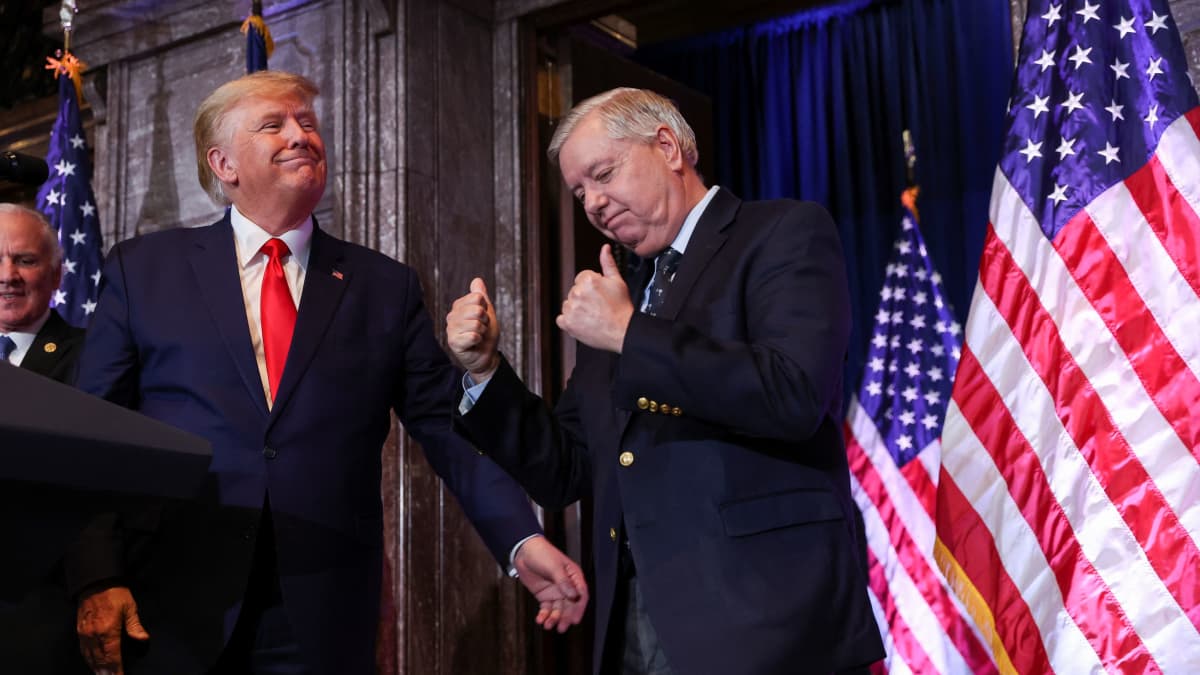
President Donald Trump has renewed his call for the US Senate to approve the CLARITY Act, a major cryptocurrency market structure bill.
Trump urged lawmakers to pass the legislation in honor of the late Senator Lindsey Graham, who died on July 11, 2026, following a sudden illness. Graham was a close Trump ally and a supporter of maintaining US leadership in digital assets.
Trump Calls for Senate Action on the CLARITY Act
In a Truth Social post published on July 13, Trump said the Senate should approve the CLARITY Act as a tribute to Graham.
The president described the South Carolina senator as a strong supporter of the legislation. He also warned that China and other countries are seeking to challenge the United States in both cryptocurrency and artificial intelligence.
Trump argued that lawmakers must act quickly to protect America’s leadership in these rapidly developing industries.
The latest statement continues Trump’s broader effort to establish the United States as a global center for cryptocurrency innovation.
CLARITY Act Faces a Tight Senate Deadline
The CLARITY Act is designed to create a clearer regulatory structure for the US cryptocurrency market.
The legislation would define how federal regulators oversee digital assets, crypto exchanges, custody providers and decentralized finance platforms. It would also clarify the responsibilities of the Securities and Exchange Commission and the Commodity Futures Trading Commission.
However, lawmakers have limited time to advance the bill before the Senate begins its August recess. The legislation previously passed the House but remains under consideration in the Senate.
The bill is expected to become one of the most closely watched cryptocurrency developments in Washington over the coming weeks.
Ethics Provision Remains a Major Obstacle
One of the main disagreements involves a proposed ethics provision.
Democratic lawmakers want stronger rules preventing senior government officials, including the president, from personally benefiting from cryptocurrency businesses while serving in office.
Republicans and Democrats have not yet reached an agreement on how such restrictions should be included in the final legislation.
The debate has become more significant because Trump reported more than $1.4 billion in income from cryptocurrency-related ventures during 2025. These business interests have increased concerns about possible conflicts between government policy and private financial activity.
The White House has rejected allegations of improper conflicts of interest. However, the ethics debate continues to complicate negotiations surrounding the CLARITY Act.
Patrick Witt Calls It a Critical Week
White House crypto adviser Patrick Witt described this week as an important period for the legislation.
Witt noted that lawmakers and government officials have already spent considerable time negotiating the bill. However, he warned that Congress cannot afford further delays.
He also highlighted the first anniversary of the GENIUS Act, another major cryptocurrency bill signed into law by Trump.
The White House previously aimed to secure passage of the CLARITY Act before July 4. That deadline was missed, placing additional pressure on lawmakers to make progress before the August recess.
House Plans CLARITY Act Hearing
The US House is also expected to hold a field hearing related to the CLARITY Act.
The hearing could provide lawmakers with another opportunity to discuss cryptocurrency regulation, market oversight and consumer protections.
Supporters argue that clear regulations would encourage innovation and help US crypto companies compete internationally. Critics, however, want stronger safeguards covering financial risks, ethics and conflicts of interest.
Cynthia Lummis Supports Trump’s Appeal
Pro-crypto Senator Cynthia Lummis also supported Trump’s call for action.
Lummis said Graham was committed to keeping the United States at the forefront of important global industries, including digital assets.
She urged her Senate colleagues to approve the legislation and send it to Trump’s desk.
The coming weeks could determine whether lawmakers can resolve their disagreements and move the CLARITY Act closer to becoming US law.