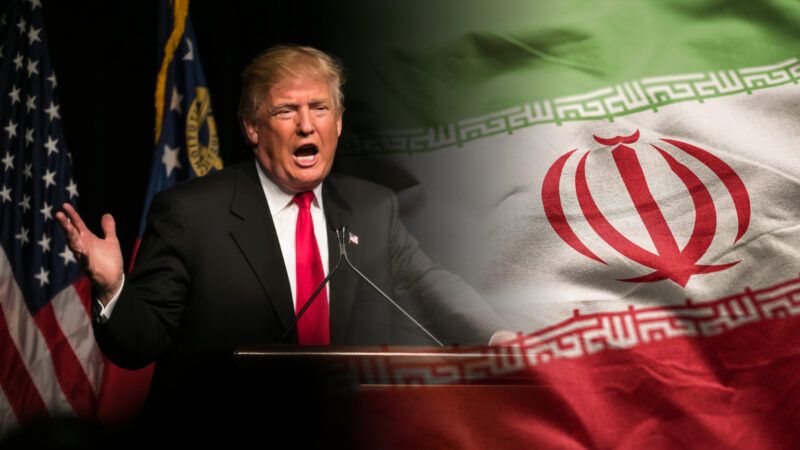
U.S. President Donald Trump has expressed fresh doubts over a framework peace deal with Iran.
Speaking at a NATO summit in Turkey, Trump said he believes the truce is “over” after both sides exchanged strikes overnight.
Trump Questions Iran Truce
Trump accused Tehran of acting in bad faith and questioned whether the agreement could still survive.
He said the U.S. had reached a deal with Iran, including terms related to nuclear weapons, but claimed Iranian officials later denied that such talks had taken place.
“As far as I’m concerned, it’s over,” Trump said.
Iran Says It Targeted US Military Sites
Trump’s comments came after Iranian armed forces said they had attacked U.S. military sites in Kuwait and Bahrain.
Iran said the strikes were retaliation for U.S. attacks on targets inside Iran and Washington’s decision to revoke a sanctions waiver linked to Iranian oil.
In a statement carried by Iran’s state news agency, the Islamic Revolutionary Guards Corps said it had hit 85 U.S. military sites.
The IRGC also claimed it had shot down an American MQ-9 drone.
Iran Condemns US Strikes
The Khatam al-Anbiya Central Headquarters, part of Iran’s military command structure, called the U.S. strikes in southern Iran a clear act of aggression.
It also said Iran would not allow foreign interference in the control or management of the Strait of Hormuz.
The strait remains one of the world’s most important routes for oil shipping.
US Says Strikes Were Retaliation
Earlier, the Pentagon said its attacks were a response to recent Iranian strikes on commercial vessels moving through the Strait of Hormuz.
U.S. Central Command said it had struck more than 80 targets inside Iran.
CENTCOM also claimed it hit more than 60 IRGC small boats in and around the strait.
Washington Revokes Iranian Oil License
The U.S. Treasury Department’s Office of Foreign Assets Control also revoked a general license linked to Iranian energy exports.
The license had authorized the production, delivery, and sale of crude oil, petrochemical products, and petroleum products of Iranian origin.
The move added further pressure to tensions between Washington and Tehran.
Tanker Attacks Raise Regional Risk
Tehran has not claimed responsibility for Tuesday’s attacks on ships off the coast of Oman.
The vessels reportedly included a Saudi oil tanker and a Qatari ship carrying liquefied natural gas.
Iran’s Parliament Speaker and top negotiator, Mohammad Bagher Ghalibaf, accused Washington of violating a 14-point memorandum of understanding signed by both sides in June.
Writing on X, Ghalibaf said the U.S. actions violated Iranian arrangements in the Strait of Hormuz, which had been reopened under the preliminary deal.
Ceasefire Talks Under Pressure
Despite the renewed strikes, a senior U.S. official told The Wall Street Journal that Washington still considers the ceasefire pact to be in effect.
However, the exchange of attacks has raised serious doubts about future negotiations.
The escalation could also threaten efforts to restore stable oil flows through the Strait of Hormuz.
Negotiations Reportedly Paused
Talks are reportedly on hold due to funeral ceremonies for former Iranian Supreme Leader Ayatollah Ali Khamenei.
Khamenei was killed during strikes at the start of a joint U.S.-Israeli assault on Iran in late February.
The pause adds more uncertainty to efforts aimed at reaching a lasting peace agreement.
Oil Prices Climb on Geopolitical Fears
Oil prices moved higher as tensions increased.
Crude recovered some of the losses seen after the framework peace deal was signed on June 17.
The rise in oil prices has revived fears that higher energy costs could fuel inflation across global economies.
UKMTO Raises Gulf Threat Level
Earlier this week, the United Kingdom Maritime Trade Operations said it had received reports of attacks on three separate oil tankers in and around the Strait of Hormuz.
Two tankers were reportedly hit by unknown projectiles, while a third was struck by a drone.
No casualties were reported.
UKMTO later raised its threat level for the Gulf region from substantial to severe.
Iran Deal Outlook
The Iran peace deal now faces one of its biggest tests since it was signed.
Trump’s comments, renewed military strikes, and rising oil prices have increased uncertainty for global markets.
For now, investors and policymakers remain focused on whether Washington and Tehran can prevent a wider conflict and keep the Strait of Hormuz open.