Tanker Traffic Through Strait of Hormuz Begins to Recover
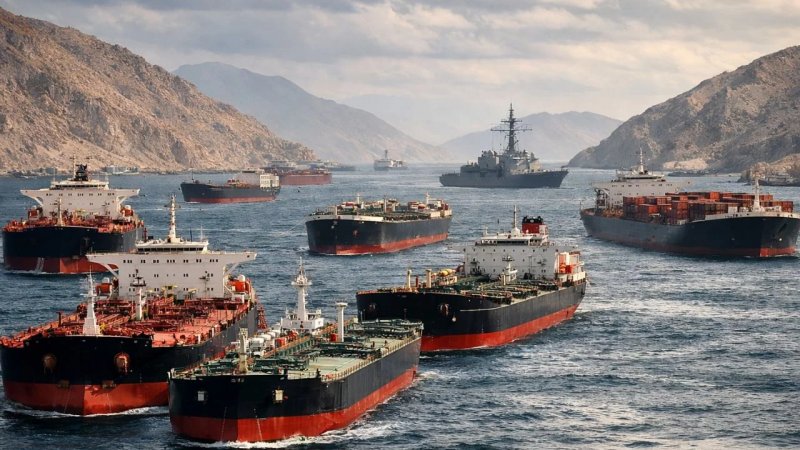
Oil and liquefied natural gas tankers crossed the Strait of Hormuz on Monday, suggesting that commercial shipping activity is gradually recovering.
Traffic had slowed after Iran announced another closure of the strategic waterway over the weekend. However, ship-tracking data showed that several vessels had resumed their journeys through the strait.
Iran Reimposes Restrictions After Ceasefire
Iran eased its effective blockade of the Strait of Hormuz last week after agreeing to a 60-day ceasefire with the United States.
The temporary agreement created room for negotiations toward a permanent peace settlement. It also allowed some commercial vessels to resume crossings.
However, Iran’s Revolutionary Guards declared the strait closed again on Saturday. Tehran said the decision was a response to Israeli strikes in Lebanon.
The announcement immediately increased concerns among shipping companies and caused vessel traffic to decline.
Qatari LNG Tankers Enter the Gulf
Four LNG tankers controlled by Qatar sailed through the Strait of Hormuz and entered the Gulf on Monday.
The vessels were identified as Wadi Al Sail, Mekaines, Al Sadd and Mesaimeer. According to Kpler data, they used the northern route controlled by Iran.
It was the first time these ships had entered the strait since the US-Israeli conflict with Iran began on February 28.
QatarEnergy’s LNG exports have faced major disruption since the outbreak of hostilities. The company did not immediately comment on the latest tanker movements.
Crude Oil Tankers Resume Crossings
Two supertankers also crossed into the Gulf on Monday. Together, the vessels can carry approximately 4 million barrels of crude oil.
One of the tankers listed the Iraqi port of Basra as its destination.
Meanwhile, two smaller crude carriers sailed in the opposite direction. They exited the Strait of Hormuz and entered the Gulf of Oman with just under 2 million barrels of oil between them.
MarineTraffic and Kpler provided the vessel-tracking information.
Traffic Remains Below Normal Levels
Despite the increase, shipping activity remains far below levels recorded before the conflict.
Shipbroker Clarksons said approximately 125 vessels crossed the strait each day before hostilities began.
Current traffic remains well below that figure. Nevertheless, the company described the latest direction as positive.
The visible numbers may not show the complete picture. Some vessels may be sailing with their Automatic Identification System transponders disabled.
Shipping sources have also reported interruptions affecting AIS data. Traders and maritime companies rely on this system to monitor vessel locations and movements.
Ships Use Iranian and Omani Routes
Commercial vessels continued using two alternative routes through the Strait of Hormuz.
Some ships traveled through Omani territorial waters in the south. Others used the northern passage controlled by Iran.
The US Navy-led Joint Maritime Information Center said traffic through both routes was beginning to increase.
A Marshall Islands-flagged dry bulk carrier named Summit Success also entered the Gulf on Monday, according to LSEG data.
Sunday Traffic Fell Sharply
Kpler recorded only five vessel crossings on Sunday, down from 26 ships one day earlier.
The vessels included three Very Large Crude Carriers, commonly known as VLCCs. Each was carrying approximately 2 million barrels of Saudi crude oil or fuel oil.
One of the ships was traveling toward Japan.
The sharp daily decline highlighted the continued sensitivity of shipping activity to security announcements and regional military developments.
More Than 17 Million Barrels Moved on Saturday
The US Central Command reported that 55 merchant vessels crossed the Strait of Hormuz on Saturday.
Those ships transported more than 17 million barrels of oil intended for international markets.
Among the vessels leaving the Gulf were three VLCCs carrying crude from the United Arab Emirates, Kuwait and Iraq. Three additional tankers transported refined oil products.
Thirteen ships entered the strait on Saturday, including two VLCCs.
Iranian Oil Exports Continue
Iran also continued moving its own oil through the restricted waterway.
Hamid Bovard, head of the National Iranian Oil Company, said more than 25 million barrels of Iranian oil had crossed the virtual blockade line since the previous Monday.
Three sanctioned supertankers carrying Iranian crude were leaving the strait on Monday, according to LSEG and Kpler.
The vessels, named Elva, Virgo and Vigor, had loaded their cargoes at Iran’s Kharg Island between late April and early May.
Gulf Producers Offer Flexible Loading Options
Major Gulf oil producers are adjusting their sales arrangements to account for the uncertainty surrounding Hormuz.
Abu Dhabi National Oil Company and Kuwait Petroleum Corporation issued crude oil tenders that allowed buyers to load cargoes from locations inside or outside the strait.
This flexibility could help reduce the risk of supply disruptions if shipping restrictions intensify again.
Two vessels operated by South Korea also passed through the strait after the interim peace agreement, according to Seoul’s Ministry of Oceans and Fisheries.
Meanwhile, the number of vessels connected to Japan that remained inside the Gulf fell to 37. That figure stood at 45 when the conflict began.
ADNOC LNG Cargoes Reach India
Two LNG tankers controlled by ADNOC were delivering cargoes to India on Monday after recently leaving the Gulf.
The Al Hamra tanker was unloading at the Ennore LNG terminal. Meanwhile, Mubaraz was scheduled to discharge its cargo at the Kochi terminal on Tuesday.
Both vessels had previously disappeared from public tracking systems before reappearing near India with loaded cargoes.
Each tanker has now completed two so-called dark voyages out of the Strait of Hormuz since the conflict began.
A dark voyage occurs when a vessel switches off or stops transmitting its AIS signal, making its movements difficult to monitor publicly.
ADNOC said it does not comment on the positions, routes or movements of its vessels.
Although tanker traffic is beginning to recover, activity through the Strait of Hormuz remains exposed to military escalation, political tensions and continuing concerns over safe passage.