US Supreme Court Blocks Trump’s Bid to Fire Fed Governor Lisa Cook
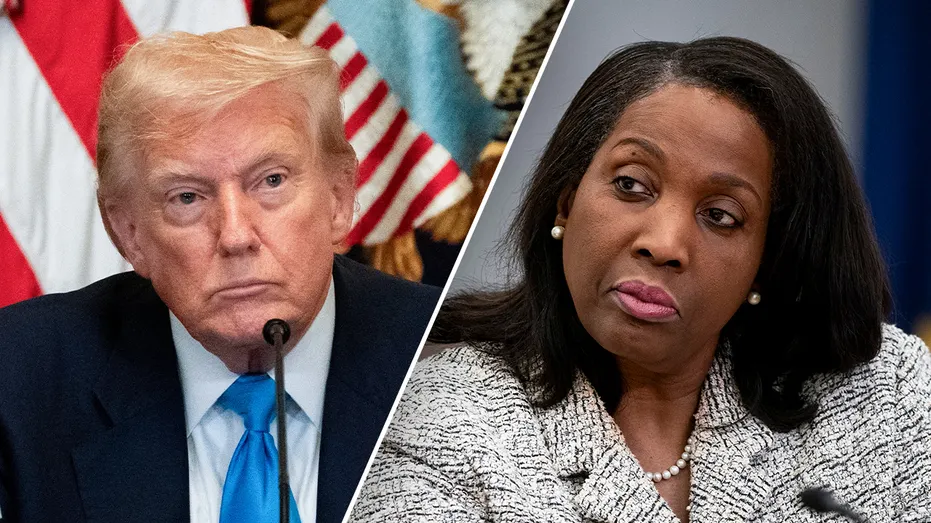
The U.S. Supreme Court rejected President Donald Trump’s attempt to remove Federal Reserve Governor Lisa Cook on Monday. The closely watched decision protected the central bank’s independence from direct political pressure.
In a 5-4 ruling, the court prevented Trump from becoming the first U.S. president to dismiss a Federal Reserve official since the central bank was created in 1913.
The case also tested the limits of presidential power during Trump’s second term.
Supreme Court Rules in Lisa Cook’s Favor
Conservative Chief Justice John Roberts and Justice Brett Kavanaugh joined the court’s three liberal justices in the majority.
Meanwhile, conservative Justices Clarence Thomas, Samuel Alito, Neil Gorsuch and Amy Coney Barrett dissented.
Roberts wrote that Trump had not provided Cook with the legal protections required under federal law. As a result, she did not receive a proper opportunity to challenge the allegations against her.
Federal Reserve governors do not serve at the president’s discretion. Instead, they receive staggered 14-year terms and may only be removed “for cause.”
Trump Cited Mortgage Fraud Allegations
Trump attempted to fire Cook in August 2025 after Federal Housing Finance Agency Director Bill Pulte raised mortgage fraud allegations against her.
The claims involved properties owned by Cook in Ann Arbor, Michigan, and Atlanta.
Cook denied the accusations. She argued that the mortgage claims were being used as a pretext to remove her because of disagreements over monetary policy.
Cook became the first Black woman to serve as a Federal Reserve governor after former President Joe Biden appointed her in 2022. Her term is scheduled to continue until 2038.
Cook Says She Resisted Political Pressure
Following the Supreme Court’s decision, Cook said the ruling supported the Federal Reserve’s responsibility to make independent monetary policy decisions.
She argued that the case was not truly about mortgage documents signed before she joined the central bank. Instead, Cook said the administration targeted her because she refused to adjust interest-rate policy in response to political pressure.
Cook also maintained that Federal Reserve officials must base their decisions on what is best for the U.S. economy.
Federal Reserve Independence at the Center of the Case
The dispute carried major consequences for the Federal Reserve’s ability to operate independently.
The central bank sets interest rates and influences borrowing costs across the United States and the global economy. Therefore, political control over its governors could affect inflation, employment, financial markets and economic confidence.
Trump repeatedly pressured the Federal Reserve to cut interest rates more quickly and aggressively. He also criticized former Fed Chair Jerome Powell for refusing to follow his preferred monetary policy.
Cook’s lawyers warned that allowing the president to remove Fed officials easily would weaken the institution’s independence. They also argued that it could give future presidents a way to control monetary policy.
Federal Reserve Act Sets a High Standard for Removal
Congress created the Federal Reserve through the Federal Reserve Act of 1913.
The law was designed partly to protect the central bank from political interference. It states that a president may remove a Federal Reserve governor only “for cause.”
However, the law does not clearly define what qualifies as cause. It also does not provide a detailed removal process.
The Supreme Court did not establish a complete definition in its ruling. Nevertheless, Roberts said the Fed’s history and independent structure suggested that the standard should be substantial.
Otherwise, any past mistake or unproven accusation could become an excuse to remove a governor. According to Roberts, that possibility could influence how Fed officials speak and vote.
President Cannot Remove Fed Governors Without Limits
Roberts acknowledged that only the president can decide whether to seek the removal of a Federal Reserve Board member, apart from congressional impeachment.
However, he said that does not allow a president to remove a governor for any reason or without a valid reason.
Congress could have allowed presidents to dismiss Fed governors whenever they wanted. It could also have prevented courts from reviewing such removals. However, lawmakers chose neither option.
The ruling therefore maintained legal limits on presidential authority over the central bank.
Lower Courts Had Already Protected Cook
U.S. District Judge Jia Cobb previously ruled that Trump’s attempt to remove Cook without advance notice or a hearing likely violated her constitutional right to due process.
Cobb also found that the allegations may not provide sufficient legal cause for dismissal under the Federal Reserve Act.
One key issue was timing. The alleged conduct occurred before Cook became a Federal Reserve governor.
The U.S. Court of Appeals for the District of Columbia Circuit later rejected Trump’s request to suspend Cobb’s order.
The Supreme Court then allowed Cook to remain in her position while the case proceeded.
Justice Thomas Criticizes the Majority Decision
Justice Clarence Thomas strongly disagreed with the majority.
In his dissent, Thomas argued that the court had improperly allowed Cook to continue exercising executive authority after Trump attempted to remove her.
He also criticized the majority’s emphasis on the fact that no president had previously removed a Federal Reserve governor.
Thomas argued that the ruling placed the central bank’s policy independence above presidential accountability. In his view, that approach conflicted with the Constitution’s allocation of executive power.
Court Expands Trump’s Power in Separate FTC Case
Although the Supreme Court ruled against Trump in the Cook case, it supported him in another major decision on Monday.
The justices backed Trump’s removal of Rebecca Slaughter, a Democratic member of the Federal Trade Commission.
That decision expanded presidential control over parts of the federal government. It also overturned a precedent dating back to 1935, which had allowed Congress to protect certain regulatory officials from dismissal without cause.
Trump described the FTC ruling as one of the most important Supreme Court decisions involving presidential power.
However, he did not immediately comment publicly on the Lisa Cook ruling.
Supreme Court Treats the Fed Differently
In recent years, the Supreme Court has reduced the independence of several federal agencies.
However, the justices have signaled that the Federal Reserve may be treated differently because of its unique history, structure and role in the economy.
In a May 2025 decision involving federal labor boards, the court noted that the central bank had a special historical tradition.
The Cook ruling strengthened the view that the Federal Reserve may receive greater protection from presidential control than other independent agencies.
Powell Investigation Also Raised Independence Concerns
The Trump administration’s actions against Cook followed a separate investigation involving former Fed Chair Jerome Powell.
That investigation focused on cost overruns connected to the renovation of two historic Federal Reserve buildings in Washington.
Powell argued that the inquiry was another attempt to pressure the central bank into cutting interest rates.
A judge blocked subpoenas related to the investigation in March, finding that the case appeared to be an improper effort to intimidate the Fed. Prosecutors later dropped the investigation in April.
Together, the Cook case and the Powell investigation represented one of the largest challenges to Federal Reserve independence since the institution’s founding.
Kevin Warsh Replaces Powell as Fed Chair
Powell completed his eight-year term as Federal Reserve chair on May 15. However, he remains a member of the Fed’s Board of Governors.
The U.S. Senate confirmed Trump’s nominee, Kevin Warsh, as Powell’s successor on May 13. Warsh was sworn into office on May 22.
Warsh previously served on the Federal Reserve Board and is expected to play a central role in shaping U.S. monetary policy.
Nevertheless, Cook will continue participating in policy decisions alongside the other Fed governors and the presidents of the 12 regional Federal Reserve banks.
Decision Could Affect Interest Rates and Financial Markets
The Supreme Court’s ruling has broader implications beyond Cook’s employment.
Federal Reserve independence is widely considered essential for controlling inflation and maintaining confidence in monetary policy.
When central bankers can make decisions without responding to election cycles or political demands, they may be better positioned to take unpopular but necessary economic measures.
Investors will therefore continue to monitor the relationship between the White House and the Federal Reserve.
The decision also makes it more difficult for presidents to remove Fed officials because of policy disagreements or disputed allegations.
Supreme Court Continues to Define Presidential Power
The Lisa Cook case is part of a wider legal debate over the limits of presidential authority.
Since returning to office in January 2025, Trump has used executive power to reshape policies involving immigration, federal employment, the military and international trade.
The Supreme Court has allowed many of those policies to proceed while legal cases continue. However, it has also imposed significant limits.
For example, the court previously struck down most of Trump’s global tariffs. Those tariffs had been imposed under a 1977 emergency powers law.
The Cook ruling represents another major exception to the court’s general willingness to support broad presidential authority.
Fed Independence Remains Protected
For now, the Supreme Court’s decision allows Lisa Cook to remain on the Federal Reserve Board.
It also reinforces the principle that Fed governors cannot be removed simply because the president disagrees with their monetary policy decisions.
Although the ruling did not fully define what qualifies as legal cause for dismissal, it established that the standard must be meaningful.
The decision is likely to influence future disputes involving the Federal Reserve, presidential power and the independence of U.S. economic institutions.