Wall Street Slides as US-Iran Tensions Offset Inflation Relief
U.S. stocks moved lower on Wednesday as investors weighed escalating tensions between the United States and Iran against a consumer inflation report that slightly reduced expectations for future Federal Reserve rate hikes.
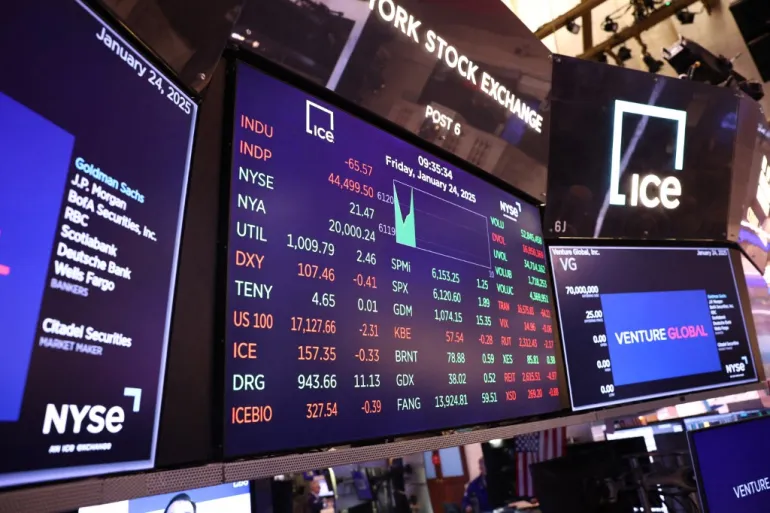
The benchmark S&P 500 fell 0.6%, while the Nasdaq Composite dropped 0.8%. The Dow Jones Industrial Average underperformed, declining 1% as risk sentiment weakened across financial markets.
Inflation Reaches Three-Year High
Investors closely monitored the latest Consumer Price Index report, which showed annual inflation accelerating to its highest level since April 2023.
According to the Bureau of Labor Statistics, headline CPI increased 0.5% month-over-month and 4.2% year-over-year in May, matching economists’ forecasts. Core CPI, which excludes food and energy prices, rose 0.2% monthly and 2.9% annually, coming in slightly below expectations on a monthly basis.
The softer core inflation reading helped ease some concerns that inflation pressures were spreading more broadly throughout the economy.
Energy Prices Drive Inflation Higher
A significant portion of the inflation increase was linked to soaring energy costs resulting from ongoing disruptions in the Middle East.
Energy prices surged 23.5% compared with a year ago, while gasoline prices jumped 40.5%, marking the strongest increases since 2022.
While markets largely anticipated the rise in headline inflation, investors welcomed signs that core inflation remained relatively contained despite higher fuel costs.
Fed Rate Hike Expectations Ease Slightly
Following the inflation report, traders modestly reduced expectations for additional Federal Reserve interest rate hikes this year.
The latest data also led some investors to increase the probability of a future rate cut, although market participants generally believe interest rates will remain elevated for an extended period.
Analysts noted that while inflation remains significantly above the Federal Reserve’s 2% target, the absence of a major acceleration in core prices provided some reassurance.
The Federal Reserve is scheduled to announce its next interest rate decision under Chairman Kevin Warsh next week.
Technology Stocks Continue to Weigh on Markets
Beyond inflation concerns, weakness in technology stocks remained a major drag on Wall Street.
The Philadelphia Semiconductor Index fell sharply as investors continued reassessing valuations across the artificial intelligence sector.
Major chipmakers including Nvidia, Micron, Intel, and Qualcomm remained under pressure following renewed concerns about the sustainability of AI-related spending and data center investment.
Investor sentiment toward the sector was also impacted by recent earnings disappointments and growing questions about how companies will finance the massive infrastructure required to support future AI development.
AI Trade Faces Renewed Scrutiny
Market analysts have increasingly questioned whether enthusiasm surrounding artificial intelligence has become excessive.
Recent corporate fundraising activity and weaker-than-expected earnings from several technology companies have prompted investors to reassess growth expectations.
As a result, many traders now view weakness in technology shares as a more immediate concern for equity markets than geopolitical developments.
US-Iran Conflict Remains a Key Risk
Despite the focus on technology stocks, geopolitical tensions continued to influence market sentiment.
President Donald Trump warned that Iran would face consequences for delaying peace negotiations, while reports indicated the United States may be considering additional military action.
The latest developments follow a series of retaliatory strikes between the United States and Iran after an attack involving a U.S. military helicopter near the Strait of Hormuz.
Iran responded with attacks targeting U.S. military facilities in the Gulf region, raising concerns that the conflict could continue escalating.
Oil Prices Rise on Supply Concerns
Oil prices advanced as traders monitored the possibility of further disruptions to global energy supplies.
The Strait of Hormuz remains one of the world’s most important oil transit routes, carrying roughly one-fifth of global crude exports. Ongoing restrictions to shipping traffic have kept energy markets on edge and contributed to higher crude prices.
Persistent supply concerns have also increased fears that elevated energy costs could continue fueling inflation worldwide.
Super Micro Computer Drops After Capital Raise Announcement
Among individual stocks, Super Micro Computer fell nearly 15% after announcing plans to raise approximately $7 billion through equity-related offerings.
The company said the proceeds would be used to finance additional hardware purchases and support future growth initiatives.
Investors Face Multiple Market Challenges
Wall Street remains caught between several competing forces, including elevated inflation, uncertainty surrounding Federal Reserve policy, weakness in technology stocks, and rising geopolitical risks.
With the next Fed meeting approaching and tensions in the Middle East continuing to escalate, investors are likely to remain cautious as they assess the outlook for economic growth, interest rates, and corporate earnings.