U.S. stocks opened mostly higher on Friday after the July jobs report showed an unexpected decline in nonfarm payrolls.
The weaker employment data prompted traders to reduce expectations for another Federal Reserve interest rate hike.
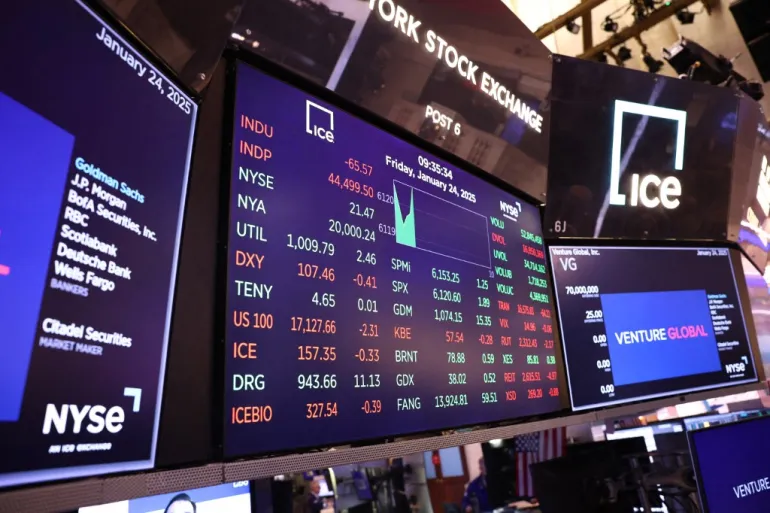
At 09:31 ET (13:31 GMT), the S&P 500 gained 0.3% to 7,731.39 points.
The tech-heavy Nasdaq Composite rose 0.8% to 26,557.94, while the Dow Jones Industrial Average slipped 0.1% to 53,849.26.
July Payrolls Fall by 23,000
According to the U.S. Bureau of Labor Statistics, nonfarm payrolls declined by 23,000 in July.
Economists had expected an increase of around 85,000 jobs.
The reading marked the first monthly decline in U.S. employment since February.
Previous figures were also revised sharply lower. Employment gains for May and June were reduced by a combined 103,000 jobs.
At the same time, the unemployment rate edged down to 4.1% from 4.2% in June.
Government Jobs Drive Much of the Decline
A large part of the July payroll decline came from government employment.
Local government education jobs fell by nearly 50,000 during the month.
Bill Adams, chief U.S. economist at Fifth Third Commercial Bank, said the decline appeared to be linked largely to seasonal adjustments in education employment.
He noted that measuring school employment during the summer can be difficult because education payrolls tend to experience large seasonal swings.
Private-sector employment still increased by 30,000 jobs in July.
Although that pace was weak, Adams argued that it did not necessarily point to a severe labor-market downturn.
Job Growth Slows Across Recent Months
After incorporating the latest revisions, U.S. employment growth averaged only around 20,000 jobs per month over the past three months.
Since the beginning of the year, the monthly average stands closer to 61,000.
While those figures point to slower hiring, they remain above the roughly 10,000 jobs per month averaged during 2025.
The data therefore suggests that the labor market is losing momentum, but has not yet entered a clear crisis.
Fed Faces Difficult Policy Trade-Off
The latest employment report arrives at a complicated time for the Federal Reserve.
On one side, payroll growth has slowed significantly.
On the other, the unemployment rate remains relatively low and inflation risks have increased due partly to volatility in oil prices linked to the Middle East conflict.
Some Fed policymakers had already shown a preference for tighter monetary policy at the central bank’s July meeting.
This creates a difficult balance for officials.
Higher interest rates can help control inflation, but they can also weaken hiring and broader economic activity.
Falling Unemployment May Limit Fed Reaction
Adams said the decline in payrolls could normally raise concerns about weakening economic momentum.
However, the simultaneous drop in the unemployment rate makes the July report more difficult to interpret.
The unemployment rate has fallen from around 4.5% in the autumn of 2025 to 4.1% in July.
That could give the Federal Reserve more reason to focus on inflation rather than react aggressively to one weak payroll report.
As a result, the upcoming July Consumer Price Index report could play an even greater role in shaping the Fed’s September decision.
Fed Rate Hike Odds Fall After Jobs Data
Markets nevertheless moved quickly to reduce expectations for tighter monetary policy.
According to the CME FedWatch Tool, the probability of a 25-basis-point Fed rate hike in September fell to around 44%.
That was down from approximately 55% the previous day.
Lower rate-hike expectations helped support stocks, particularly growth and technology shares.
Airbnb and Cloudflare Shares Jump
Corporate earnings also provided support to the market.
Airbnb shares surged around 12% after the company raised its full-year outlook following stronger-than-expected quarterly results.
The travel platform benefited from resilient booking demand and improved expectations for the remainder of the year.
Cloudflare shares also jumped more than 11%.
The company reported revenue and earnings above Wall Street forecasts, supported by rising demand for infrastructure used to power and scale artificial intelligence applications.
AI Spending Concerns Remain in Focus
Despite the positive start to Friday’s session, concerns surrounding heavy artificial intelligence spending remain an important theme for investors.
Expectations across the technology sector have risen sharply, leaving companies under pressure to deliver strong returns from AI-related investments.
Recent results from memory-chip companies including Sandisk and Western Digital failed to fully satisfy those elevated expectations.
That has kept investors focused on whether the current wave of AI spending can translate into sustainable earnings growth.
Markets Await Inflation Data
For now, weaker payroll growth has reduced expectations for another Fed rate increase and helped lift major U.S. stock indexes.
However, the central bank’s outlook remains heavily dependent on inflation.
The upcoming July CPI report could therefore become the next major catalyst for the S&P 500, Nasdaq and broader financial markets.