Rubio Says Progress Has Been Made in Iran Talks, but Peace Deal Remains Uncertain
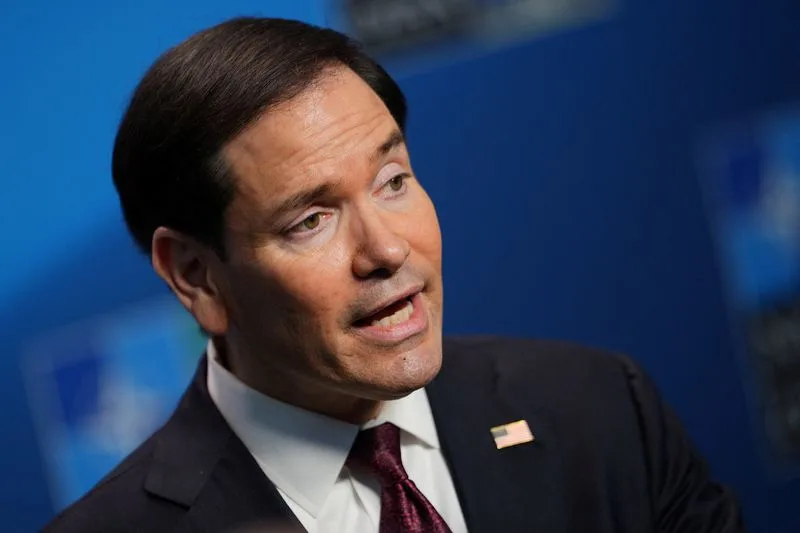
The United States and Iran have yet to reach an agreement to end their conflict, despite recent signs of diplomatic progress, according to U.S. Secretary of State Marco Rubio.
Speaking after a NATO ministers meeting in Sweden, Rubio acknowledged that negotiations have advanced slightly but emphasized that a final breakthrough remains distant.
“We’re not there yet,” Rubio said, signaling that major disagreements continue between both sides.
Key Disputes Continue Blocking an Iran Peace Agreement
According to Rubio, unresolved issues surrounding Iran’s nuclear enrichment activities and future control of the Strait of Hormuz remain significant obstacles to any deal.
Pakistan continues to play a major mediating role between Washington and Tehran, acting as the primary diplomatic intermediary during negotiations.
The latest developments come as efforts intensify to end a conflict that has lasted more than two months and has had growing effects on global markets.
Pakistan Expands Role as Mediator Between the US and Iran
Reports from Iranian media indicated that Iran’s foreign minister met with Pakistan’s interior minister to discuss proposals aimed at narrowing differences between both sides.
The meeting followed recent communication in which Pakistan reportedly delivered updated messages from the United States to Iranian officials.
Pakistan has repeatedly acted as a mediator during negotiations and is attempting to help establish a framework for ending hostilities.
Officials suggested Pakistani Interior Minister Syed Mohsin Naqvi is working to support diplomatic efforts and reduce tensions.
Mixed Signals Create Uncertainty Around Negotiations
Market sentiment has shifted repeatedly as conflicting reports emerged regarding the progress of talks.
Some reports indicated negotiation gaps have narrowed.
However, new disagreements surfaced after claims that Iran’s leadership had taken a firmer stance regarding enriched uranium, potentially conflicting with one of President Donald Trump’s major demands.
The White House reportedly rejected those claims, calling them inaccurate.
These contradictory developments have continued fueling uncertainty around the likelihood of a near-term peace agreement.
Fragile Ceasefire Continues After Months of Conflict
The United States and Iran remain under an extended ceasefire following the initial escalation that began earlier in the year.
The conflict expanded beyond Iran and involved broader instability across the Middle East, including regions critical to global energy production.
Despite reduced direct confrontation, geopolitical risks remain elevated.
Strait of Hormuz Remains Major Concern for Global Markets
One of the most important unresolved issues involves the Strait of Hormuz, a key shipping route responsible for transporting roughly 20% of global oil supplies.
The passage remains heavily disrupted, limiting tanker traffic and contributing to higher energy prices worldwide.
Former President Donald Trump has opposed proposals involving toll systems for ships crossing the route, while discussions continue regarding possible long-term solutions.
Rubio stated the United States did not formally seek NATO assistance to reopen the strait during recent meetings, although contingency planning remains important.
Rising Oil Prices and Stronger Dollar Reflect Ongoing Risks
Financial markets continue reacting to geopolitical uncertainty.
Oil prices climbed again on Friday after several days of declines, with Brent crude trading above $103 per barrel, significantly higher than pre-conflict levels near $70.
At the same time, the U.S. dollar remained close to six-week highs as investors continued treating the currency as a relative safe haven.
Higher energy prices have also intensified concerns over global inflation and future central bank policy decisions.
Investors Remain Cautious Despite Early Optimism
Analysts noted that hopes for a peace agreement initially improved sentiment earlier in the week.
However, renewed doubts surrounding the pace of negotiations have since reduced optimism, keeping investors cautious.
Until clearer signs of progress emerge, geopolitical developments are likely to remain a major driver of commodity prices, currencies, and broader financial markets.