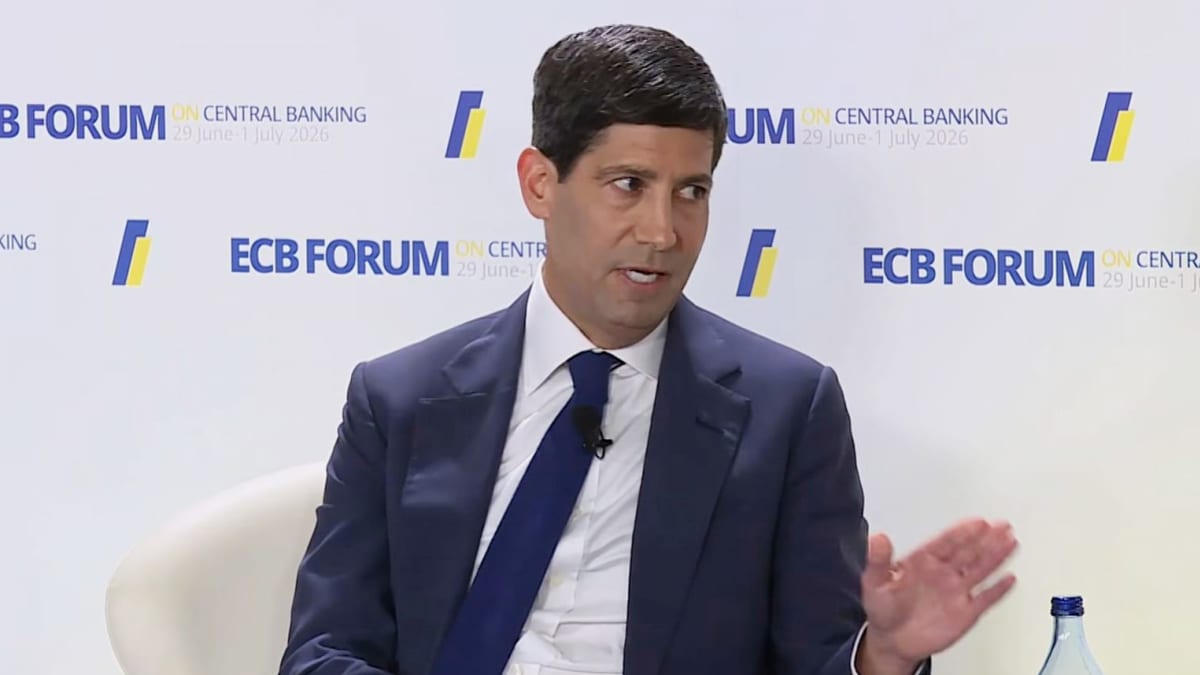
Central bankers from around the world appear to have found a potential ally in Federal Reserve Chair Kevin Warsh.
His outreach at the European Central Bank’s annual forum in Sintra, Portugal, offered a rare area of agreement in an otherwise difficult relationship between global policymakers and Washington.
Kevin Warsh Builds Ties in Sintra
During the three-day conference, Warsh held several private meetings with central bank officials from Europe and other regions.
His discussions included an extended lunch with ECB President Christine Lagarde in the courtyard of the former convent where the event was held.
According to people familiar with the meetings, the conversations remained broad. Officials spent limited time discussing inflation, shadow-banking risks, or international policy coordination.
However, many participants viewed Warsh’s willingness to engage as an encouraging sign.
Fed Signals Continued Global Engagement
Central bankers interpreted Warsh’s outreach as evidence that the Federal Reserve intends to remain active in international forums.
That helped ease concerns that the Fed could reduce its involvement in the institutions that support cooperation between major central banks.
Some policymakers had privately worried that a Fed chair appointed by President Donald Trump might face greater political pressure over interest rates.
Others were concerned that the central bank could become less committed to international coordination.
Warsh’s appearance in Sintra offered some reassurance, although officials acknowledged that it was still too early to judge his leadership.
Why the Federal Reserve Matters Globally
The Federal Reserve plays a central role in the global financial system.
During periods of financial stress, it can provide crucial U.S. dollar liquidity to foreign central banks and financial institutions.
Some countries also hold a significant portion of their gold reserves through arrangements connected to the United States.
In addition, the Fed remains one of the most influential voices in global discussions about interest rates, financial regulation, and economic stability.
Because of this influence, policymakers arrived in Sintra eager to understand how the Fed’s international relationships might change under Warsh.
Central Bankers Compare Warsh With Powell
Many officials had developed close working relationships with former Fed Chair Jerome Powell.
As a result, they wanted to know whether those connections would continue under the new leadership.
Several central bankers already knew Warsh from his previous period as a Federal Reserve governor between 2006 and 2011.
Others had worked with him through the Group of Thirty, an international advisory organization made up of senior economic and financial figures.
Those officials said Warsh appeared similar to the policymaker they had known for years.
However, some participants warned that his real test would come when he had to balance the Fed’s credibility against political pressure from the White House.
Warm Reception for the New Fed Chair
Warsh’s reception in Sintra was especially notable because many central bankers had strongly supported Powell during his disagreements with Trump.
Current and former policymakers had publicly defended the Federal Reserve’s independence.
Powell also received a standing ovation at the previous year’s Sintra conference.
Despite the potential for an uncomfortable transition, Warsh received a warm welcome.
Lagarde greeted him enthusiastically at the opening dinner and publicly expressed her desire to work closely with him.
Personal Relationships Take Center Stage
Warsh also made an effort to connect personally with other officials.
Having studied in France and speaking fluent French, he held conversations with several French participants in their own language.
He also moved around the room during an informal dinner rather than remaining within a small group of senior officials.
Later, Warsh appeared on a panel with Lagarde, Bank of England Governor Andrew Bailey, and Bank of Canada Governor Tiff Macklem.
He adopted a cooperative tone and described the other panelists as respected colleagues.
These gestures may appear symbolic. However, personal relationships can become extremely important when central banks must work together during a financial crisis.
Central Bankers Find Common Ground
Participants also identified areas of agreement on how monetary policy should be communicated.
Warsh has expressed support for simpler central bank messaging and has questioned the value of detailed forward guidance.
That position matched the broader “back to basics” theme of the Sintra conference.
Forward guidance refers to signals that central banks provide about the likely direction of future interest rates or monetary policy.
Warsh also emphasized the Federal Reserve’s independence and said central banks shared several common challenges, even though they operated in different economies.
Lagarde and Bailey Question Forward Guidance
Lagarde said the European Central Bank no longer needed overly complicated forms of forward guidance.
Bailey also warned that such commitments can be easier to introduce than to remove.
These comments suggested that several major central banks may be moving toward more flexible communication.
Instead of making strong promises about future policy, officials may prefer to respond more directly to changing economic data.
Differences Remain Beneath the Surface
Despite the areas of agreement, important differences remained.
Lagarde said the ECB would continue explaining how it reacts to new economic information.
She described this approach as “framework guidance.”
Macklem later referred to a similar idea during his own remarks.
Warsh, by contrast, showed little interest in discussing a detailed Federal Reserve policy framework.
His preference appeared to be for simpler language and fewer commitments about the future direction of interest rates.
Central Banks Move Beyond Crisis-Era Policies
Some participants also saw evidence that central banks on both sides of the Atlantic were moving away from policies introduced during earlier financial crises.
Discussions at the ECB included the possibility of normalizing bank reserve requirements.
Such changes could represent a gradual return to more traditional monetary policy tools.
Officials appeared more focused on these similarities than on their remaining differences.
Warsh Faces a Major Test Ahead
The Sintra conference gave Kevin Warsh an opportunity to build trust with leading central bankers.
His meetings, public comments, and personal outreach reassured officials who had feared that the Federal Reserve might withdraw from international cooperation.
However, the long-term strength of those relationships will depend on how Warsh handles interest-rate decisions, inflation risks, and pressure from the Trump administration.
For now, central bankers appear willing to view him as a potential partner in maintaining global financial stability.