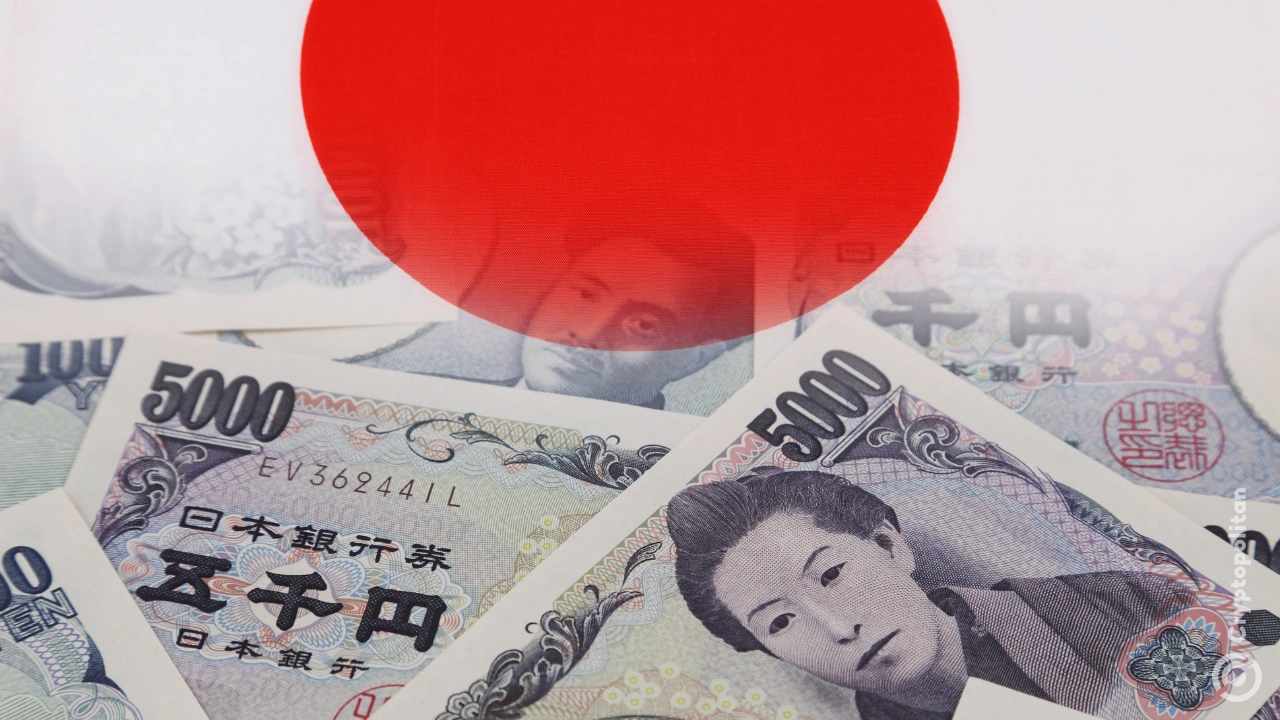
Japan’s benchmark 10-year government bond yield reached 3% on Tuesday, marking its highest level since September 1996.
The move was driven by growing concerns over inflation, Japan’s fiscal outlook and expectations that the Bank of Japan (BOJ) may need to raise interest rates more aggressively.
Inflation Fears Push Japanese Bond Yields Higher
Inflation concerns have intensified as the Middle East crisis puts upward pressure on global energy prices.
At the same time, markets are increasingly expecting the Bank of Japan to accelerate its monetary policy normalization. As a result, yields have climbed sharply across the Japanese government bond market.
The rise has gathered momentum in recent days. Domestic media reports suggested that Japan’s ministries and government agencies could submit the largest initial budget request on record for the next fiscal year.
Japan’s 10-Year JGB Yield Has More Than Tripled
The 10-year Japanese government bond yield, which serves as an important benchmark for mortgages and corporate borrowing, has more than tripled over the past two years.
Shorter-term bond yields have also moved sharply higher.
The five-year JGB yield climbed to a record 2.265%, while the two-year yield reached 1.795%, its highest level in 31 years.
Markets are now pricing in a very high probability that the Bank of Japan will raise interest rates at its meeting this month.
Bond yields generally rise when bond prices fall.
Japan’s Fiscal Policy Comes Under Pressure
The sharp increase in yields also reflects concerns about Japan’s fiscal position.
Investors are questioning whether Prime Minister Sanae Takaichi can maintain fiscal discipline while increasing investment in strategic industries such as semiconductors and artificial intelligence.
Ryutaro Kimura, senior fixed-income strategist at BNP Asset Management in Tokyo, said rising yields have increasingly acted as a warning from the bond market against further fiscal expansion.
According to Kimura, investors are also beginning to accept that higher interest rates may become a more permanent feature of Japan’s financial landscape.
Weak Yen Adds Pressure on the Bank of Japan
Inflationary pressures and persistent weakness in the Japanese yen have increased calls for the BOJ to raise interest rates more quickly.
The yen has been trading close to four-decade lows, adding to imported inflation pressures and increasing the cost of commodities purchased from overseas.
The Bank of Japan has also faced criticism that it has been too slow to normalize monetary policy.
Its normalization strategy includes both higher interest rates and a gradual reduction in its extensive holdings of Japanese government bonds.
Rising Bond Yields Threaten Japan’s Debt Outlook
Japan’s bond market selloff has attracted significant attention because of the country’s exceptionally high public debt.
Higher bond yields increase the cost of government borrowing and could make Japan’s debt burden increasingly difficult to manage.
The government used a 3% long-term interest rate assumption when calculating debt-servicing costs for its fiscal 2026 budget.
Therefore, a sustained rise above the 3% level could place additional pressure on government finances.
Japan’s government debt already exceeds 200% of gross domestic product, making the country particularly sensitive to higher borrowing costs.
Japan Reaffirms Commitment to Fiscal Discipline
Japanese Finance Minister Satsuki Katayama declined to comment directly on the benchmark yield approaching 3% following the first day of a Group of 20 finance leaders meeting.
However, she reiterated Japan’s commitment to fiscal discipline.
Katayama said the government aims to gradually reduce its debt burden, reform the budget process and finance planned consumption tax relief without issuing additional deficit-financing bonds.
Strategic Investment Plans Raise Investor Concerns
Prime Minister Takaichi has promoted an investment-driven growth strategy since taking office in October.
The government is targeting strategic sectors, including semiconductors and artificial intelligence, as part of its efforts to strengthen Japan’s long-term economic competitiveness.
However, planned spending and tax cuts have raised concerns that Japan’s fiscal position could weaken further.
These concerns have become increasingly important as government borrowing costs continue to rise.
Global Bond Yields Also Move Higher
Japan is not the only major economy experiencing pressure in its bond market.
Elevated oil prices and uncertainty surrounding the U.S.-Iran conflict have contributed to renewed inflation concerns worldwide.
Government bond yields in the United States, Germany and France have also climbed to multi-year highs as investors increase expectations for tighter monetary policy.
Strong Bond Auction Helps Stabilize the 10-Year Yield
Japan’s 10-year JGB yield briefly reached 3% soon after afternoon trading resumed.
However, a government bond auction released shortly afterward showed strong investor demand, helping stabilize the market.
The benchmark yield later eased slightly to around 2.995%.
Kimura said the 3% level represents an important psychological threshold for investors and could attract additional demand for Japanese government bonds.
Strong bidding at the latest auction may therefore help keep yields relatively stable around the 3% area in the near term.