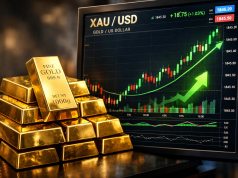
Gold prices moved higher on Thursday as investors weighed softer U.S. inflation data against elevated Treasury yields and a stronger U.S. dollar.
At 09:03 ET, spot gold rose 0.5% to $4,179.00 an ounce, while gold futures gained 0.5% to $4,208.67.
Stronger Dollar Limits Gold’s Upside
The U.S. Dollar Index rose around 0.3% to 101.79.
A stronger dollar can make gold more expensive for buyers using other currencies. This can reduce demand for the precious metal and limit price gains.
At the same time, high Treasury yields continue to create pressure for gold.
Gold Records Sharp September Decline
Gold prices fell around 6% in September, marking their largest monthly decline since June.
The weakness followed the Federal Reserve’s first interest-rate increase since 2023.
The central bank also indicated that additional tightening could remain necessary if inflation stays elevated.
High Treasury Yields Pressure Gold Prices
Global bond yields moved sharply higher during September as investors became more concerned about government debt levels and fiscal deficits.
Higher yields tend to weigh on gold because the metal does not generate interest income.
As returns on bonds rise, investors may find income-producing assets more attractive relative to gold.
Softer Inflation Data Supports Gold
Despite these pressures, gold has found some support from softer U.S. inflation data.
The core Personal Consumption Expenditures price index, which excludes food and energy, rose 0.2% in August.
The result came in below market expectations, while the previous month’s reading was also revised lower.
The softer figures reduced concerns that the Federal Reserve would need to raise interest rates again immediately.
Fed Rate-Hike Expectations Decline
Following the inflation data, traders sharply reduced expectations for another Federal Reserve rate increase at the October meeting.
The implied probability of a hike fell to around 34%, down from nearly 70% earlier in the week.
Lower expectations for additional monetary tightening can support gold by reducing the opportunity cost of holding the non-yielding metal.
Strong Consumer Spending Keeps Yields Elevated
However, other economic data continued to show strength in the U.S. economy.
Consumer spending increased in August at its fastest pace in more than a year.
The strong reading reinforced expectations that the economy may be able to withstand higher interest rates for longer.
As a result, longer-dated Treasury yields remained close to multi-decade highs.
U.S. Jobs Report Becomes the Next Focus
Investors will now turn their attention to Friday’s U.S. employment report.
The data could provide fresh clues about the strength of the labor market and the Federal Reserve’s next interest-rate decision.
For gold traders, the outlook remains closely tied to inflation, Treasury yields, the U.S. dollar and expectations for future Fed policy.