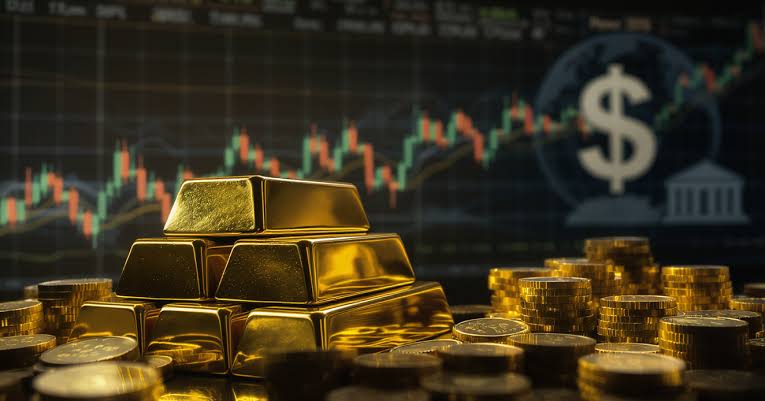
Gold prices extended their advance on Monday as a weaker U.S. dollar increased demand for the precious metal. A sharp decline in oil prices also supported bullion after concerns over escalating tensions in the Middle East eased.
However, investors remained cautious ahead of several important U.S. economic reports that could influence the Federal Reserve’s future interest-rate decisions.
Gold and Silver Prices Move Higher
At 01:43 ET, spot gold rose 0.5% to $4,062.41 per ounce. U.S. gold futures gained 0.3% to $4,117.35.
Other precious metals also advanced. Silver climbed 0.6% to $57.98 per ounce, while platinum increased 0.3% to $1,650.18.
Iran Developments Push Oil Prices Lower
Gold received additional support after U.S. President Donald Trump said Iran and other Middle Eastern countries had requested more time to complete an agreement.
The proposed deal would aim to reopen the Strait of Hormuz and address concerns surrounding Iran’s nuclear programme.
Trump’s remarks reduced expectations of an immediate military escalation in the region. As a result, oil prices fell by more than $5 per barrel at the start of Asian trading.
Lower oil prices helped ease fears that prolonged supply disruptions could keep inflation elevated. This reduced some of the pressure on central banks to maintain tighter monetary policy.
Weaker Dollar Supports Gold Demand
The U.S. Dollar Index remained under pressure and slipped further below the 100 level to around 99.7.
A weaker dollar generally makes gold less expensive for buyers using other currencies. This can increase international demand for dollar-denominated bullion.
The dollar’s decline therefore provided another positive factor for gold prices during Monday’s session.
Federal Reserve Concerns Limit Gold’s Gains
Despite the latest rise, investors remained cautious following hawkish comments from several Federal Reserve officials.
Three policymakers who opposed the Fed’s decision at its previous meeting repeated their concerns that inflation remained too high. They argued that an immediate interest-rate increase was necessary to protect the central bank’s credibility in controlling inflation.
Higher interest rates usually create pressure on gold because the metal does not provide interest or dividend income. Rising yields can therefore make bonds and other income-generating assets more attractive.
Gold Faces Important Resistance Levels
Tony Sycamore, senior market analyst at IG, said gold’s recent performance had been weaker than expected, despite his generally positive outlook for the precious metal.
According to Sycamore, gold must rise above resistance between $4,110 and $4,120 to strengthen the case for a broader recovery.
A further break above the early-July high of $4,202 could confirm that gold has formed a stable base above its late-June low of $3,942.
Until those resistance levels are cleared, the risk of another decline toward the $3,942 support area remains.
U.S. Employment Data Comes Into Focus
Investors will now turn their attention to a busy schedule of U.S. economic releases.
Key reports include JOLTS job openings, the ADP private employment report, weekly unemployment claims and Friday’s nonfarm payrolls figures.
These reports could provide new information about the strength of the U.S. labour market. They may also shape expectations surrounding the Federal Reserve’s next interest-rate decision.